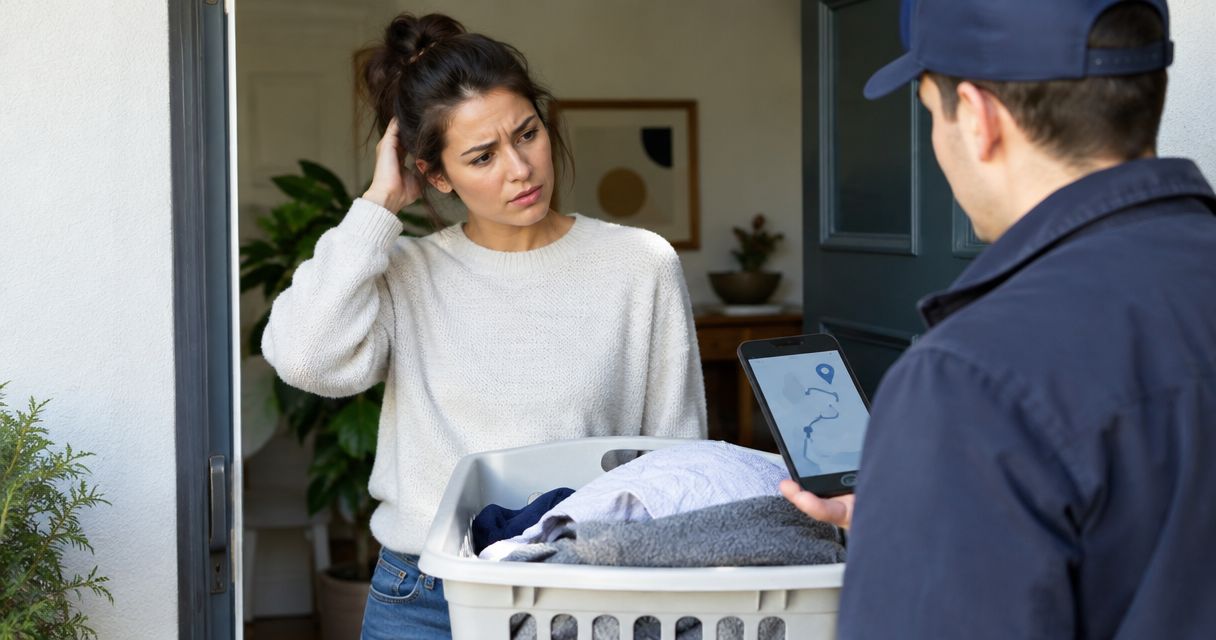
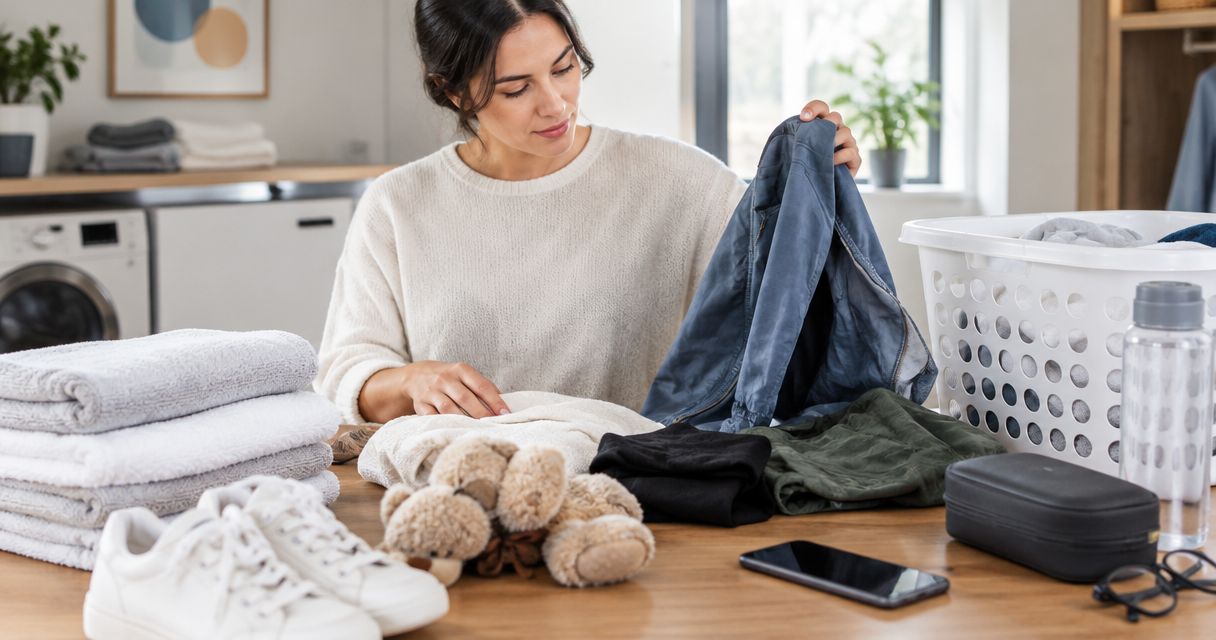
Keep solvent-soaked rags, needles, loose batteries, and other hazardous objects out of a standard laundry pickup bag. Set aside dry-clean-only garments, hand-wash-only pieces, leather, structured clothing, and bulky household items until the provider confirms suitable handling. An item being washable does not automatically make it suitable for routine wash-and-fold service.
- What items cant be sent through laundry pickup? Keep hazardous items out and confirm special-care items before packing.
- Dry-clean-only and hand-wash-only labels require different handling; do not assume standard wash-and-fold covers either.
- Hampr provides laundry pickup, wash, fold, and delivery for households and businesses in select US cities.
- Read care labels, empty pockets, and ask about unusual items before leaving your bag out.
What items can't be sent through laundry pickup service?
Do not send hazardous materials or assume that special-care items belong in an ordinary wash-and-fold order. Other restrictions depend on the provider, the item, and its condition. Use this 2026 checklist to decide what to remove, what to ask about, and what needs a different cleaning method.
Start with the guide to preparing laundry for pickup and delivery if you need help organizing your bag. Then check anything that falls outside everyday machine-washable clothing and linens.
| Item or condition | Packing decision | Main concern | Best next step |
|---|---|---|---|
| Needles, blades, loose batteries, and pocket objects | Keep out | Injury, damage, or fire risk | Remove and dispose of or store appropriately |
| Rags exposed to gasoline, solvents, or flammable chemicals | Keep out of routine laundry | Fire and chemical exposure | Follow substance-specific safety and disposal guidance |
| Dry-clean-only garments | Set aside | Ordinary washing conflicts with the label | Use a cleaner that offers the required method |
| Hand-wash-only or do-not-tumble-dry items | Confirm first | Washing and drying instructions differ | Ask whether the required handling is offered |
| Leather, suede, and structured garments | Seek suitable specialist care | Material, shape, and finish need attention | Follow the label and consult a qualified cleaner |
| Bulky bedding, rugs, shoes, and pet beds | Confirm first | Construction, filling, and equipment requirements vary | Describe the exact item before packing |
| Items with infestation or hazardous contamination | Keep separate | Exposure and handling requirements | Disclose the condition and seek specific instructions |
This is a sorting guide, not a universal list of provider policies. A clear yes for the exact item matters more than a general promise to wash laundry.
Why this matters
A pickup bag hides its contents from the person collecting it. A forgotten needle presents a different problem from a sweater that needs flat drying, but both deserve attention before the bag leaves your home.
The goal is not to make laundry complicated. It is to keep an unusual item from turning an ordinary load into a safety issue or a damaged-garment problem. For your 2026 laundry routine, make the care label and the provider's instructions your starting point—not the fact that an item fits inside the bag.
Hazardous items: leave them out of routine laundry
Needles, razor blades, and broken glass do not belong loose among clothes. Remove batteries, electronics, lighters, and other pocket contents too. These are objects to deal with separately, not laundry extras.
Rags exposed to gasoline or flammable solvents also need a different decision. Do not put them in a routine pickup bag or assume detergent makes them safe. Follow the product's safety instructions and local disposal guidance for the substance involved.
Oil-soaked textiles deserve special attention because some oils can generate heat as they oxidize. A dryer adds another source of heat. Do not treat chemically contaminated or oil-saturated cloths as ordinary towels.
For workplace materials, check the substance's safety data sheet and your workplace procedures. Tell the cleaner what the textile contacted before asking about cleaning; a vague note saying that a rag is dirty does not communicate the hazard.
Dry-clean-only clothing: use the specified cleaning method
A dry-clean-only label is a reason to remove a garment from an ordinary wash-and-fold bag. Water, agitation, and drying can affect its fabric, dyes, trim, or construction. A jacket can look sturdy while still depending on internal materials that need special care.
Dry cleaning is best for garments whose care instructions require dry cleaning. Its advantage is matching that specified method; its limitation is that it is a separate cleaning process, not something to assume a laundry pickup order includes.
Do not confuse a business offering pickup with a business offering every cleaning method. Ask specifically about dry cleaning, rather than asking only whether the provider takes dresses or suits. The garment category alone does not settle the question.
Hand-wash-only and air-dry items: confirm the whole process
Hand-wash-only clothing should stay out of a standard bag unless the provider confirms the required handling. The same caution applies when a garment allows machine washing but prohibits tumble drying. Washing instructions and drying instructions are separate checks.
Special-care handling is best for washable pieces that need a method outside the regular process. The benefit is keeping those instructions visible; the limitation is that not every wash-and-fold service offers separate hand washing, flat drying, or line drying.
A mesh bag helps contain small items, but it does not change a care label. It also does not tell the person washing the load to use a different cycle or drying method.
Before including a delicate item in a 2026 pickup order, describe both requirements: how it should be washed and how it should be dried. Ask how to separate and identify it if the provider accepts it.
Leather, structured pieces, and keepsakes: choose suitable care
Leather and suede need material-specific care. Ordinary washing can affect their finish and shape, while a structured garment can contain linings, padding, adhesives, or other components with different needs. Follow the item's instructions rather than judging by the outer fabric alone.
Specialist cleaning is best for materials and construction that routine laundering does not address. It offers item-specific assessment, but it requires finding someone qualified for that particular material. A cleaner who handles one unusual textile is not automatically the right choice for another.
Treat irreplaceable items with extra caution. A handmade quilt, signed jersey, or sentimental blanket deserves a conversation about its materials and condition before cleaning. Emotional value does not create a new washing method, but it does change how much uncertainty you should accept.
Bulky bedding, rugs, and pet items: ask before bagging
A comforter, rug, pair of shoes, and pet bed can all be washable under some circumstances. That does not make them interchangeable with shirts and towels. Size, backing, filling, removable inserts, and drying requirements affect the decision.
Check the label on the entire item, not just a removable cover. A washable cover does not establish that the foam insert can follow it into the machine. Rubber-backed rugs and shoes also have components that need their own care instructions.
For pet bedding, describe the condition honestly. Loose hair, a heavily soiled insert, and a suspected pest problem are different situations. Ask about the exact item and condition rather than treating all pet laundry as either automatically accepted or automatically prohibited.
Do not hide a questionable item beneath ordinary clothes. Confirmation before pickup is more useful than a note discovered after the bag arrives.
Why laundry pickup restrictions vary
Restrictions are not simply a judgment about whether something is dirty. They reflect what the item requires and whether the service can handle it safely.
- Care instructions: Machine washing, hand washing, dry cleaning, and drying directions call for different processes.
- Material and construction: Leather, coatings, trim, padding, and internal structure change how an item responds to cleaning.
- Size and filling: Bulky items need suitable equipment and enough room for cleaning and drying.
- Contamination: Chemicals, sharps, suspected pests, and other exposure concerns require specific handling decisions.
- Service scope: A routine wash-and-fold order is not automatically a dry-cleaning, restoration, or specialist-cleaning order.
For 2026, ask about the service you are actually booking. An item accepted under a separate arrangement is not necessarily accepted in a regular pickup bag.
How do I check an item before laundry pickup?
Use these 4 steps before sealing your bag. They separate ordinary laundry from questions that need answering first.
- Read labels. Check both washing and drying directions. Set aside anything that conflicts with the service you plan to book.
- Empty pockets. Remove money, tissues, pens, batteries, sharp objects, and small electronics. Check hidden and zippered pockets too.
- Separate exceptions. Keep special-care, bulky, contaminated, or uncertain items apart from routine clothing. Do not rely on a buried note.
- Confirm handling. Describe the item, its label, and any unusual condition. Ask how to pack it if the provider agrees to accept it.
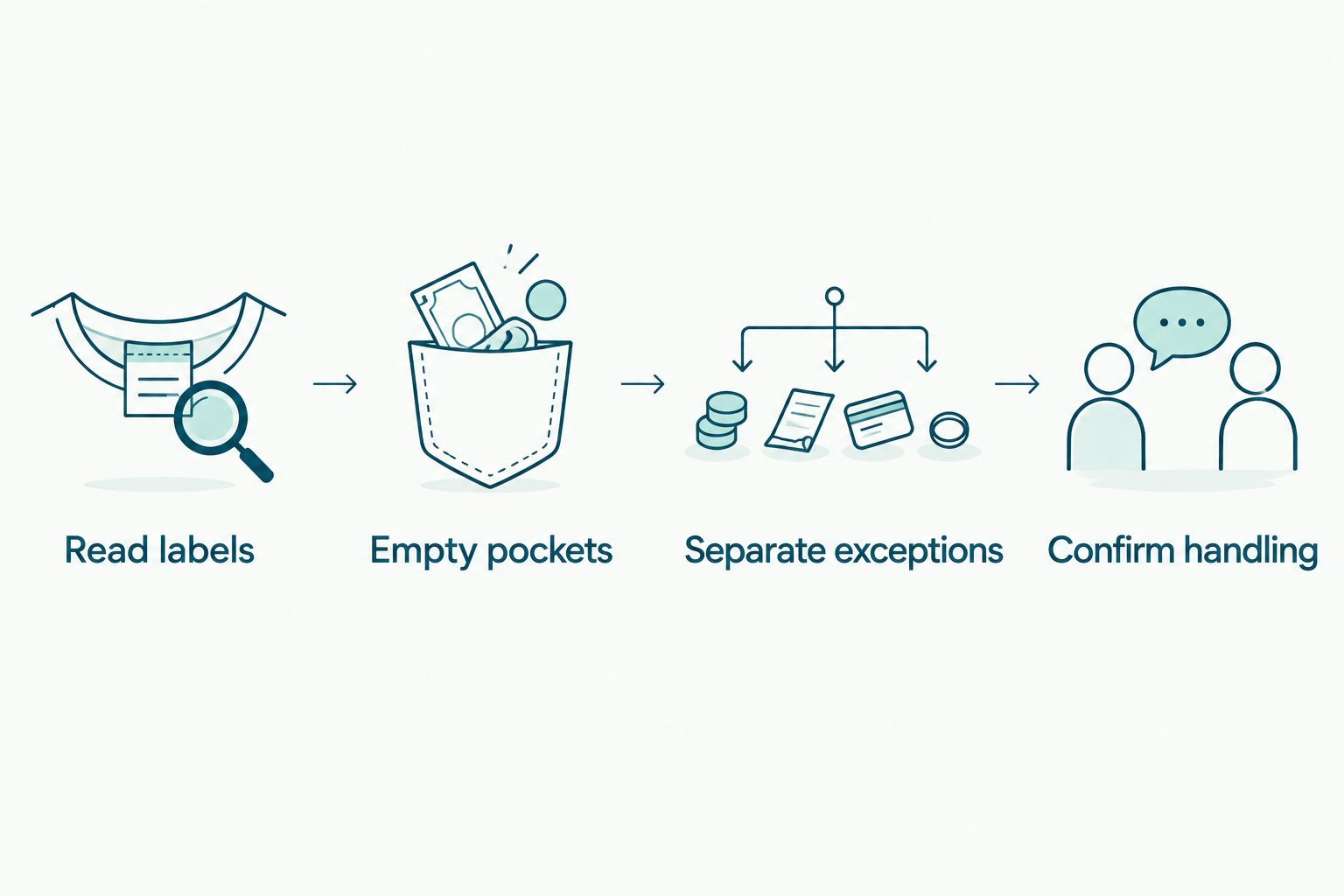
Use 3 checks for anything unusual: the label, the item's condition, and the provider's instructions. If one remains unclear, leave that item out while you ask. The rest of your laundry does not need to wait for a mystery sweater.
Can I send an item with no care label?
A missing care label is a reason to ask, not permission to guess. Describe the material if you know it, plus any lining, embellishment, backing, or filling. A photo can help explain the item, but it does not establish a safe cleaning method by itself.
Keep an unknown item separate until the cleaner has enough information to advise you. This matters especially for structured clothing, vintage textiles, and pieces you cannot replace.
Are ordinary stains a reason to leave clothes out?
An ordinary food stain is not the same as hazardous contamination. Describe a stain you want addressed and disclose any treatment already applied, while recognizing that washing does not guarantee complete stain removal.
Do not use the word stain to downplay gasoline, chemical exposure, sharps, or suspected infestation. The source of the problem matters as much as what the fabric looks like.
Is pickup laundry the right fit for my household or business?
Hampr is best suited to households and businesses seeking laundry pickup, wash, fold, and delivery in select US cities. That service description is a useful starting point, not confirmation that every material or cleaning method is included.
Use Hampr to explore its laundry pickup service, and ask about unusual items before including them. The benefit is handing off routine laundry; the boundary is that special-care and safety questions still need an answer.
For businesses, describe what the textiles are used for and anything they have contacted. Choosing Hampr for laundry pickup should follow the same item-by-item check as choosing any service: match the textile and its condition to the handling offered.
FAQ
What items can't go in a laundry pickup bag?
Keep hazardous materials, sharps, loose batteries, and other non-laundry objects out of a routine pickup bag. Set aside special-care garments, bulky items, and contaminated textiles until the provider confirms appropriate handling.
Can I put dry-clean-only clothes in with regular laundry?
Do not include dry-clean-only clothes in a regular wash-and-fold bag without an explicitly arranged dry-cleaning service. Pickup describes collection, not the cleaning method.
Can a mesh bag make hand-wash-only clothes safe to send?
A mesh bag does not replace hand washing or change a garment's care instructions. Confirm both the washing and drying method before sending the item.
Can I send shoes, rugs, or pet beds through laundry pickup?
Shoes, rugs, and pet beds require item-specific confirmation. Describe the materials, backing or filling, care label, and condition before packing them.
Can I send towels used with gasoline or cleaning solvents?
Do not send gasoline- or solvent-contaminated towels through routine laundry pickup. Follow the substance's safety instructions and applicable disposal guidance instead of treating them as ordinary towels.
Does Hampr accept every machine-washable item?
Do not assume every machine-washable item belongs in a Hampr order. Confirm the exact item and any special washing, drying, size, or contamination concerns before sending it.
What should I do if I discover a questionable item after booking?
Keep the questionable item out of the bag and ask the provider for instructions. Describe the item and its condition clearly rather than leaving the decision to a note inside the load.
One last thing
Check the drying label even when the washing label looks straightforward. A garment can allow machine washing and still require flat drying or another method outside the regular process. That small distinction is an easy thing to miss when you are trying to reclaim your evening.
Make it your 2026 bag-it-and-leave-it rule: routine laundry goes in; unanswered questions stay out until you have a clear answer.