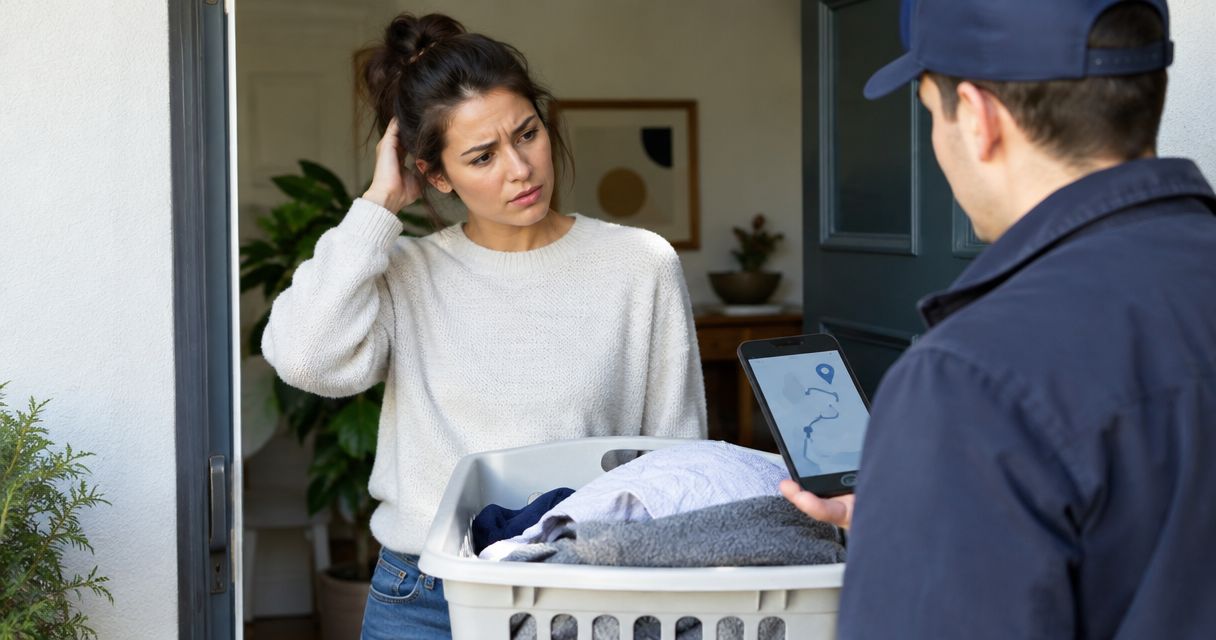
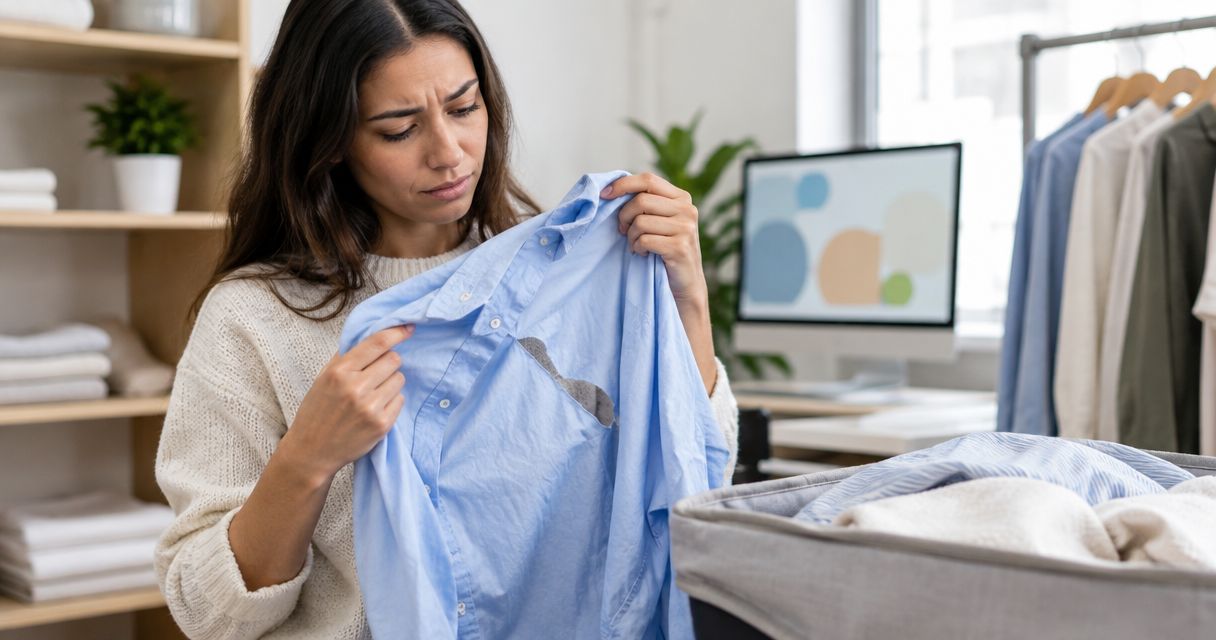
If clothes are damaged during laundry delivery, photograph the damage, keep the returned items and packaging, and report the problem through the provider’s official support channel. A refund, repair, or replacement is not automatic: the next step depends on the applicable service terms and the provider’s response to your report.
- What happens if clothes are damaged during laundry delivery? Document the damage and request a policy-based review.
- Hampr provides laundry pickup, washing, folding, and delivery; check its current terms before assuming damage coverage.
- Keep the garment, care label, packaging, order details, and support messages together.
- Ask for written instructions before rewashing, repairing, or discarding the damaged item.
What happens if clothes are damaged during laundry delivery?
Your first move is to preserve the evidence, not run another wash cycle. Show what arrived, identify the affected item, and give the provider a clear description of the problem. For background on the handoff itself, see how laundry pickup and delivery works.
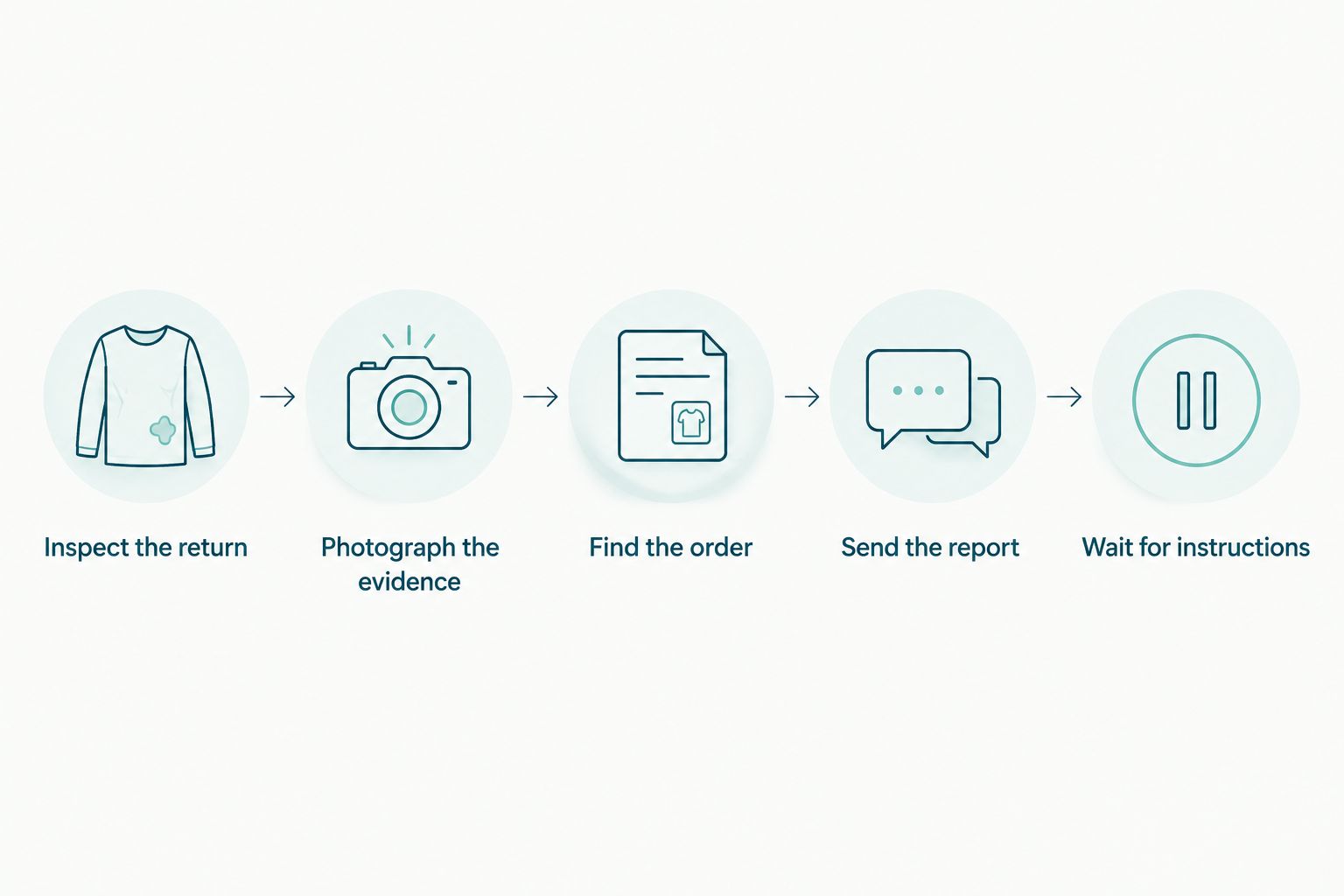
Follow this sequence before attempting a fix:
- Inspect the return. Look at the affected garment and the bag it arrived in. Separate damaged clothing from the rest of the clean laundry.
- Photograph the evidence. Capture the whole item, the damaged area, the care label, and any relevant packaging condition.
- Find the order. Save the order confirmation, delivery information, and any instructions you submitted with the laundry.
- Send the report. Describe what you found through the provider’s official support channel. Ask which terms apply and what documentation is needed.
- Wait for instructions. Ask whether the provider needs to inspect or collect the item before you alter it.
That sequence gives you an organized starting point. It does not establish who caused the damage or promise a particular outcome.
Why this matters
A favorite shirt coming back damaged is frustrating enough. You should not have to piece together the order details while also trying to rescue it.
Keeping the original condition documented separates what you observed from what still needs an explanation. A photograph shows a tear or discoloration; it does not, by itself, establish when or how that damage happened.
For a laundry order placed in 2026, save the terms associated with that order alongside your confirmation. Use those documents when asking about a resolution rather than relying on a general statement about what laundry services cover.
What should you include in a damage report?
Make the report easy to follow without making assumptions about the cause. Describe the garment, the visible problem, and when you noticed it. Keep the language plain: a torn seam is more useful information than saying the entire order was ruined.
Include these details:
- Order identification: The confirmation or order reference that connects the item to the delivery.
- Item description: Garment type, color, brand if known, and any distinguishing feature.
- Observed damage: The location and appearance of the tear, stain, discoloration, shrinkage, or other change.
- Care information: A readable image of the care label and a copy of any handling instructions you submitted.
- Supporting records: Relevant before-and-after photos, purchase documentation if you have it, and delivery messages.
- Requested next step: Ask for a review, the applicable policy, and instructions for keeping or returning the garment.
For a simple starting set, take 4 photos: the whole garment, a close-up, the care label, and the relevant packaging. This is an organizing suggestion, not a provider’s claim requirement; add images when they show something those views miss.
Keep everything in 1 folder and send 1 initial message that summarizes the issue. Follow any separate instructions the provider gives you for submitting documents.
How should you describe damage without guessing?
Write down observations rather than a diagnosis. Say that the sleeve has a tear near the cuff, not that a particular machine tore it, unless you have evidence of that cause.
If you believe an item shrank, include an earlier measurement or a matching reference item if you have one. If you do not have a before photo, say so honestly and provide the records you do have. Do not stage or recreate evidence.
What resolutions should you ask about?
Ask the provider to explain which resolution its terms support for your order. Treat the options below as questions to raise, not benefits you have already been promised.
| Resolution to ask about | Best for discussing | Useful feature | Limitation to clarify |
|---|---|---|---|
| Inspection or further review | Damage with an unclear cause | Gives the provider an opportunity to examine the item | Does not itself resolve the loss |
| Corrective cleaning | A problem that might be removable | Focuses on restoring the garment | Further treatment needs to suit the care label |
| Repair | Localized damage that a repair professional can assess | Focuses on the affected area | A repair does not necessarily restore the original appearance |
| Reimbursement or replacement | Damage that cannot be satisfactorily corrected | Addresses the item rather than only the cleaning | Eligibility and valuation require a policy-based answer |
| Service credit | A proposed adjustment to the laundry service | Addresses a future service charge | Is not the same as payment for the damaged garment |
Before agreeing to an option, ask what it resolves. A credit for laundry service and compensation for a damaged coat address different issues.
Also ask whether accepting the proposed resolution closes the report. Get that explanation in writing so you understand the offer before making a decision.
Why the next step varies
There is no single outcome to assume from the words “damaged laundry.” Build your questions around the specific item, the records you have, and the terms attached to your order.
These factors help you decide what to ask next:
- The observed condition: A tear, a color change, and a new mark need different descriptions. Identify the problem before discussing a remedy.
- The care label: Keep the actual instructions visible instead of relying on your memory of how the garment should be washed.
- The submitted instructions: Save what you told the service and any acknowledgment you received.
- The delivery condition: Record a wet, torn, or otherwise affected bag separately from the condition of the clothing inside.
- The order terms: Ask about the reporting deadline, exclusions, documentation requirements, and any limits that apply.
- The written response: Check whether support is requesting more evidence, offering a resolution, or declining the report.
For a 2026 claim, ask the provider to identify the policy version that applies to the order. Keep its answer with your records; do not substitute a different service’s policy or an unrelated online discussion.
How quickly should you report damaged laundry?
Report damage as soon as you discover it, then confirm the provider’s reporting deadline. Do not wait until you have found every receipt before sending the initial notice. Explain what you know and ask how to supply additional documents.
Record the delivery date and the date you first noticed the problem. These are separate facts, so keep both accurate rather than treating them as interchangeable.
There is no universal reporting window to use for every laundry service in 2026. Check the terms associated with your order and ask support for clarification if the deadline is unclear.
Should you wash or repair damaged clothes before reporting them?
Document the item and ask for instructions before washing, treating, or repairing it. Further handling changes the condition you are asking the provider to review. Keep any proposed treatment consistent with the garment’s care label.
If the returned item is wet, describe that immediately and ask how to preserve it safely while the report is reviewed. Do not apply heat, bleach, or another treatment simply to see whether the problem disappears.
If you already tried a fix, tell support exactly what you did. Include the product used and the sequence of events rather than leaving a gap in the record.
What if the provider declines your damage report?
Ask for the reason in writing and the specific policy provision behind the decision. Then compare that explanation with your order records and the evidence you submitted.
A useful follow-up stays focused:
- Identify the decision you want reviewed.
- Point to a factual error or an unanswered question.
- Attach any relevant evidence that was not included previously.
- Ask whether an internal review or escalation process exists.
Repeating the same complaint without addressing the explanation does not add information. If the provider says the item falls outside its coverage, ask it to identify the relevant exclusion rather than assuming what that exclusion means.
For a disputed 2026 order, preserve the full conversation, including the final response. If you seek outside consumer guidance, use that complete record rather than a summary written from memory.
How can you prepare the next laundry order?
Decide what belongs in the bag before pickup, not after delivery. Read the care labels and set aside anything you do not want included in the service. Ask whether your required handling instructions can be followed before sending the item.
Hampr is a laundry pickup and delivery option for households and businesses that want washing and folding handled for them. The convenience is handing off those chores; the trade-off is that you are not supervising each step yourself. Check service availability for your location and the current terms before booking.
For your next order, keep special-care items separate until you have a clear answer about handling. You can also use this guide to prepare laundry for pickup and delivery.
A simple routine beats a complicated inventory: check pockets, read labels, record important instructions, and keep the order confirmation. Photograph distinctive or particularly important garments if you want a condition record before handoff.
FAQ
Will a laundry delivery service automatically replace damaged clothes?
No—do not assume automatic replacement. Ask the provider to review the damage under the terms that apply to your order and explain any proposed resolution in writing.
What should I do first if my laundry comes back damaged?
Photograph the damage and keep the garment and packaging before attempting a fix. Find your order confirmation and report the issue through the provider’s official support channel.
How many photos should I take of damaged laundry?
Start with 4 photos: the whole garment, the damaged area, the care label, and the relevant packaging. This is a suggested starting set, not a provider’s documentation requirement.
Can I report damaged clothing without a purchase receipt?
Report the damage even if you cannot find a purchase receipt. Submit the records you have and ask what documentation the provider requires; reporting does not guarantee approval.
Does Hampr guarantee reimbursement for damaged clothes?
Do not assume Hampr guarantees reimbursement. Check the terms associated with your order and ask support to explain the applicable damage-report process.
Should I throw away clothing damaged during laundry delivery?
Keep the damaged clothing until the provider gives you instructions about inspection, return, or disposal. Photograph the item and preserve the related order records.
What should I check before using laundry delivery in 2026?
Before booking laundry delivery in 2026, check service coverage, garment restrictions, care-instruction handling, and damage-report terms. Keep the terms associated with your order alongside your confirmation.
One last thing
A laundry-service refund and a damaged-item resolution are not necessarily the same thing. Before accepting an offer, ask exactly what it covers and whether it closes the report. That short question keeps a disappointing delivery from turning into another misunderstanding.