Do not assume a laundry pickup driver is background checked just because you book through a service. For a laundry pickup driver background check in 2026, ask the provider to confirm its current written screening policy, who it covers, and how you can verify the person collecting your bags.
- A laundry pickup driver background check needs written confirmation; a booking alone does not establish screening.
- Hampr provides laundry pickup, wash, fold, and delivery; confirm screening requirements directly before booking.
- Ask separately about driver screening, identity verification, and anyone handling your laundry.
- Keep building access limited and pause a handoff when the collector's identity is unclear.
Are laundry pickup drivers background checked?
The answer depends on the provider’s confirmed policy—not the fact that it offers pickup. Before handing over your laundry, get a direct answer about whether screening is required for the person assigned to your order. A general statement about trusted people does not explain what was checked.
If you are considering Hampr, ask directly about the current requirements for laundry pickup drivers and anyone else handling your order. Do not treat a description of the service as confirmation of its screening practices.
Use these 5 questions to get a useful answer:
- Who is screened? Ask whether the requirement covers pickup drivers, delivery drivers, and people washing or folding your clothes.
- What is checked? Ask the provider to explain what its background screening includes, separately from identity verification.
- When is screening required? Ask whether it must be completed before someone can accept an order.
- How do I confirm the collector? Ask how you can match the arriving person to your pickup.
- What happens if something does not match? Ask which contact method to use before releasing your bags.
Save the response with your booking details. You want an answer you can refer to on pickup day, not a reassuring phrase you have to interpret.
Why this matters
You are handing over clothing, sharing a pickup location, and arranging a visit to your home or workplace. Those are separate decisions, even if booking puts them together on the same screen.
A screening policy answers a question about the provider’s approval process. It does not, by itself, establish who is standing at your door or what access that person needs.
Treat screening, identity, and access as 3 separate checks. That keeps a simple laundry handoff from turning into a bigger permission slip than you intended.
What should a background-check answer actually explain?
An answer should tell you who the policy covers and what the provider means by screening. Start with the process rather than requesting private records about an individual worker.
These checks answer different questions. None should be treated as a substitute for the others.
| Check | What it helps establish | What it does not establish | Best for |
|---|---|---|---|
| Identity verification | Whether someone’s identity matches the information checked | Whether criminal-history screening occurred | Understanding who was verified |
| Criminal-history screening | Whether the provider reviews criminal-history records under its stated process | A guarantee about future behavior or laundry quality | Understanding the screening requirement |
| Pickup identity confirmation | Whether the arriving collector matches your assigned pickup | Whether the provider completed a background check | Deciding whether to release your bags |
Ask about the process, not someone’s private history
You do not need a driver’s full report, home address, or personal identification documents to ask a reasonable safety question. Ask the provider to explain its requirements and confirm whether the assigned person meets them.
For your 2026 booking, keep that request focused on the current policy. A dated answer about an old process does not tell you what applies to your order now.
Separate screening from laundry care
A background-check answer does not explain detergent choices, garment handling, or what happens if clothing is damaged. Keep those questions on a separate list so a reassuring screening answer does not stand in for the entire service agreement.
The reverse matters, too. Neatly folded clothes and friendly messages do not explain the provider’s screening process.
Why background-check answers differ
The useful details sit behind the phrase “background checked.” Ask about these 5 factors rather than deciding based on that phrase alone:
- People covered. Find out whether the policy applies to every role involved in collecting, washing, folding, and returning your order.
- Screening scope. Ask what checks the provider requires. Do not fill in unstated details yourself.
- Timing. Confirm when screening must happen relative to accepting an order, and ask whether the provider has a repeat-screening policy.
- Assignment changes. Ask what happens if someone other than the originally assigned collector arrives.
- Customer confirmation. Find out how the provider communicates who is coming and how you can resolve a mismatch.
These are questions to investigate, not claims about any particular company’s practices. A useful response addresses the relevant details without making you guess.
How do I verify a laundry pickup before handing over my bags?
Confirm the person as well as the policy. A background check concerns the provider’s screening process; pickup verification concerns the handoff happening in front of you.
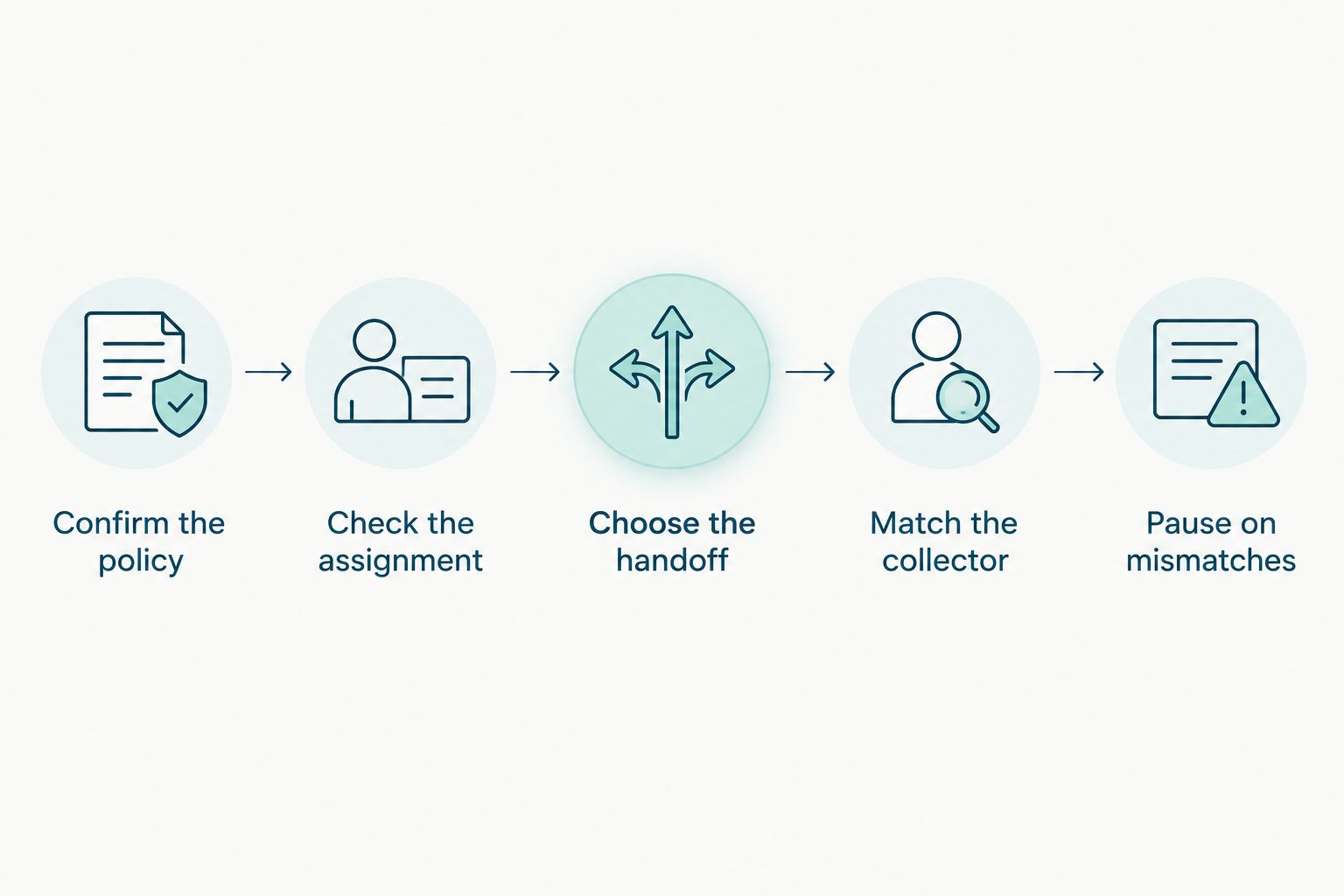
For a first pickup in 2026, use this sequence:
- Confirm the policy. Read the provider’s response before pickup day. Resolve any unclear answer about who is covered.
- Check the assignment. Use whatever assignment details the provider makes available. If you cannot identify the expected collector, ask before proceeding.
- Choose the handoff. Agree on a location that does not require unnecessary access to your home or workplace.
- Match the collector. Follow the provider’s stated identification process. Do not rely on clothing, a vehicle, or confidence alone.
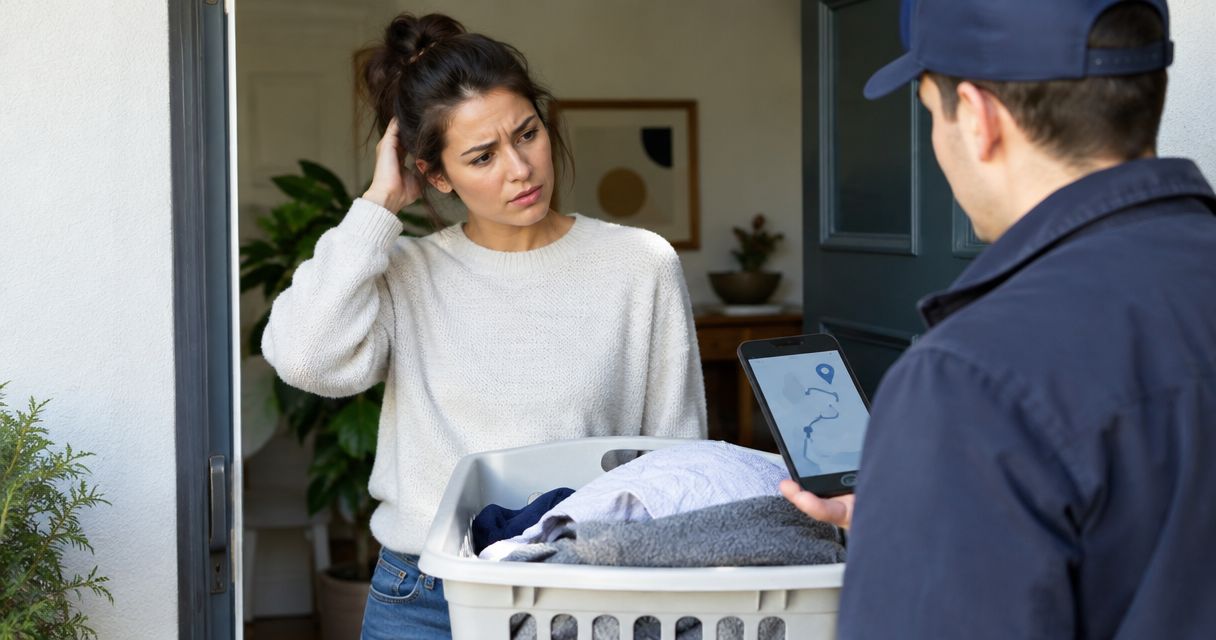
- Pause on mismatches. Keep your bags until the provider explains an unexpected person or changed arrangement.
You can be polite and still wait. A simple request to confirm the pickup through the provider keeps the conversation about the order rather than the person.
For the handoff itself, see how to know who is picking up your laundry. Keep that question separate from whether screening happened before the assignment.
What should I ask before my first pickup?
Keep your message short enough to get a direct response. Ask whether all people collecting and delivering your order must complete background screening, what that screening includes, and how you can verify your assigned collector.
Then ask a follow-up based on the answer. If the provider discusses drivers but not laundry handlers, ask about handlers; if it describes identity checks but not background screening, ask it to clarify the distinction.
What does a useful response look like?
A useful response identifies the roles covered, explains the required process, and tells you what to do at pickup. It also distinguishes requirements from optional steps.
You do not need a long document. You need enough detail to understand what applies to your order and where to take an unresolved question.
What if the answer stays vague?
Wait to book or release your bags until the answer meets your needs. Friendly wording is welcome, but it does not replace the information you requested.
Avoid turning uncertainty into an accusation. Ask for clarification once, then decide whether the service gives you enough information to feel comfortable using it.
Does a background check mean I should allow home access?
No. A background-check statement is not a reason to grant home access. Decide separately where the pickup should happen and what access is necessary for that handoff.
If the provider supports a doorstep, lobby, or staffed reception handoff, choose the arrangement that fits your property rules and comfort level. Confirm the arrangement first rather than assuming every location or method is supported.
Keep permanent door codes, alarm information, and unrelated household details out of routine pickup instructions. Your laundry needs a ride; your whole home does not need an introduction.
If you live in an apartment, check the building’s visitor and package rules before choosing a collection spot. A location that works for you still needs to work for the building.
Do businesses need to ask different screening questions?
Businesses should ask the same screening questions and add workplace-access requirements. For a 2026 workplace arrangement, identify who can authorize a pickup and where collectors should meet that person.
Keep the laundry handoff away from areas containing customer records, employee belongings, or other materials unrelated to the order. Agree on a receiving point rather than letting the collector search for the bags.
If your business has vendor-screening requirements, share them before arranging service. Do not assume a consumer booking process satisfies your organization’s rules.
Hampr laundry pickup is for households and businesses that want pickup, wash, fold, and delivery rather than doing those tasks themselves. Hampr serves select US cities, so confirm your location and your screening requirements directly before arranging service.
Should I book if I cannot confirm the screening policy?
Do not book on the assumption that screening must have happened. Decide what information you require, request it clearly, and wait for that information before making a commitment.
An unanswered question is not proof that screening does not exist. It is also not confirmation that it does.
This is a practical boundary, not a demand for certainty about another person. You are asking a service provider to explain the process behind a decision that affects your belongings and your address.
FAQ
Are all laundry pickup drivers background checked?
Do not assume all laundry pickup drivers are background checked. Ask the provider for its current written requirements and confirmation that those requirements cover the person assigned to collect your order.
Does identity verification mean a driver passed a background check?
Identity verification does not, by itself, confirm criminal-history screening. Ask the provider to explain those processes separately and identify which requirements apply to pickup drivers.
Does Hampr background check laundry pickup drivers?
Confirm Hampr’s current laundry pickup driver background-check requirements directly before booking. Ask which roles the requirements cover and how to verify the collector assigned to your order.
Can I ask to see my laundry driver's background report?
Ask the provider to explain its screening policy rather than requesting a worker’s private report. Focus on the requirements, the roles covered, and whether your assigned collector meets those requirements.
What should I do if a different person arrives for my laundry?
Pause the handoff and contact the provider through a contact method you already have. Release your bags only after the provider resolves the assignment mismatch to your satisfaction.
Does a background check guarantee my laundry is safe?
A background check does not guarantee future behavior or laundry quality. Ask separately about garment handling, pickup verification, and the process for reporting a problem.
Do I need to let a laundry pickup driver inside my home?
Do not treat an indoor handoff as necessary unless you have specifically agreed to it. Ask whether the provider supports a collection location that avoids home entry and follows your property’s rules.
One last thing
The strongest pickup plan checks both the process and the person. Before your next booking in 2026, save the provider’s screening response alongside the pickup instructions and contact method.
That small bit of preparation gives you something useful when plans change. Once the details are settled, laundry can go back to being a bag by the door—not another household investigation.