To prepare your laundry for pickup and delivery, empty pockets, check care labels, set aside anything that needs special treatment, and pack the accepted items in the bag your service requires. Keep laundry dry, close the bag securely, and add clear care and pickup instructions through your provider’s booking process. Before the handoff, confirm the pickup location and access details—bagging your clothes does not replace checking what your service accepts.
- How to prepare laundry for pickup and delivery: check pockets, read care labels, pack dry clothes, and confirm access.
- Hampr provides laundry pickup, washing, folding, and delivery for households and businesses in select US cities.
- Keep dry-clean-only garments and other special-care items out of routine wash-and-fold unless your provider confirms acceptance.
- Use your provider’s bagging instructions; do not assume every laundry service accepts the same containers or items.
For Hampr, check the current service instructions before packing. The checklist below explains the preparation you control without assuming a particular bag type, detergent option, or delivery schedule.
How do I prepare my laundry for pickup and delivery?
Your job is to make the load safe to handle and your instructions easy to follow—not to do the laundry before someone collects it. Use this sequence for your 2026 pickup routine.
1. Check the service instructions
Read your booking confirmation before reaching for a bag. Check the accepted items, required container, pickup location, and method for submitting care requests.
Do not assume that accepting clothing means accepting everything in your linen closet. Bulky bedding, rugs, shoes, and special-care garments need their own acceptance check. Keep anything uncertain out of the load until you have an answer.
Also distinguish between a request and a confirmed service. Writing a preference in a note does not establish that the provider offers it.
2. Empty every pocket
Check pants, jackets, hoodies, pajamas, and anything with a small inside pocket. Remove tissues, receipts, coins, keys, pens, earbuds, and other loose objects.
Turn pockets out where practical so you can see what is inside. A quick pat on the outside is easy to rush, especially when a pocket holds something flat.
Look through the hamper for non-laundry items, too. Toys, packaging, and loose accessories do not belong in a wash-and-fold bag. This is also a good moment to rescue the thing you have been blaming the couch for hiding.
3. Read care labels
Check garment labels before including unfamiliar clothing, new purchases, or anything you usually wash separately. Follow the care instructions rather than guessing from how sturdy the fabric feels.
Set aside dry-clean-only pieces and items whose instructions do not match the booked service. Hand-wash instructions, drying restrictions, and decorative details deserve a separate check with the provider.
A note cannot make an unsuitable washing method safe for a garment. If the service cannot follow the label, keep that item out and arrange appropriate care elsewhere.
4. Check for stains and damp items
Identify visible stains before packing. Tell the provider where the stain is and what caused it, if you know; a specific description is more useful than asking for extra attention to the whole bag.
Do not mix stain-removal chemicals or apply a new treatment just because pickup is approaching. Follow the garment label and any product directions, and disclose treatments you have already used.
Let damp towels and sweaty clothing dry before placing them in a closed bag. Do not seal wet items away while waiting for collection. Items contaminated with bodily fluids, chemicals, or other hazardous materials require explicit handling guidance rather than a routine laundry booking.
5. Pack, close, and confirm
Use the bag or container specified by your provider. Pack it so the closure works as intended; do not force an overfilled bag shut or leave clothing hanging out.
Submit care requests through the provider’s stated communication method. Then confirm the pickup address, apartment or suite, access instructions, and designated handoff spot.
Place the bag out according to the confirmed instructions, not simply wherever it is easiest to drop. Keep it protected from rain, sprinklers, pets, and foot traffic while it waits.
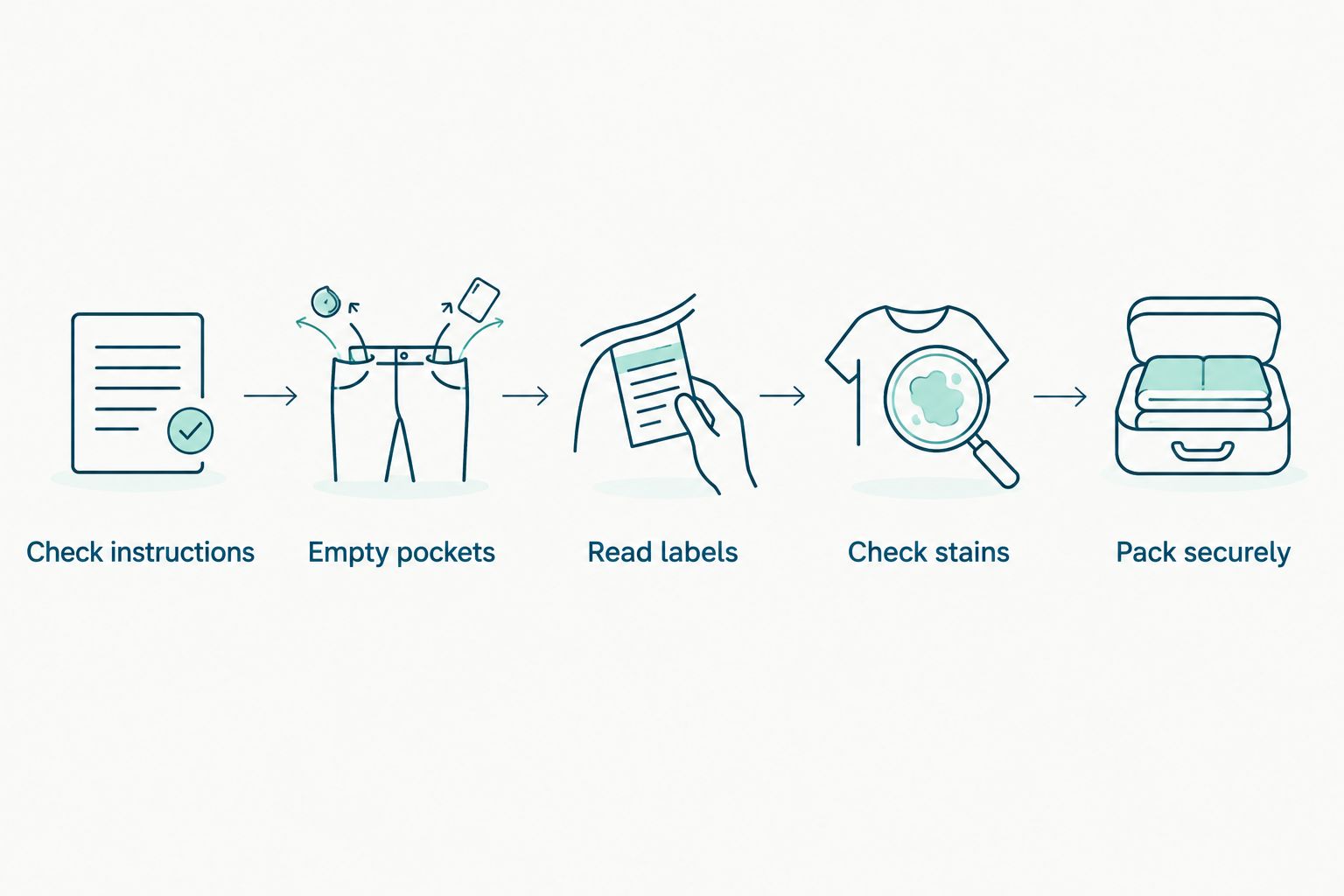
The sequence matters: deciding what belongs in the load comes before bagging it. Otherwise, you end up reopening everything to find a garment that should never have gone in.
Why this matters
Laundry pickup removes washing and folding from your list, but preparation still belongs to you. Clear boundaries protect special-care items, while clear access instructions help make the handoff straightforward.
For your 2026 routine, focus on repeatable checks rather than elaborate sorting rituals. Keep the same preparation order each time, and review the booking whenever you change services or send a different type of load.
If you are arranging your first collection, this guide to how laundry pickup and delivery works explains the overall process. Preparation is the part to finish before the pickup begins.
Everyday clothing: best for routine wash-and-fold
Everyday machine-washable clothing is the starting point for a routine load, provided the service accepts it and can follow its care labels. Check shirts, socks, underwear, and similar items for pocket contents and specific washing restrictions.
The benefit is a simpler handoff: suitable items can go through the booked wash-and-fold process. The limitation is that everyday use does not mean identical care—an ordinary-looking sweater can still require special treatment.
Do not make assumptions based on color alone. A garment’s label and the provider’s instructions matter more than whether it looks like the rest of the pile.
Special-care clothing: best kept separate until confirmed
Keep garments with hand-wash instructions, dry-clean-only labels, or particular drying requirements separate while you confirm handling. The same applies when you are unsure about trim, embellishments, or delicate construction.
Separating these pieces prevents them from disappearing into the routine load. The trade-off is that you need to arrange the right care rather than expecting a standard booking to cover everything.
Use this comparison when deciding what goes in the bag:
| Laundry group | Best for | Preparation | Benefit | Limitation |
|---|---|---|---|---|
| Routine washable clothing | A confirmed wash-and-fold load | Empty pockets and check labels | Keeps everyday laundry together | Individual care restrictions still apply |
| Special-care garments | Separate handling after confirmation | Set aside and ask about the required method | Makes care needs visible | Not automatically covered by routine service |
| Towels and bedding | A load confirmed to accept those items | Check labels, acceptance, and bagging rules | Keeps household laundry organized | Bulky items need a separate acceptance check |
Match the item to the confirmed service, not the service to a full hamper. Leaving an unsuitable garment out is better than hoping a note solves the mismatch.
Why laundry preparation varies
The basic pocket-and-label check stays the same. These details change how you prepare a particular pickup:
- Garment care requirements. A load of washable cotton clothing needs a different acceptance check from garments labelled for hand washing or dry cleaning.
- The booked service. Wash-and-fold, special garment care, and bulky-item handling are not interchangeable. Confirm what your booking actually covers.
- Bagging instructions. Follow the provider’s container and closure requirements rather than choosing a bag based only on convenience.
- Pickup access. A house entrance, apartment building, and staffed business each need instructions that identify the correct handoff point.
- Item condition. Dampness, visible stains, and contamination call for different preparation decisions. Ordinary laundry instructions do not replace hazardous-material handling guidance.
- Requested care preferences. Detergent and drying requests need confirmation. Record accepted preferences through the provider’s stated process.
Treat a changed load as a reason to check again. Instructions that worked for your clothing do not automatically settle how to send a comforter or a delicate dress.
What should I put in my pickup instructions?
Write instructions that identify the location, the item, or the action. Long explanations are less useful than details someone can follow at the door or while handling the load.
For access, include the entrance and handoff point requested by the service. If your building has a concierge or package room, confirm that laundry collection is permitted there before naming it as the pickup spot.
For garment care, describe the relevant item clearly. Identify the color, garment type, and stain location where needed, then state the confirmed care request. Do not rely on an unexplained sticky note tucked somewhere inside the bag.
Keep sensitive access information in the provider’s designated communication channel. Avoid displaying door codes or personal details on a bag left in a shared space.
Keep pickup and delivery instructions distinct
The place that works for collection is not automatically the right place for returning clean laundry. Check both parts of the booking, especially if the building has different rules for outgoing items and incoming deliveries.
For a 2026 household checklist, save stable details such as the correct entrance, but review anything temporary before each booking. A blocked doorway or changed access arrangement needs an updated instruction, not an assumption that someone will work it out.
What should I check just before pickup?
Do a final pass without unpacking the whole bag. You are checking that the preparation is complete, not starting the laundry project again.
- Contents: Only accepted items are inside; special-care pieces are accounted for.
- Condition: No wet clothing is sealed in the bag, and known stains have been described.
- Closure: The container closes properly without clothing trapped in the opening.
- Instructions: Care requests and access details are submitted through the stated method.
- Location: The bag is at the confirmed handoff point and protected from weather.
- Return plan: Delivery instructions identify where the clean laundry should go.
Hampr is best for households and businesses seeking pickup, washing, folding, and delivery in its service cities. You still need to check current instructions for your location; that service description does not establish special-care acceptance or a particular handoff arrangement.
Do I need to sort laundry before pickup?
You need to separate items that do not belong in the booked service; detailed color sorting depends on your provider’s instructions. Do not assume you must prepare separate color bags, and do not assume every garment can travel together.
Start with care labels and acceptance rules. If the provider asks for additional sorting, follow that process before closing the bag.
Should I wash or pretreat clothes before pickup?
You do not need to wash ordinary dirty laundry before sending it to a wash-and-fold service. Check pockets, identify stains, and follow any preparation instructions instead.
Pretreatment is a separate decision. Avoid experimenting with a new chemical treatment before collection, and tell the provider about anything you have already applied.
Can I leave my laundry outside for pickup?
You can leave laundry outside only when that handoff arrangement is confirmed with your provider. Choose the agreed spot and protect the bag from weather, animals, and passersby.
For apartments, do not treat an accessible hallway as automatic permission. Building rules and the provider’s pickup process both need to support the arrangement.
FAQ
What's the easiest way to prepare laundry for pickup and delivery?
Empty pockets, check care labels, set aside unsuitable items, and pack dry laundry according to your provider’s instructions. Confirm the handoff location and submit any care requests before pickup.
Do I need a special bag for laundry pickup?
Use the bag or container your provider requires. Do not assume a household hamper, disposable bag, or reusable tote is accepted without checking the current instructions.
Can I send towels and clothes in the same laundry bag?
Follow your provider’s sorting and acceptance instructions for towels and clothing. Check each item’s care label rather than assuming everything in the bag needs the same treatment.
Should I include dry-clean-only clothes with wash-and-fold laundry?
Keep dry-clean-only clothes out of routine wash-and-fold unless the provider explicitly confirms an appropriate service for them. A care note alone does not change the washing method a garment requires.
What should I do with wet towels before pickup?
Let damp towels dry before sealing them in a laundry bag. If items need special handling because of contamination, ask the provider for explicit guidance before including them.
Do I need to be home when my laundry is collected?
Whether you need to be home depends on the provider’s confirmed handoff process and access requirements. Arrange the pickup location in advance rather than assuming unattended collection is permitted.
How do I prepare a Hampr laundry pickup?
Check Hampr’s current booking instructions, then empty pockets, review care labels, and pack accepted dry items in the required container. Confirm your pickup location and submit care requests through the stated process.
One last thing
Make a small keep-out pile before you make the pickup bag. Put special-care garments, pocket contents, and anything you need before the laundry returns somewhere separate from the hamper.
That is a useful habit to add to your 2026 laundry routine. It gives the items that should stay home a clear destination—and keeps an enthusiastic last-minute tidy-up from sending them straight back into the bag.