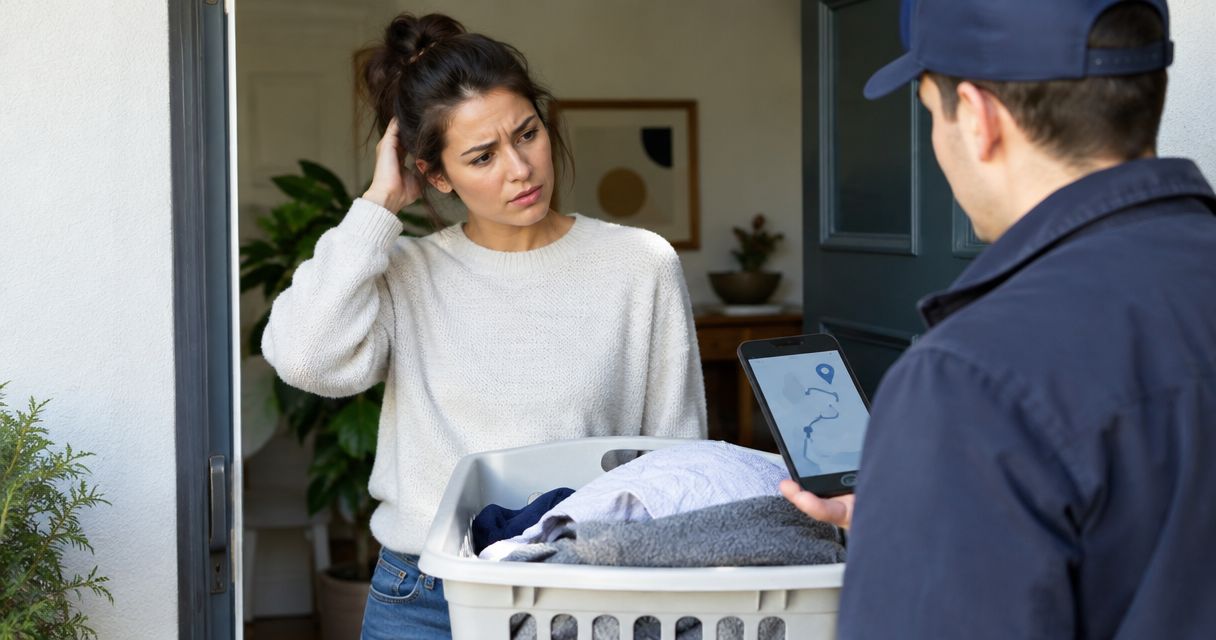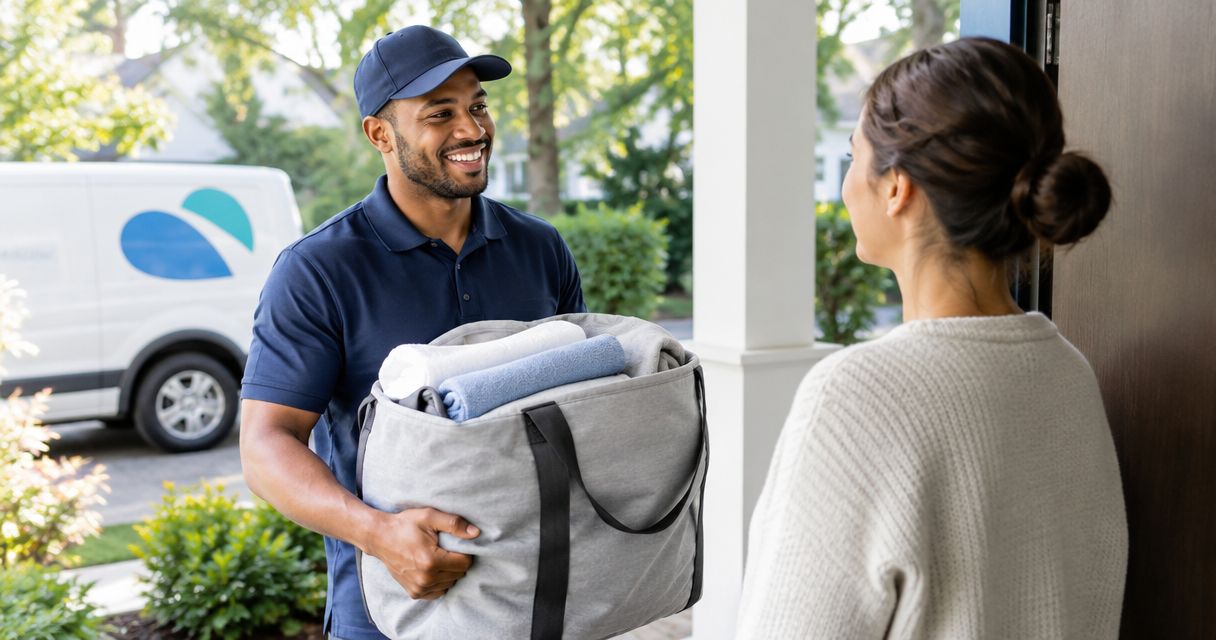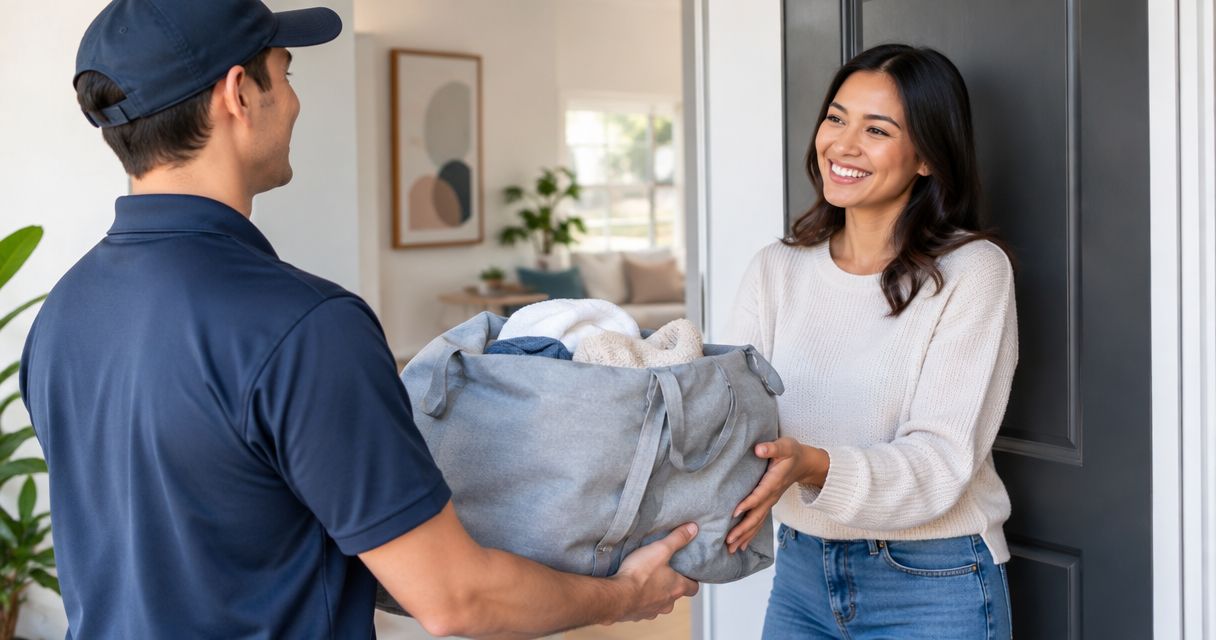
Laundry delivery can handle delicate items only when the provider explicitly accepts them and can follow every care-label instruction, including drying. Hand-wash-only clothing needs confirmed hand washing—not just a machine’s delicate cycle—and dry-clean-only pieces belong outside a standard wash-and-fold order unless the provider confirms a separate, suitable service.
- Can laundry delivery handle delicate items? Yes, when the provider confirms care-label requirements before pickup.
- Hand-wash-only clothing needs confirmed hand washing; a delicate machine cycle is not the same process.
- Hampr provides laundry pickup, washing, folding, and delivery; confirm delicate-item handling before including those garments.
- A mesh bag reduces snagging risk but does not override washing or drying instructions.
Can laundry delivery handle delicate or hand-wash items?
Yes, but the deciding factor is the treatment your garment needs—not whether someone can collect it from your doorstep. Pickup and delivery describe transportation. They do not establish whether the cleaning includes hand washing, flat drying, or another special instruction.
For your 2026 laundry routine, use the care label as the starting point and get the provider’s agreement before packing. If you use Hampr, confirm the handling required for your particular garment rather than assuming it comes with a wash-and-fold order.
| Item or care requirement | Best for | What to confirm before pickup | Main limitation |
|---|---|---|---|
| Machine-washable delicates | Garments whose labels permit machine washing | Suitable cycle, wash temperature, and drying method | A gentle wash does not make tumble drying appropriate |
| Hand-wash-only items | Clothing specifically labeled for hand washing | Actual hand washing and the required drying method | A machine’s delicate cycle is not a substitute |
| Dry-clean-only items | Garments whose labels require dry cleaning | Acceptance through an appropriate cleaning service | Standard wash-and-fold is not dry cleaning |
| Care at home | Items you can clean according to their labels | Your ability to wash and dry the garment correctly | You keep the work and responsibility |
Keep the garment out of the bag until its care instructions and the provider’s process match. That is a simpler rule than trying to decide whether something merely looks delicate.
Why this matters
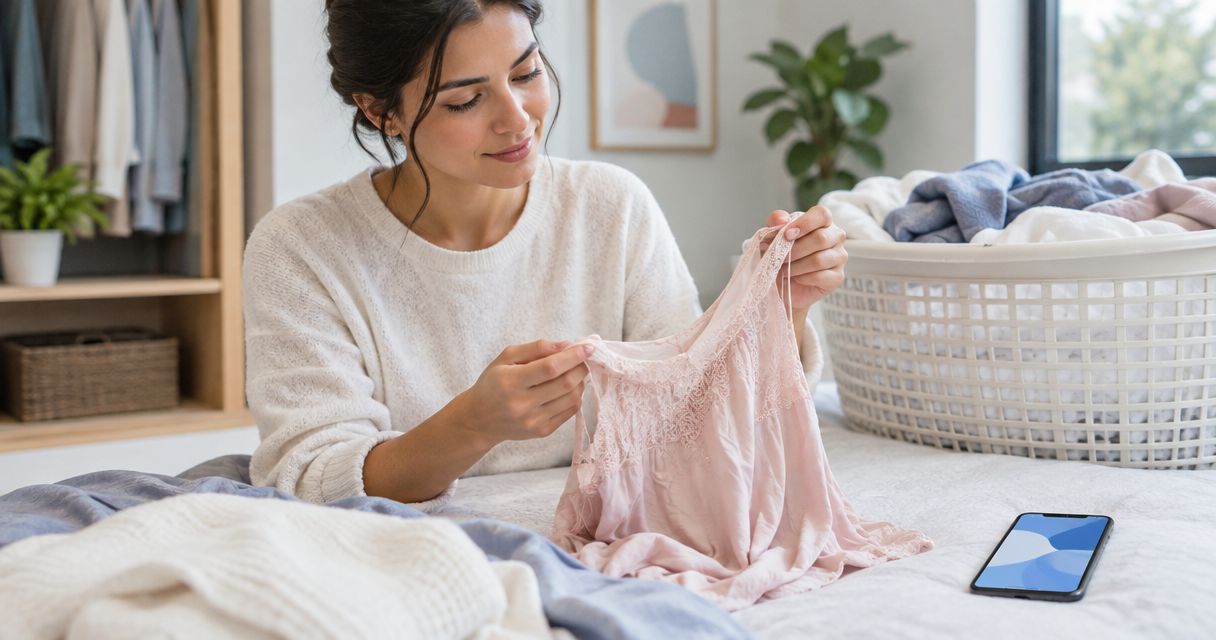
A blouse can tolerate washing but not tumble drying. A knit can need support while drying to retain its shape. Lace, hooks, and decorative details introduce handling concerns that a fabric name alone does not explain.
The useful question is not simply whether a service takes silk, wool, or lingerie. Ask whether it can follow the instructions on your specific item. Two garments made from the same fiber can have different construction, finishes, and care requirements.
Treat your 2026 pickup bag as a collection of compatible garments, not a place to hide every item you have been avoiding. The sweater with special instructions deserves its own decision.
Machine-washable delicates: confirm washing and drying
Machine-washable does not mean suitable for every wash-and-fold process. Read the entire label, including any temperature, cycle, bleach, and drying restrictions. Then compare those instructions with what the provider actually agrees to do.
Best for: Delicate garments whose labels allow machine washing and whose complete care requirements the provider accepts.
The benefit is straightforward: you can hand off an eligible garment without doing the washing yourself. The limitation is equally important: acceptance of a gentle wash does not establish acceptance of line drying, flat drying, or another finishing step.
Ask about washing and drying separately. A response about cold water leaves the drying question unanswered. Likewise, agreement to avoid the dryer does not explain how the garment will be washed.
If the label allows machine washing but the item has loose trim, damaged seams, or exposed hooks, point those out before pickup. Do not assume a delicate setting addresses a garment’s existing damage.
Hand-wash-only items: ask for actual hand washing
A machine’s hand-wash or delicate setting is still a machine process. If the garment says hand wash, ask whether the provider will wash it by hand. A vague promise to be gentle does not answer that question.
Best for: Hand-wash-only garments accepted by a provider that confirms both hand washing and label-compatible drying.
The advantage of a suitable service is avoiding a hands-on chore. The drawback is that a standard wash-and-fold offering does not, by itself, establish that this work is included. Confirm it before the garment leaves your home.
Ask about any instruction against wringing and whether the garment must dry flat. Washing is only part of the job; twisting or hanging a wet item against its care instructions can undermine an otherwise careful wash.
For a 2026 hand-wash pickup request, be literal: identify the garment, transcribe its instructions, and ask whether each instruction can be followed. If the answer is incomplete, keep the item home or choose an appropriate specialist.
Dry-clean-only items: choose a different cleaning route
Dry-clean-only clothing is not a more delicate version of ordinary wash-and-fold. It calls for a different cleaning method. Do not put it into a water-wash order on the assumption that a gentler cycle solves the problem.
Best for: Garments whose labels require dry cleaning and that are accepted by an appropriate cleaner.
The benefit is matching the cleaning method to the label. The limitation is that laundry pickup alone does not establish access to dry cleaning, even when both services involve someone collecting a bag.
Check the exact wording. A label that says dry clean only gives a different instruction from a label that permits washing. When a label is missing or unreadable, ask a garment-care professional rather than inventing a safe setting.
Keep dry-clean-only pieces separate from the wash-and-fold pile. Physical separation prevents a familiar household mix-up: the special-care item disappearing into a bag of socks.
Why delicate-item handling varies
Delicate-item handling depends on more than softness or how much you like the garment. These are the factors to discuss with the provider:
- Care-label instructions: Required washing and drying methods set the boundaries for acceptable treatment.
- Garment construction: Linings, interfacing, pleats, and combined materials can need different handling from a simple unlined item.
- Trims and fasteners: Lace, hooks, beads, and loose decorations create snagging or damage concerns.
- Drying requirements: Flat drying, line drying, and tumble drying are different processes, not interchangeable finishing preferences.
- Garment condition: Existing tears, loose seams, or weakened fabric need attention before cleaning.
- Provider acceptance: A service must agree to the required treatment; an order note alone does not establish acceptance.
You do not need to become a textile expert. You need a readable label, a clear request, and an answer that covers the whole process.
How do I prepare delicate items for laundry pickup?
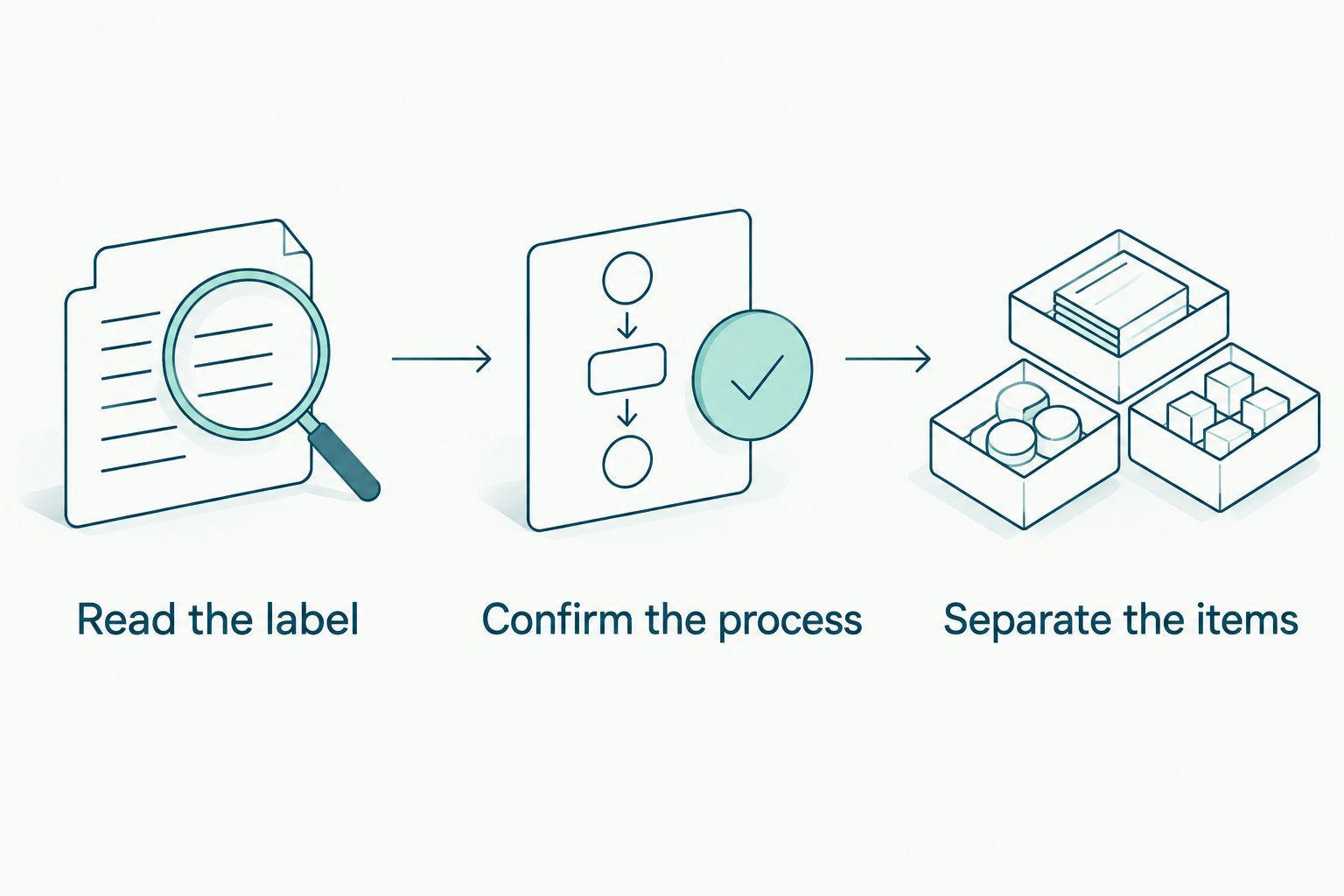
Use 3 checks before pickup: read, confirm, separate. Make this your 2026 packing routine so special-care clothing does not get swept into the everyday laundry pile.
- Read the label. Check washing, drying, and any restrictions together. Photograph the label for your own reference, especially when its wording is small or difficult to read.
- Confirm the process. Identify the garment and ask whether the provider accepts every required instruction. Use the provider’s stated communication method; do not assume a loose note will reach the person doing the washing.
- Separate the items. Keep accepted special-care garments identifiable according to the provider’s instructions. Leave unapproved pieces out of the order altogether.
Separation helps communicate your request, but it is not permission to send an unsupported item. A second bag marked delicate still needs an agreed process behind it.
For the rest of your order, follow the provider’s packing instructions rather than applying special-care rules to everything. This guide to preparing laundry for pickup and delivery covers the broader handoff.
What should I ask before sending hand-wash clothing?
Ask about 2 stages: washing and drying. Both need a clear answer before a hand-wash-only garment goes into the pickup bag.
A useful request identifies the item and its actual instructions. For example, describe a cardigan labeled hand wash and dry flat, then ask whether the service accepts that treatment. This is an example of a request—not a statement about any provider’s policy.
Use this short checklist:
- Will you hand wash this item rather than use a machine cycle?
- Can you follow the drying instruction on its label?
- How should I identify and separate it if you accept it?
- What happens if you find that you cannot follow its instructions?
Save the response with your order information. If the answer covers washing but skips drying, ask again rather than filling in the blank yourself. Clear instructions help; confirmed instructions help more.
Does a mesh bag make delicate laundry safe to send?
A mesh bag is a handling aid, not a care-label exception. It can help contain small items and reduce contact with other garments, but water, detergent, and the effects of the selected wash process still reach the contents.
The benefit is containment. The limitation is that a bag does not turn a machine wash into hand washing, prevent every kind of damage, or make dryer heat appropriate for a no-tumble-dry item.
Use a mesh bag only as part of an accepted care process. Ask whether the provider wants special-care items packed that way before sending them. Do not rely on the bag’s appearance to communicate washing or drying instructions.
Where Hampr fits in a delicate-laundry routine
Hampr is best for households and businesses seeking wash-and-fold pickup and delivery in the US cities it serves. That describes the service—not a promise that every special-care garment is eligible.
For your 2026 laundry routine, separate the decision to outsource ordinary laundry from the decision to send a delicate item. You can want help with the overflowing hamper and still keep an unconfirmed hand-wash piece out of the order.
The benefit is handing off pickup, washing, folding, and delivery for accepted laundry. The limit is that the service description alone does not confirm hand washing, flat drying, dry cleaning, or garment-specific exceptions.
FAQ
Can laundry delivery handle delicate items safely?
Laundry delivery can handle delicate items when the provider accepts them and confirms it can follow their care labels. Verify washing and drying separately before pickup.
Can I send hand-wash-only clothes with wash-and-fold laundry?
Send hand-wash-only clothes only when the provider confirms actual hand washing and the required drying method. A standard wash-and-fold description does not establish that those steps are included.
Is a delicate machine cycle the same as hand washing?
A delicate machine cycle is not the same as hand washing. For a hand-wash-only garment, ask whether the provider will wash it by hand rather than selecting a gentler machine setting.
Does Hampr hand wash delicate clothing?
Confirm hand-washing acceptance directly with Hampr before including a hand-wash-only garment. Its pickup, wash, fold, and delivery service description does not establish garment-specific hand-washing or drying options.
Can I put silk or wool in a laundry pickup bag?
Include silk or wool only when the garment’s care instructions match a process the provider accepts. The fiber name alone does not establish a suitable cleaning method.
Will a mesh laundry bag protect my delicates in the dryer?
A mesh laundry bag does not make tumble drying suitable for a garment whose label forbids it. Confirm the drying method separately from any bagging instructions.
What should I do if the service does not answer my special-care request?
Keep the garment out of the pickup order until the provider confirms the required treatment. Use care at home or an appropriate specialist instead of treating silence as approval.
One last thing
The drying instruction can be the deciding factor, even when the washing instruction looks easy. Before your next pickup, check the line below the wash directions. If it calls for flat drying or prohibits tumble drying, that is a required part of the conversation—not a detail to mention after collection.
Bag the accepted laundry and leave the uncertainty out. Your special sweater does not need to audition for the regular load.