Best overall: zippered mesh laundry bags with a tight, fine weave and a zipper that stays shut through a full spin cycle. Best for skipping delicates sorting altogether: Hampr's wash and fold delivery, which picks up the load and hands it back clean and folded. Best for high-volume households: a multi-pack of drawstring mesh bags that covers several loads at once. Here's how the rest of the field stacks up for 2026.
- Zippered mesh laundry bags win overall for everyday delicates like bras, tights, and fine knits in 2026.
- Hampr's wash and fold delivery is the best pick for anyone who wants to skip sorting and bagging entirely.
- Bra-specific rigid-frame bags protect underwire better than standard mesh, but take up more drum space.
- Drawstring multi-packs cost less per bag but the closure can loosen mid-cycle.
- Bag size matters as much as mesh quality: a 12 x 16 inch bag suits underwear, a 24 x 36 inch bag suits a comforter.
Why this matters
Delicates lose their shape fast in a washing machine, not because of the detergent, but because of what they get tangled with. A bra hooked on a zipper, a silk blouse pinned under a wet towel, a pair of tights wound around an agitator arm — that's how most delicates actually die.
A mesh laundry bag is a $5 fix for a $50 problem, but only if you pick the right type for what's inside it. And if you'd rather not think about any of this, Hampr's wash and fold delivery handles sorting, washing, and folding for you, delicates included, without a single bag to buy or wash yourself.
What makes the best mesh laundry bag
- Weave density — tight enough to stop an earring or a bra clasp from slipping through
- Closure type — a zipper holds through a full cycle; a drawstring can work itself loose
- Seam strength — reinforced double-stitched seams survive repeated tumbling without splitting
- Size match — a bag sized for underwear is the wrong bag for a comforter
- Machine and dryer safety — polyester and nylon mesh tolerate both wash and dry cycles; check the care label before assuming
- Corner or frame reinforcement — rigid-edge bags protect underwire and structured pieces from crushing
Best mesh laundry bags at a glance
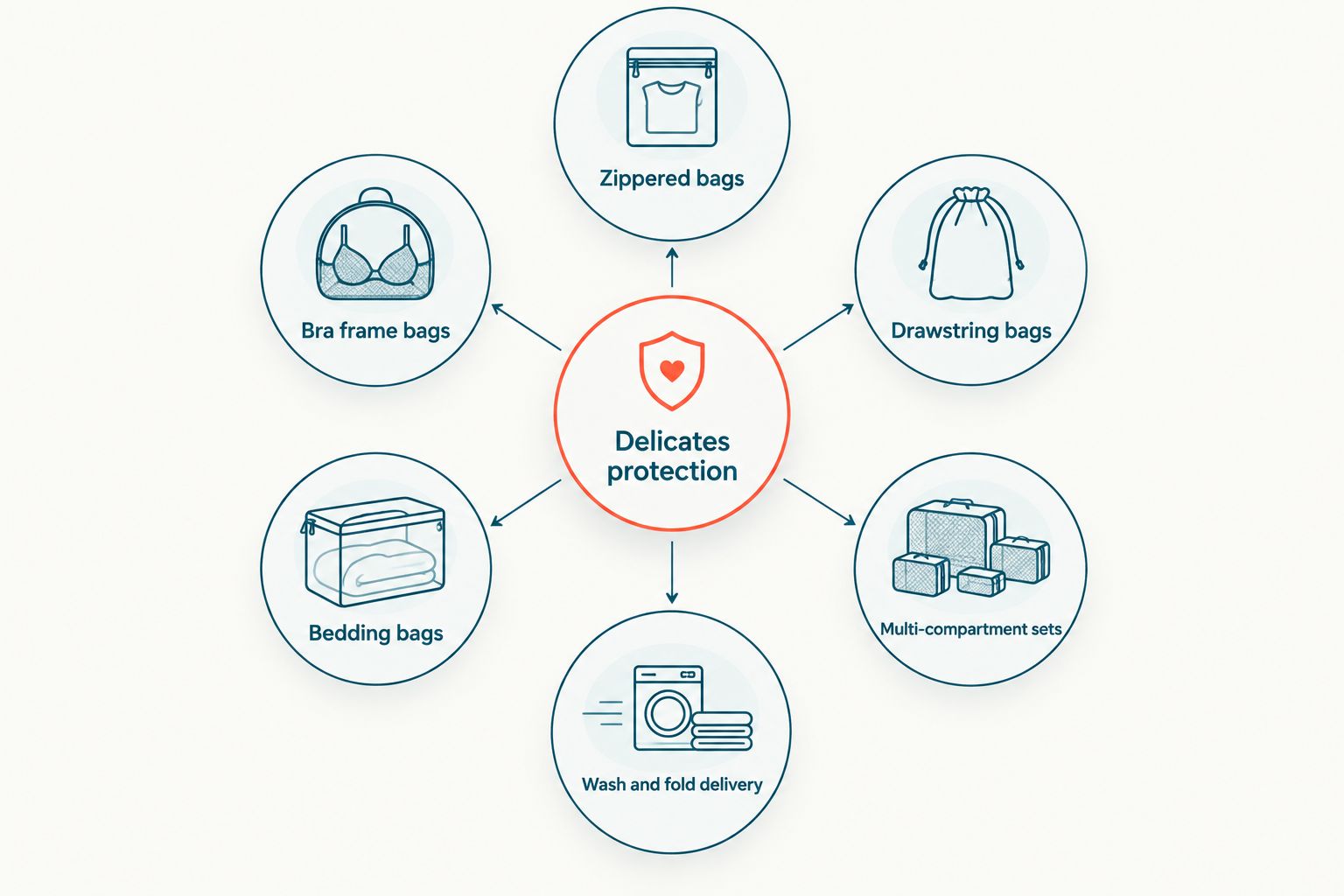
| Item | Best for | Standout feature | Key limitation |
|---|---|---|---|
| Hampr wash and fold delivery | Skipping delicates sorting entirely | Pickup and delivery handle the whole load | Only runs in Hampr's service cities |
| Zippered mesh laundry bags | Everyday delicates (bras, tights, knits) | Zipper stays shut through a full cycle | Fine mesh traps lint if overstuffed |
| Bra-specific rigid-frame bags | Underwire protection | Rigid frame keeps cup shape intact | Bulkier, takes more drum space |
| Drawstring mesh bags (multi-pack) | High-volume households | Simple design covers several loads at once | Drawstring can loosen mid-cycle |
| Large mesh bags for bedding | Bulky items like comforters and pillows | Oversized panel fits duvet-sized loads | Too big for small delicates, items shift inside |
| Multi-compartment mesh bag sets | Sorting colors or fabrics in one wash | Separate zip sections in a single bag | Each compartment holds fewer items |
1. Hampr wash and fold delivery: best for skipping the mesh bag routine entirely
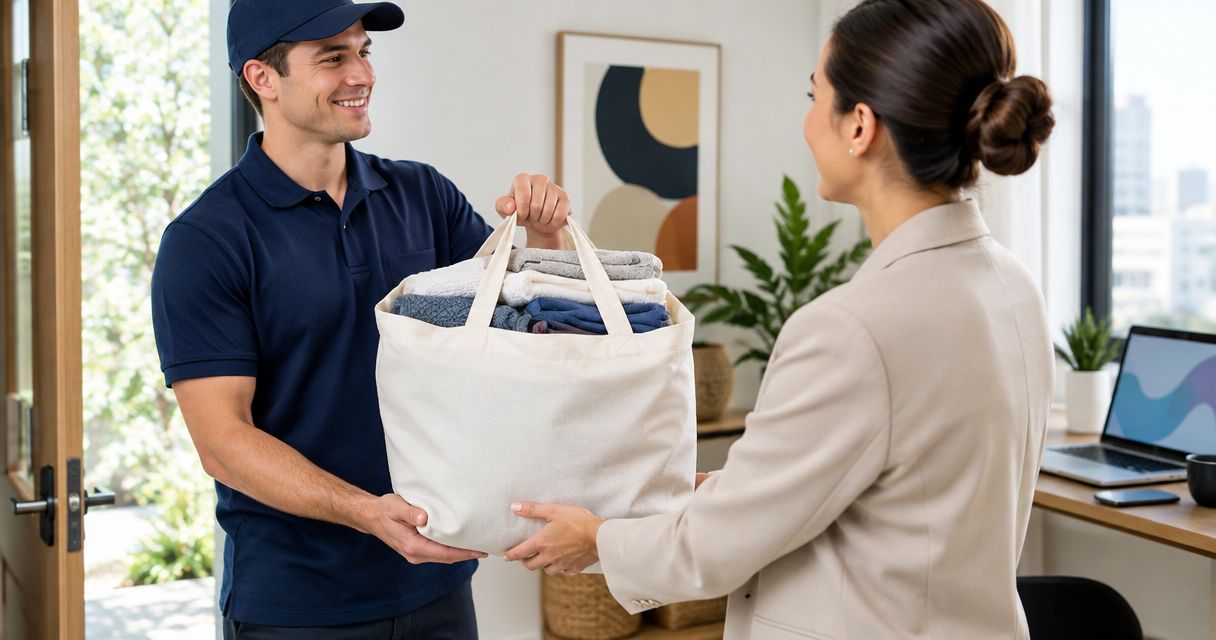
Hampr picks up your laundry, washes and folds it, including delicates, and delivers it back to your door. You never sort into a mesh bag, never guess at water temperature, and never dig a stray sock out of a drum.
Hampr pros:
- No bags to buy, wash, or lose
- Delicates get handled without you setting the cycle
- Frees up the time you'd spend sorting and folding
Hampr cons:
- Only available in the cities Hampr currently serves
- Not a fit if you want to control the exact wash settings yourself
Best for: busy households who'd rather not think about laundry at all. If you want to compare it against other options, see how wash and fold laundry services stack up city by city. Verdict: worth trying if Hampr runs in your area.
Skip the laundry sorting
Bag it, leave it, and let Hampr wash and fold your delicates.
2. Zippered mesh laundry bags: best for everyday delicates
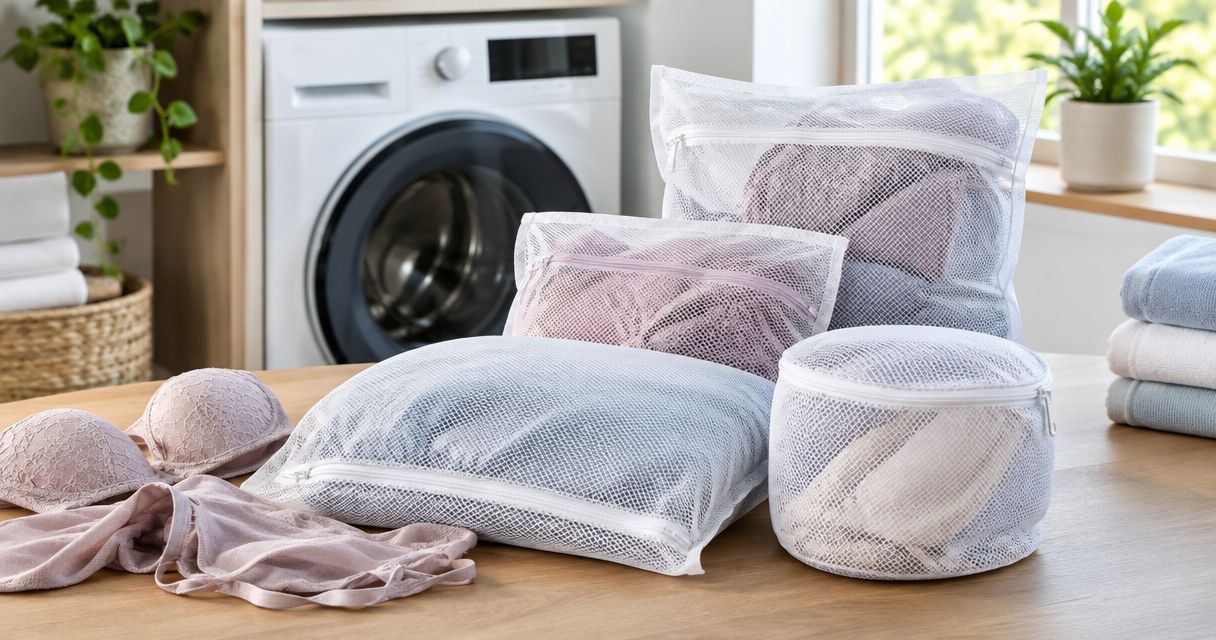
A zippered mesh bag is the standard pick for bras, tights, fine knits, and anything with hooks or straps that snag on other fabric. The tight weave lets water through while keeping small items contained.
Zippered mesh bag pros:
- Zipper closure survives a full spin cycle without popping open
- Fine weave stops small items like earrings or clasps from escaping
- Works in both top-load and front-load machines
Zippered mesh bag cons:
- Overstuffing traps lint against delicate fabric
- Cheaper zippers can snag the mesh itself over time
Best for: anyone washing bras, tights, and fine knits weekly. Verdict: Buy.
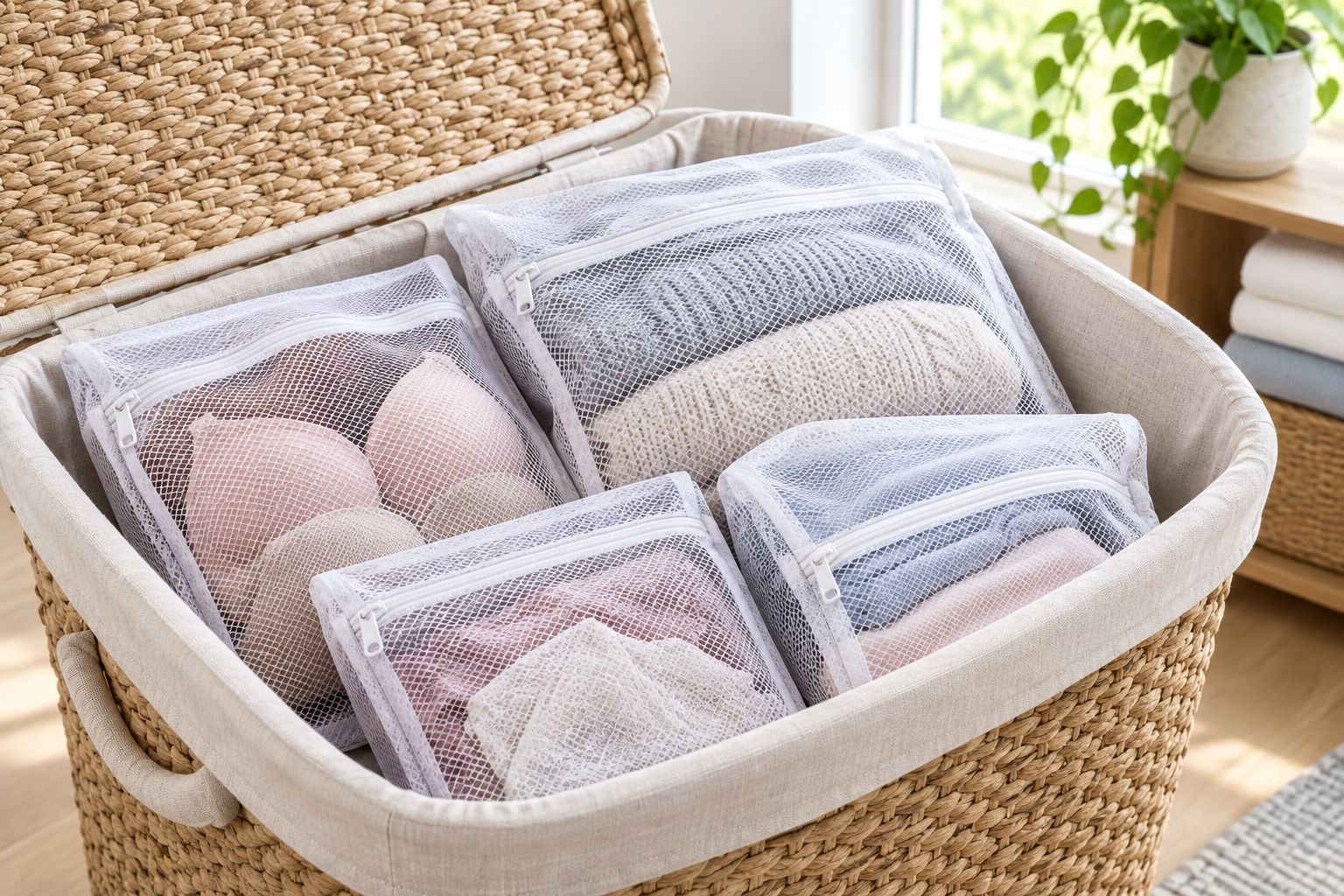
3. Bra-specific rigid-frame bags: best for underwire protection
These bags use a rigid plastic frame instead of soft mesh on one side, so an underwire bra keeps its cup shape through the wash instead of folding flat.
Rigid-frame bag pros:
- Rigid shell prevents cup collapse and underwire bending
- Usually still has a mesh side for water flow
- Reusable for years since there's no fabric to fray
Rigid-frame bag cons:
- Takes up more room in the drum than flat mesh
- Only fits bras and similarly shaped items, not versatile
Best for: anyone tired of underwire poking through after a wash. Verdict: Buy.
4. Drawstring mesh bags (multi-pack): best for high-volume households
A multi-pack of drawstring mesh bags is the simplest option for a household running several loads a week, with enough bags to sort by garment type across multiple cycles.
Drawstring bag pros:
- Simple pull-tight closure, no zipper to snag
- Multi-packs mean a bag for every load without reusing one before it dries
- Lightweight and easy to pack for travel or laundromat trips
Drawstring bag cons:
- Drawstring can loosen mid-cycle and let items escape
- Less secure than a zipper for anything with hooks
Best for: households doing several delicate loads a week. Verdict: Buy, but check the string tension before each wash.
5. Large mesh bags for bedding: best for bulky items
Comforters, pillows, and duvet inserts need a bigger panel than a standard delicates bag, something closer to a 24 x 36 inch mesh sleeve that keeps the item from wrapping around the agitator.
Bedding bag pros:
- Oversized panel fits duvet inserts and pillows without cramming
- Keeps bulky items from twisting into a rope mid-cycle
- Reduces the wear that direct agitation causes on down fill
Bedding bag cons:
- Too large for small delicates, they shift around loose inside
- Needs a machine with enough drum space to fit the bag flat
Best for: anyone washing comforters or pillows at home instead of sending them out. Verdict: Buy if your machine has the capacity.
6. Multi-compartment mesh bag sets: best for sorting in one wash
These bags split into two or three zippered sections inside one outer shell, so whites, colors, or delicates stay separated even though they're washing together.
Multi-compartment bag pros:
- Keeps colors or fabric types apart without running separate loads
- Saves water and time compared to multiple small washes
- Useful for shared laundry rooms where machine access is limited
Multi-compartment bag cons:
- Each compartment holds fewer items than a single large bag
- More seams mean more places for stitching to eventually fail
Best for: small households trying to combine loads without mixing fabrics. Verdict: Buy if you're short on machine time.
“If you can fit your hand through the mesh, so can an earring.”
How we ranked these
Each entry was measured against the same six criteria: weave density, closure security, seam strength, size match to the garment, machine and dryer safety, and frame or corner reinforcement for structured pieces. Items that failed on closure security (loose drawstrings) or size match (bedding bags used for bras) dropped in rank even when the mesh quality itself was solid.
Which mesh laundry bag should you choose?
If you only buy one thing this year, buy a zippered mesh bag sized for bras and tights — it covers the widest range of everyday delicates. Add a bra-specific rigid-frame bag if underwire is a recurring casualty, and a large bedding bag if comforters are part of your rotation.
And if none of this sounds like something you want to manage every week in 2026, that's exactly the gap Hampr's on-demand laundry pickup and delivery is built to close — no bags, no sorting, no guessing at water temperature.
FAQ
What's the best mesh laundry bag for bras?
A zippered mesh bag sized around 12 x 16 inches works for most bras in 2026, and a rigid-frame bra bag is the better upgrade if underwire keeps bending.
Are mesh laundry bags actually necessary for delicates?
They're not required, but they cut the chance of snagging, tangling, or stretching in the wash significantly. Skipping them is fine for sturdy cotton, riskier for lace, silk, or anything with hooks.
Can mesh laundry bags go in the dryer?
Most nylon and polyester mesh bags tolerate a dryer cycle, but check the care label on the bag itself first since some are wash-only.
How full should a mesh laundry bag be?
Fill it to about half capacity so water and detergent can move through the mesh freely. An overstuffed bag traps lint and blocks proper rinsing.
What size mesh bag do I need for a comforter?
Look for an oversized bag close to 24 x 36 inches. Standard delicates bags are too small and let the comforter bunch or twist.
Is a drawstring or zipper closure better for mesh bags?
A zipper is more secure through a full cycle. A drawstring works fine for lighter loads but can loosen, especially on longer or high-spin cycles.
Does Hampr wash delicates as part of its service?
Yes, Hampr's wash and fold delivery includes delicates as part of a normal pickup, handling sorting and washing without you needing a mesh bag at all.
Do mesh laundry bags work in cold water washes?
Yes, mesh bags perform the same in a cold wash around 86°F (30°C) as in a warm cycle. Mesh protects against tangling, not temperature.
One last thing
A mesh bag only protects what's inside it — it does nothing for the rest of the load banging around the same drum. If you're mixing a mesh-bagged bra with jeans and towels, the bag survives but the wash cycle still runs rough on everything else. Separate delicates into their own smaller, gentler cycle even when they're bagged, or hand that whole decision to Hampr and stop thinking about cycle settings altogether.