Yes, laundry pickup services can wash comforters when the service accepts the item and its care label permits the cleaning method. Sheets, pillowcases, and duvet covers also need their own care checks; accepting everyday laundry does not automatically mean accepting bulky bedding. For your 2026 bedding refresh, confirm the comforter’s size, filling, care instructions, and drying requirements before booking.
- Can laundry pickup services wash comforters? Yes, when the provider accepts the item and follows its care label.
- Hampr offers laundry pickup, wash, fold, and delivery; confirm bedding acceptance before sending a comforter.
- Washable sheets and duvet covers need different handling from filled comforters and specialty bedding.
- Check drying instructions before pickup, and never store bedding while it is damp.
Can laundry pickup services handle bedding and comforters?
Yes—but the item’s care label and the provider’s acceptance rules must agree. A washable comforter is not automatically suitable for every laundry service, and a service that handles sheets does not necessarily handle every filled blanket.
Start by identifying exactly what you want cleaned. A removable duvet cover is different from the filled insert inside it. That distinction belongs in your booking notes, not in a surprise discovery after pickup. The guide to preparing laundry for pickup and delivery covers the broader handoff process.
| Bedding item | Best for | Main advantage of sending it out | Main limitation to check |
|---|---|---|---|
| Sheets and pillowcases | Routine washable bed linens | Moves washing, drying, and folding off your list | Fabric-specific washing and drying instructions still apply |
| Removable duvet cover | Cleaning a washable outer layer | Lets you clean the cover separately from the insert | Cleaning the cover does not clean the insert |
| Machine-washable comforter | A filled item accepted by the provider | Avoids handling a bulky wash at home | Both washing and drying equipment must suit the item |
| Down-filled bedding | Items whose labels permit the proposed method | Outsources a bulky item with particular care needs | Filling and drying instructions need explicit confirmation |
| Dry-clean-only bedding | Following a dry-clean-only care instruction | Directs the item toward the appropriate cleaning process | Standard wash-and-fold is not a substitute |
The label takes priority over the category name. Cotton on the outside, for example, does not tell you everything about the filling, trim, or construction inside.
Why this matters
Bedding takes up space before it even reaches the machine. Packing a comforter into a bag is easy; choosing a suitable cleaning method requires more thought. The point of pickup is to remove a chore, not send a favorite blanket on an unnecessary adventure.
For a 2026 service comparison, separate convenience from garment care. Pickup solves transportation and handoff. It does not change whether a comforter permits machine washing, whether the filling needs particular treatment, or whether the provider accepts the item.
Choose the cleaning method first and the pickup arrangement second. That order keeps the doorstep convenience without overlooking what your bedding actually needs.
Sheets and pillowcases: check the fabric instructions
Sheets and pillowcases are straightforward candidates for wash-and-fold when their labels allow the provider’s process. Tell the service about any special washing instructions rather than assuming every piece in a bedding bag can share the same treatment.
Their advantage is simple: you hand off the whole wash, dry, and fold chore. Their limitation is that fabric care still matters. Decorative trim, delicate materials, or a restrictive label deserve a separate check.
Before packing, remove anything tucked into the sheets and check pillowcases for items left inside. Separate pieces that need a different cleaning method. A matching set looks tidy on the bed, but matching colors do not guarantee matching care instructions.
Duvet covers: keep the insert separate
Remove the duvet cover before sending it for cleaning. Then check the cover’s label and the insert’s label independently. They are separate items, even when they spend every night together.
A washable cover is useful when you want to refresh the outer layer without cleaning the insert unnecessarily. The trade-off is that stains or odors in the insert remain a separate cleaning job.
Tell the provider whether the order contains the cover, the insert, or both. Calling everything a duvet leaves room for confusion; naming each piece makes the request clear.
Comforters and filled inserts: confirm the whole process
For a comforter, ask about washing and drying—not just whether it fits in a bag. The item needs equipment suitable for its bulk and a drying method consistent with its care instructions.
Check the filling description as well as the outer fabric. Down, synthetic fill, and other materials do not become interchangeable just because the bedding is the same bed size. Follow the item’s instructions instead of borrowing settings from another comforter.
The benefit of sending out an accepted, washable comforter is avoiding a bulky home laundry job. The limitation is that acceptance must be confirmed for that particular item. A general wash-and-fold description is not enough to settle the question.
Specialty bedding: ask before adding it to the bag
Weighted blankets, electric blankets, quilts with fragile stitching, and items marked dry clean only need individual attention. Do not treat them as ordinary comforters simply because they live on the bed.
For these items, consult the manufacturer’s care instructions and describe the construction to the provider. If the proposed process conflicts with those instructions, choose another cleaning route rather than asking the provider to work around the label.
The advantage of checking first is avoiding an unsuitable booking. The drawback is an extra conversation—but that is easier than trying to reverse damage to a sentimental quilt.
Why comforter handling varies
The useful question is not just whether a service washes bedding. It is whether the service can follow the instructions for your bedding. These factors determine what you need to confirm:
- Care label: Machine-washable and dry-clean-only instructions point to different cleaning methods. Send a clear photo if the provider accepts photos.
- Size and bulk: State the bed size and describe unusually thick or oversized construction. Do not assume a size label alone explains the item’s bulk.
- Filling: Identify the filling from the label rather than guessing from how fluffy the comforter feels.
- Condition: Flag open seams, loose stitching, stains, and existing damage before the item changes hands.
- Drying instructions: Confirm that the provider can follow the permitted drying method, including any restrictions on heat.
- Special treatment: Ask about fragrance preferences, stain requests, and other care needs before including the item.
Use these checks when reviewing a provider in 2026. An answer about ordinary clothing does not answer a question about a thick comforter with different instructions.
How do I prepare a comforter for laundry pickup?
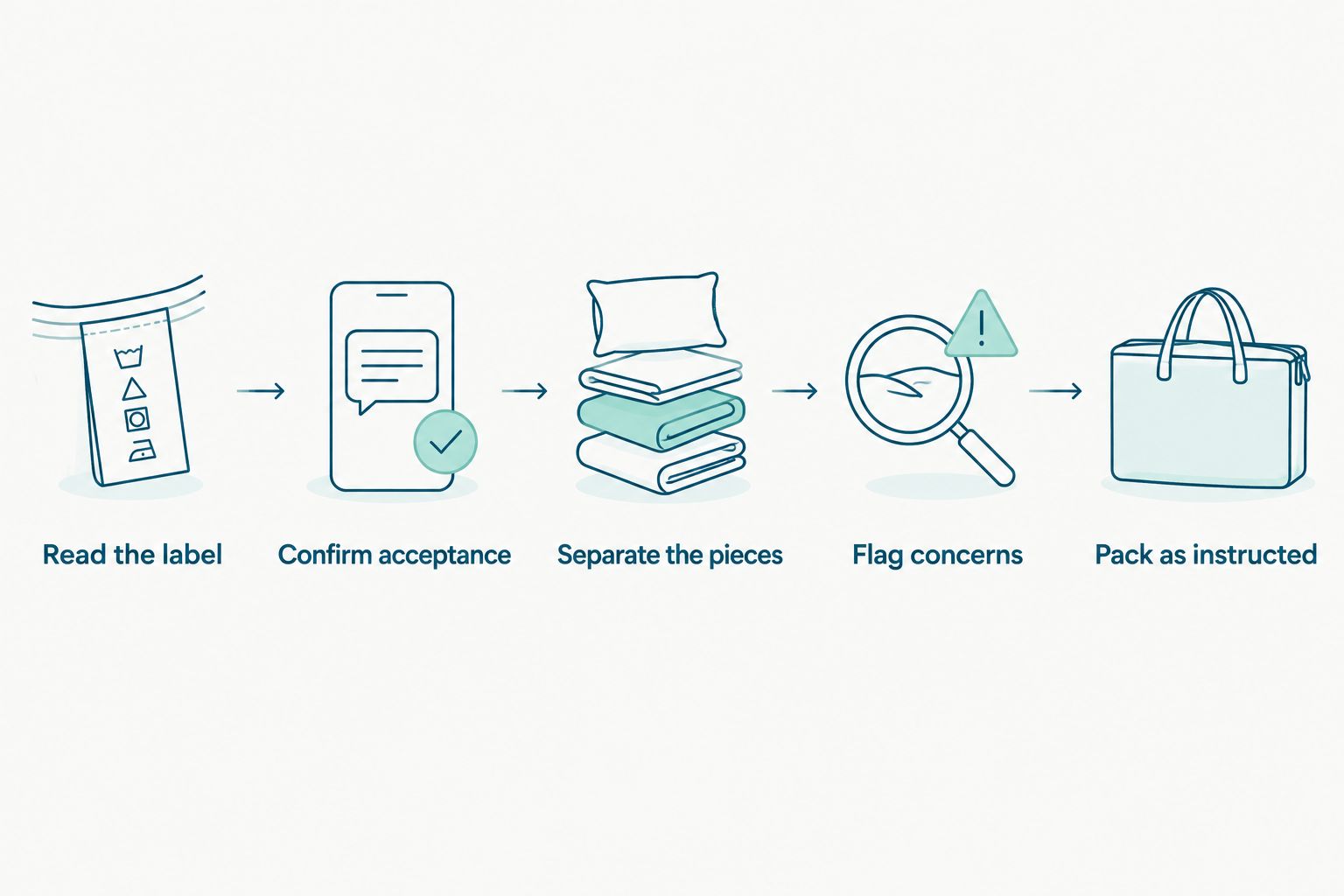
Keep preparation simple, but do it in the right order. Identify the item, confirm acceptance, and then pack it according to the provider’s instructions. There is no prize for making the bag look ready before checking whether its contents belong there.
- Read the label. Check washing, drying, and any special-care instructions. Photograph the label so you can refer to it while booking.
- Confirm acceptance. Describe the comforter’s size, filling, and condition. Ask whether the provider’s cleaning process follows the label.
- Separate the pieces. Remove a duvet cover from its insert. Keep items with different care requirements identifiable.
- Flag concerns. Point out stains, tears, fragrance preferences, and any treatment already attempted. Avoid promising yourself that a stain will disappear.
- Pack as instructed. Follow the provider’s bagging and identification directions. Do not assume ordinary laundry instructions cover oversized bedding.
Keep your notes short and specific. A useful request identifies the item, repeats its care restrictions, and asks whether the service accepts it. A long story about your laundry pile is optional; the label details are not.
What should I ask before booking bedding pickup?
Ask whether the provider accepts your exact bedding item and can follow its care instructions. Then confirm how to identify it in the order and what return timing applies to that item.
For a 2026 booking, check the current service details rather than relying on an old order or someone else’s experience. Ask whether bedding requires a separate booking selection or handling arrangement, and review the complete order terms before confirming.
A practical message includes:
- The type of item: comforter, duvet cover, insert, or blanket.
- The size and filling listed on its label.
- The washing and drying restrictions.
- Any stains, damage, or special requests.
- Whether you need the item back before a particular night.
Do not strip the only bed in the house before the return arrangement works for you. Keep another clean bedding set ready if you need the bed while the order is away.
Where Hampr fits into your bedding routine
Hampr is best for households seeking laundry pickup, wash, fold, and delivery in its select US service cities. The benefit is handing off the laundry chore; the boundary is that you still need to confirm whether your particular bedding item is accepted.
Use Hampr to review the service and ask about your comforter before including it. Treat the bedding check as part of booking, not as an assumption based on the general laundry service description.
Check your laundry options
Review the service, then confirm care requirements for your bedding before booking.
Can a laundry service wash a dry-clean-only comforter?
A dry-clean-only comforter should not go through a standard water-based wash-and-fold process. Look for a provider that offers the cleaning method specified on the label, and confirm that the item is accepted.
Pickup and cleaning method are separate decisions. A doorstep handoff does not turn a wash-and-fold order into dry cleaning.
Can I send a duvet cover without the insert?
Yes, you can request cleaning for the duvet cover alone if the service accepts it and its care label permits the process. Remove the insert before packing and identify the cover clearly.
This keeps the request focused on the outer layer. If the insert also needs cleaning, check its instructions separately rather than adding it under the cover’s care directions.
How do I check a comforter after it comes back?
Check that the comforter is completely dry before putting it away or making the bed. Unfold it and feel across the item, including thick areas and seams, rather than checking only the outer surface.
If you find dampness, an unresolved stain, or a new concern, contact the provider before storing the item. Follow the care label for any further handling, and do not add heat just to hurry things along.
FAQ
Can laundry pickup services wash comforters?
Yes, laundry pickup services can wash comforters when the provider accepts the item and its care label permits the cleaning process. Confirm size, filling, and drying requirements before booking.
Does Hampr wash every type of comforter?
Confirm your specific comforter with Hampr before sending it. The item’s care label, construction, and the service’s acceptance rules determine whether it belongs in the order.
Can I put sheets and a comforter in the same pickup?
Ask the provider whether both items are accepted in the same order and how to pack them. Shared pickup does not mean the items should receive identical washing or drying treatment.
Can a laundry service wash a down comforter?
A laundry service can wash a down comforter only when its care instructions permit the process and the provider accepts it. Confirm the drying method as well as the wash.
Should I remove my duvet cover before pickup?
Yes, remove the duvet cover and check its care instructions separately from the insert. Tell the provider whether you are sending the cover, the insert, or both.
Will laundry pickup remove every stain from bedding?
Do not assume every stain will come out. Identify the stain and any treatment already attempted, then ask the provider what treatment is appropriate for the fabric.
Can I store my comforter as soon as it is delivered?
Store the comforter only after checking that it is completely dry. Unfold it and inspect thick areas and seams before putting it away.
One last thing
Before your next bedding pickup in 2026, take a photo of the care label and keep it with your order notes. That small step gives you the exact instructions when you need them—without wrestling the comforter open again.
Book around the label, not just the laundry pile. Your bedding gets the right cleaning route, and you get to cross a chore off the list.