
Wedding and event planners’ laundry pickup is a collection, washing, folding, and return service aimed at getting washable event supplies ready without adding laundry runs to your schedule. This 2026 guide explains how to separate everyday washable stock from specialty fabrics, arrange clear handoffs, and protect the next event’s setup deadline.
- Laundry pickup for wedding and event planners fits washable, planner-owned stock—not an unchecked bag of rental linens.
- Hampr offers business laundry pickup, wash, fold, and delivery; confirm item suitability and local coverage before booking.
- Work backward from setup, not guest arrival, when setting your laundry return deadline.
- Keep specialty cleaning, rental returns, and wash-and-fold laundry on separate tracks.
Why laundry pickup matters for wedding and event planners
Event laundry has a deadline beyond getting the basket empty. You need the right pieces back at the right location before someone starts dressing tables, packing supply kits, or loading a vehicle.
Hampr provides on-demand laundry pickup, wash, fold, and delivery for households and businesses in select US cities. Hampr laundry pickup is best for planners seeking wash-and-fold help with suitable everyday washable stock. Confirm the specific items and handoff arrangements before assigning an event batch to the service.
The useful distinction is ownership and care requirements, not whether an item appeared at a wedding. A washable preparation towel and an embellished table runner need different decisions. Rental linens also have return instructions that take priority over your preferred laundry routine.
For your 2026 event calendar, build laundry into the closeout plan rather than leaving it to whoever takes the last bag home. You can handle the system with a spreadsheet and calendar reminders; a pickup service replaces the washing trip, not your inventory decisions.
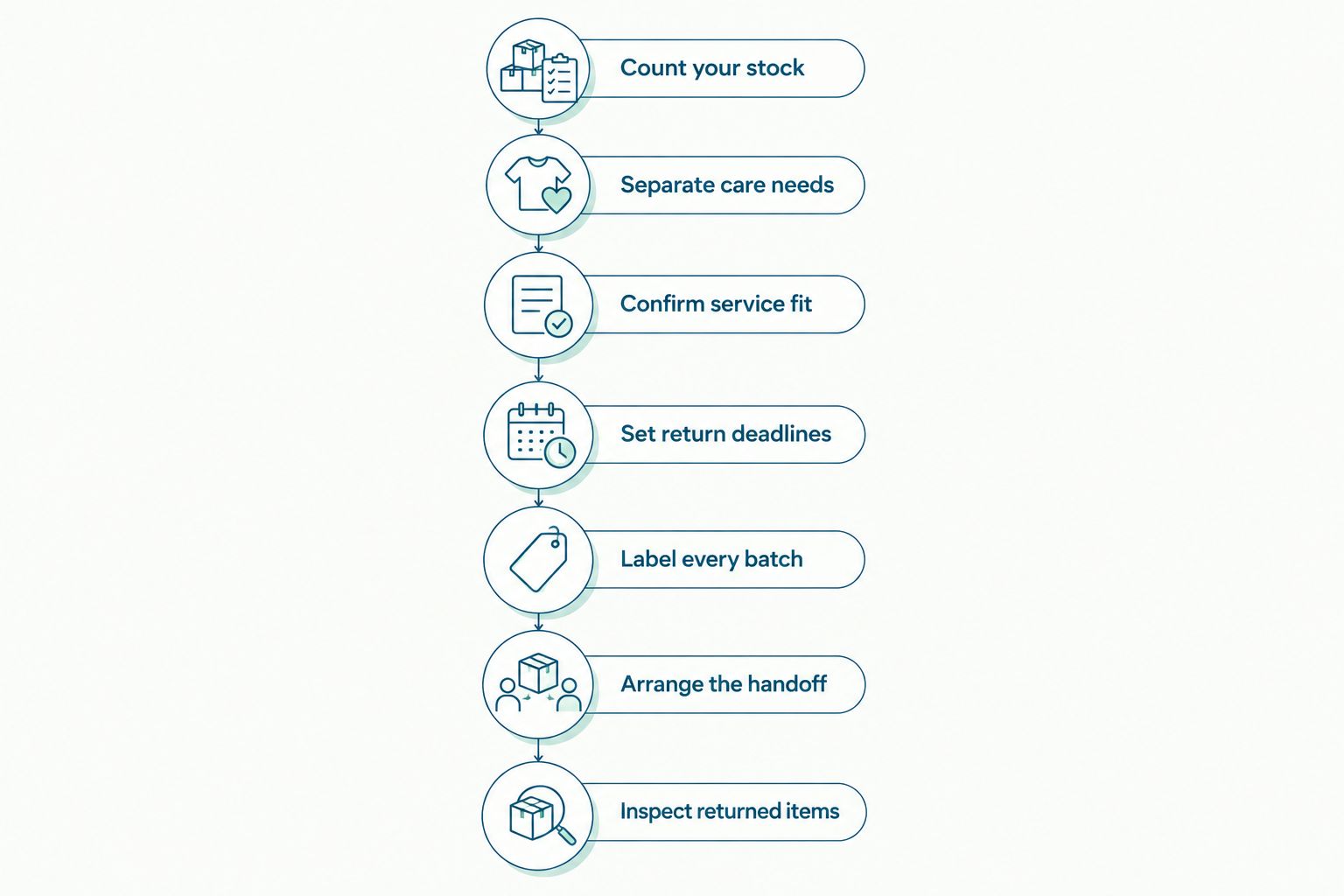
How to build an event laundry pickup routine
1. Count your stock
Start with a simple inventory sheet. Record each item type, its owner, care instructions, condition, and next required date before deciding what goes into a laundry order.
Keep planner-owned supplies separate from anything belonging to a venue, rental company, caterer, or couple. Ask the owner how items should be returned rather than assuming that washing them is helpful. A well-intended wash is still the wrong move when the owner has given different instructions.
For your first batch, choose an easy-to-identify group of suitable washable items. That makes the outgoing count and returned count easier to compare. Avoid using an important presentation piece as your first test of an unfamiliar cleaning arrangement.
- Record quantities by item type, not just by bag.
- Mark ownership beside every inventory group.
- Note existing tears, loose trim, or visible stains.
- Add the next setup deadline to each reusable group.
2. Separate care needs
Read the care labels before building the pickup batch. When a label is missing or unclear, ask the owner or a qualified cleaner instead of choosing a wash setting by appearance.
Create 3 handling groups: suitable wash-and-fold items, specialist-care items, and owner-return items. These are sorting instructions for your team, not a claim that a provider accepts every fabric in a group.
Wash-and-fold describes a laundry process; it does not promise pressing, restoration, or stain removal. If table linens need a particular presentation finish, confirm that requirement separately. Folding a cloth is not the same task as preparing it for a formal tablescape.
- Follow care labels for washing and drying decisions.
- Separate dry-clean-only or otherwise specialist-care pieces.
- Keep rental returns out of the general laundry pile.
- Flag stains and unusual materials before requesting service.
3. Confirm service fit
Write down your requirements and ask the provider to confirm them. You can do this manually with an item list, a description of the batch, and a clear return deadline; no special scheduling system is necessary.
Hampr laundry pickup offers a way to outsource the pickup, wash, fold, and delivery work. Its business service description does not establish acceptance of every event textile, a specific turnaround, pressing, or specialty stain treatment. Choose the service around confirmed requirements, not the other way around.
For a 2026 event, explain the actual use: washable preparation towels, for example, rather than simply calling the bag wedding laundry. Ask about business-order handling and any item restrictions before packing. If a requirement cannot be confirmed, keep that item on another care track.
- Describe item types, materials, and care instructions.
- Confirm service coverage for the actual handoff addresses.
- Ask whether the batch and its handling needs are accepted.
- Confirm the return arrangement before committing event stock.
4. Set return deadlines
Put the next setup time on your calendar first, then work backward. Your laundry deadline should leave room for counting, inspection, transport, and any additional finishing you arrange.
Use 3 checkpoints: pickup handoff, returned-stock inspection, and event packing. Give each checkpoint a named person. A returned bag is not automatically ready for the loading dock, especially when several events share similar supplies.
Do not treat a requested deadline as a confirmed commitment. Record the provider’s agreed arrangements and keep a backup stock or cleaning plan for pieces essential to setup. For your 2026 schedule, check each event separately instead of copying a previous order’s timing.
- Record the setup deadline, not only the ceremony time.
- Schedule inspection before the event packing deadline.
- Identify backup stock for essential reusable items.
- Recheck arrangements when venues or event dates change.
5. Label every batch
Use a plain tracking sheet and labels your own team can understand. Each batch needs an event reference, an item count, an owner, and the intended return location.
Assign 1 batch owner to reconcile the outgoing and incoming records. List 2 contacts when different people handle pickup and return, but make responsibility clear: a second phone number should not create a second version of the instructions.
Keep personal belongings and guest items outside the event laundry batch. Ask the provider how to submit handling notes rather than assuming a paper note inside a bag will reach the person doing the washing. Follow the provider’s packaging instructions rather than inventing your own format.
- Use a distinct event reference for every batch.
- Record the number of bags and item quantities separately.
- Keep a copy of handling instructions with your event records.
- Confirm which contact handles questions during processing.
6. Arrange the handoff
Agree on a specific pickup point with the venue or property contact. A building address alone does not explain which entrance to use or who can release the bags.
Keep packed laundry separate from rental returns, trash, and supplies waiting to load. Your team should be able to identify the pickup batch without opening every bag. Confirm access instructions through the provider’s accepted communication method.
For multi-venue events in 2026, decide whether laundry will leave from the venue, your storage space, or another agreed location. Do not assume a venue will hold bags after breakdown or receive a delivery before your team arrives. Get permission from the person responsible for the property.
- Name the exact handoff location and responsible contact.
- Confirm venue permission and access requirements.
- Separate laundry from other outgoing event materials.
- Record the agreed return location in the same order notes.
7. Inspect returned items
Open and reconcile the batch before putting it into storage. Compare the returned items with your original record, then check condition, cleanliness, dryness, and whether the finish suits the next use.
Keep anything needing attention out of ready-to-use stock. Follow the provider’s stated process for raising a concern, and retain the order details and your original condition notes. Do not promise a client that an item is ready until someone has checked it.
Close the loop by updating the inventory sheet. The useful result is not just clean laundry; it is an accurate record of what your team can pack next. A short review also shows where your handoff instructions need improvement.
- Count returned items against the outgoing inventory.
- Separate items needing attention from event-ready supplies.
- Record the storage location and next assigned event.
- Update your packing list only after inspection.
The sequence stays the same whether you wash items yourself or arrange pickup: identify the stock, choose the right care path, confirm timing, and inspect the return. Use this workflow for your 2026 team briefing so laundry responsibilities remain visible after breakdown.
Compare your event laundry options
Match the cleaning method to the item and deadline, not to the size of the pile. Each option solves a different problem. More than one care route can belong in the same event closeout plan.
| Option | Best for | Main advantage | Key limitation |
|---|---|---|---|
| In-house washing | Suitable washable stock your team can manage | Keeps washing and inspection under your direct control | Your team must handle washing, drying, folding, and transport |
| Hampr wash-and-fold pickup | Planners outsourcing suitable everyday business laundry | Combines pickup, washing, folding, and delivery | Serves select US cities; specific item needs and arrangements require confirmation |
| Specialist textile cleaner | Items with care or finishing needs outside ordinary wash-and-fold | Lets you discuss the textile’s specific treatment requirements | Acceptance, treatment, and deadlines require a separate agreement |
| Rental-company return process | Linens and textiles owned by a rental supplier | Follows the owner’s handling instructions | Applies to rented stock, not your general laundry inventory |
Start with ownership: rented stock follows the rental agreement. Next, check care requirements. Only then decide whether to wash suitable items yourself or arrange pickup.
For a mixed batch, splitting the work is a sensible choice. Keep specialist pieces with the appropriate cleaner and use wash-and-fold only for confirmed suitable items. One event does not need one laundry method.
Common mistakes wedding and event planners make
Washing rental linens without checking instructions
Clean is not automatically the required return condition. Read the rental agreement and ask the supplier what to do with used linens before anyone starts washing or treating them.
Treating wash-and-fold as presentation finishing
A washed and folded item still needs inspection against your event’s presentation requirements. Arrange any required finishing separately, and do not assume it is included in an ordinary laundry order.
Mixing events in an untracked bag
Similar napkins or preparation towels become difficult to allocate once the event reference disappears. Keep records by event and ownership so a returned batch does not become a guessing game.
Setting the deadline at guest arrival
Laundry needs to be ready for packing and setup, not for the first toast. Build your return plan around the team that needs the items earliest.
Leaving the handoff to whoever is nearby
A vague pickup point creates unnecessary questions during breakdown. Name the batch owner, record the handoff location, and make sure the venue contact agrees to the arrangement.
FAQ
Is laundry pickup a good fit for wedding and event planners?
Laundry pickup is a good fit for suitable washable stock when item acceptance, handoffs, and return timing are confirmed. Keep rental returns and specialty-care textiles on their own handling tracks.
Can Hampr handle laundry for an event planning business?
Hampr provides on-demand laundry pickup, wash, fold, and delivery for businesses in select US cities. Confirm local coverage, the specific event items, and the required return arrangements before booking.
Can I send wedding dresses and embellished linens with ordinary laundry?
Do not include wedding dresses or embellished linens in ordinary laundry without confirming their care requirements and the provider’s acceptance. Follow the care label and seek specialist advice when the required treatment is unclear.
Should I wash rented tablecloths before returning them?
Follow the rental supplier’s return instructions rather than washing rented tablecloths automatically. Ask the supplier how to handle used or stained pieces before treating them.
How far ahead should I arrange laundry pickup for an event?
Work backward from setup and confirm the provider’s return arrangements before committing your stock. Leave time in your own schedule for inspection, transport, and any separately arranged finishing.
Does wash-and-fold include pressing event linens?
Do not assume pressing is included in wash-and-fold. Confirm any presentation finishing separately and inspect the returned items before packing them for an event.
What should I do if returned event laundry needs attention?
Keep the affected items out of ready-to-use stock and follow the provider’s stated process for raising a concern. Use your outgoing inventory, condition notes, and order details to describe the issue clearly.
One last thing
Give your inventory sheet an inspected and ready field, not just a returned field. That small distinction stops a bag at the door from being mistaken for a finished job.
Before your next event, assign someone to make that final check. The laundry task ends when the right items are ready to pack—not when the delivery arrives.