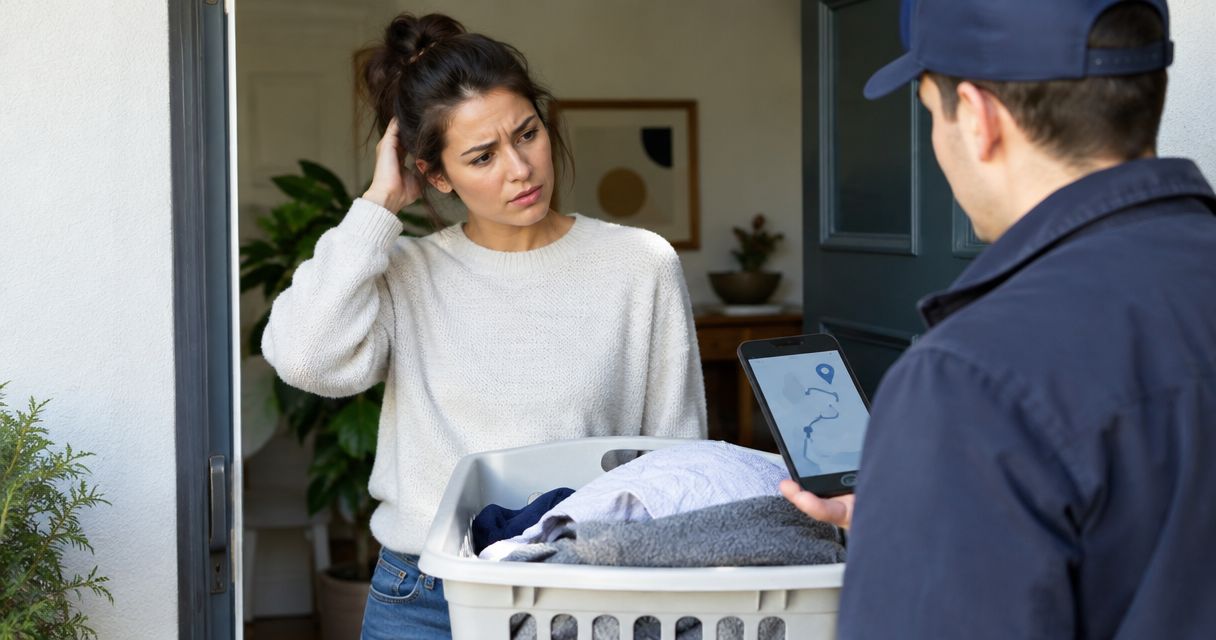

You can ask for special instructions on a laundry pickup order, but confirm that your service accepts the request before sending clothes that depend on it. A written preference is not a guarantee of a particular detergent, wash setting, drying method, or folding style.
- Can I add special instructions to laundry pickup order? Ask your provider, then confirm any essential handling requirements.
- Hampr provides laundry pickup, wash, fold, and delivery for households and businesses in select US cities.
- Separate pickup directions from clothing-care requests so each instruction is easy to understand.
- Keep items out of the order when their required care has not been confirmed.
Why this matters
A bag of everyday towels and a sweater with special care instructions need different decisions before pickup. Writing “please be careful” does not explain what either needs. Clear instructions name the item, the requested action, and whether that action is essential.
Hampr provides pickup, wash, fold, and delivery, so it fits households and businesses looking to hand off everyday laundry. Special handling still needs its own confirmation; the service description is not a promise that every request can be accommodated.
For your 2026 laundry routine, make that distinction before you bag anything. You want less laundry on your plate, not a mystery about what happens to your favorite shirt.
Can I add special instructions to my laundry pickup order?
Ask your provider how to submit instructions and which requests it accepts. If the ordering process includes a notes field, use it for clear, specific directions; if it does not, use the provider's published communication method. Do not assume there is an editable notes field, a particular app button, or a way to change instructions after submission.
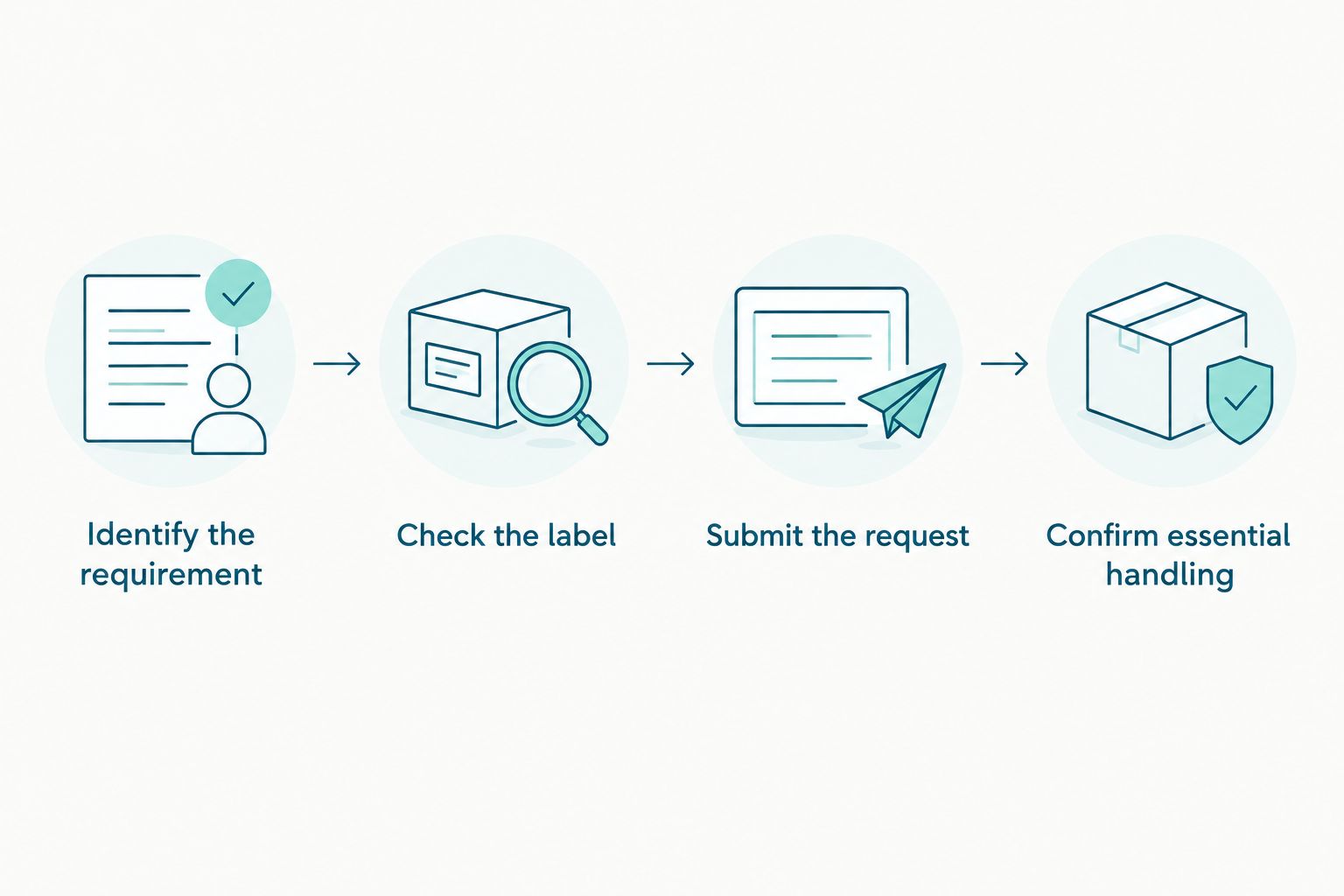
Use these 4 steps before handing over the bag:
- Identify the requirement. Decide whether you are explaining where to collect the bag, requesting a preference, or specifying essential clothing care.
- Check the care label. Write the request around the garment's actual instructions, not a guess about its fabric.
- Submit the request. Use the method your provider documents for order instructions or questions.
- Confirm essential handling. Keep the affected item out of the pickup until you know the service can follow its requirements.
A useful request has 3 parts: the item, the action, and the boundary. For example, identify the blue sweater, explain that its label requires flat drying, and ask whether that care is supported before including it.
That is a sample request, not a statement that flat drying is offered. Ask for the care you need; do not treat the request itself as acceptance.
Which instructions belong with a laundry pickup order?
Separate collection details from washing and finishing preferences. A driver locating a bag needs different information from someone deciding how to care for a garment. Organize your message so neither has to untangle a laundry-themed riddle.
| Instruction type | Best for | What to explain | Limitation |
|---|---|---|---|
| Pickup directions | Finding the correct bag | Exact collection spot and relevant access directions | Directions do not establish permission to enter a building |
| Detergent request | Communicating a product preference or concern | The ingredient or product requirement you need checked | A request does not confirm product use or residue controls |
| Wash and dry request | Explaining label-based care | Identifiable garment and required treatment | The service must confirm it supports that treatment |
| Folding preference | Explaining how you organize clean laundry | A simple, concrete folding request | A preference is not a promised finishing service |
| Item separation | Keeping particular groups identifiable | Which items belong together and why | Separate packaging does not establish separate processing |
These are categories of requests, not a menu of confirmed Hampr service features. Each gives you a clearer question to ask before your order leaves home.
For example, “please fold the kitchen towels together” communicates an organizational preference. “This garment must not go in a dryer” describes an essential care boundary. Treat those requests differently when deciding whether to include the item.
How should I write special instructions?
Write instructions that someone can act on without guessing. Use the garment's color and type, name the requested action, and explain whether you need confirmation before proceeding.
For a 2026 order, use this compact format:
- Item: Describe the garment or group clearly enough to identify it.
- Request: State the action you want checked or followed.
- Boundary: Explain whether the item must stay out unless that care is supported.
For pickup directions, describe a location rather than writing a household backstory. “The laundry bag will be beside the apartment door” is clearer than “it's where we usually leave things.” Only designate a location you are authorized to use.
For washing requests, avoid vague terms such as “gentle,” “natural,” or “extra clean” without explaining what you mean. If a care label specifies a treatment, reference that treatment and ask whether the service supports it.
For folding, describe the result you want rather than assuming everyone folds the same way. Keep the request simple. If an exact finish matters more than having the laundry handled for you, confirm it before placing the item in the bag.
Why special-instruction requests vary
The deciding factor is whether your request matches the service's actual process and the item's care requirements. A friendly note cannot turn ordinary wash-and-fold into a different kind of garment-care service.
Check these factors:
- Garment requirements: Care-label instructions set boundaries that a general laundry preference should not override.
- Service scope: Pickup, washing, folding, and delivery do not establish every possible specialty treatment.
- Product requirements: A detergent preference and a requirement to avoid a particular ingredient need different questions.
- Processing stage: Ask about changes before collection rather than relying on a message sent after handling has begun.
- Building access: Collection directions must match the access arrangements you are allowed to provide.
- Required outcome: A nice-to-have folding style is different from care an item cannot safely go without.
For Hampr laundry pickup, frame your question around the specific requirement rather than assuming a general service description answers it. That keeps the conversation useful and avoids a long list of preferences that never identifies the one thing that really matters.
Can I request a specific detergent?
You can ask about a specific detergent, but confirm the exact product requirement before including laundry that depends on it. Providing a detergent name does not establish that the provider uses it, accepts customer-supplied detergent, or controls exposure to other products.
Explain whether you have a scent preference or an ingredient you need to avoid. Those are not interchangeable requests. “I prefer no added fragrance” communicates something different from a medically important restriction.
If you need help shaping the question, read the guide to requesting specific detergent for laundry pickup. For health-related concerns, discuss appropriate precautions with your healthcare professional rather than treating an order note as a safety guarantee.
Can I request special care for delicate clothes?
You can ask about delicate-item handling, but include an item only after its required care is confirmed. A separate bag can identify a garment; it does not establish that the garment will receive hand washing, flat drying, or another specialty process.
Read the label before packing. If the label calls for care outside the provider's confirmed service, keep that item out and arrange suitable care separately. That is simpler than hoping “delicate” means the same thing to everyone involved.
In your 2026 pickup checklist, give uncertain items their own review before you seal the bag. The question is not whether the garment looks sturdy. It is whether the available care matches what the garment requires.
Can I change instructions after placing an order?
Ask your provider whether an existing order can be updated, and request confirmation that the change applies to that order. Do not assume a new account preference changes an order already submitted.
Identify the affected pickup and state exactly what changed. If the change concerns essential garment care, explain that clearly rather than adding it beneath unrelated collection directions.
A sent message is not proof that handling has changed. If you cannot confirm an essential update before handoff, keep the affected item out of the bag. For a pickup already collected, contact the provider through its published method instead of assuming a late note will reach the person handling the clothes.
Check your bag before pickup
Use this 2026 pre-pickup check to connect your instructions to the clothes actually going out the door. Even a beautifully written note cannot help if it describes an item you forgot to separate or a bag left somewhere else.
- Read the final request: Remove conflicting directions and make essential requirements easy to spot.
- Match the description: Make sure the item you describe is identifiable without private household knowledge.
- Remove uncertain items: Keep out garments whose required care is still unconfirmed.
- Check the collection location: Put the bag where the accepted pickup arrangement says it belongs.
Also remove unrelated paperwork from the bag. Keep access information in the provider's designated communication method rather than attaching unnecessary personal details to your laundry.
You do not need a novel taped to the hamper. A short, accurate message and a sensible packing decision do more useful work.
FAQ
Can I add special instructions to laundry pickup order?
Ask your provider whether it accepts special instructions and how to submit them. Confirm essential handling before including any garment that depends on the request.
Where do I put special laundry instructions?
Use the instructions field if your provider offers one, or its published communication method for order questions. Do not assume a particular app screen or editing option exists.
Can I ask for my laundry to be washed without fragrance?
You can ask for fragrance-related requirements to be checked, but confirm the product and process before sending affected laundry. A preference note is not a guarantee about ingredients or exposure to other products.
Can I put my own detergent in the pickup bag?
Ask the provider before including your own detergent. Sending a product does not confirm that it is accepted or will be used.
Can I ask for clothes to be folded a certain way?
You can request a folding preference, but confirm whether the service supports it if the exact result matters. Describe the requested fold plainly rather than relying on a household nickname.
Will a separate bag keep my delicates out of the dryer?
A separate bag identifies items but does not guarantee a drying method. Confirm that the provider supports the garment's care requirements before including it.
What if my special instructions are essential?
Keep the affected item out of the order until the provider confirms it can meet the requirement. For medical concerns, get appropriate advice rather than relying on an order note as a safety assurance.
One last thing
The most useful special instruction sometimes changes what you leave out of the bag. When a garment needs care you have not confirmed, keeping it home is a clear decision—not a failed laundry day.
Make your 2026 routine simple: send suitable everyday laundry, communicate specific needs, and resolve essential exceptions before pickup. The goal is a smaller chore list, not a longer list of things to worry about.