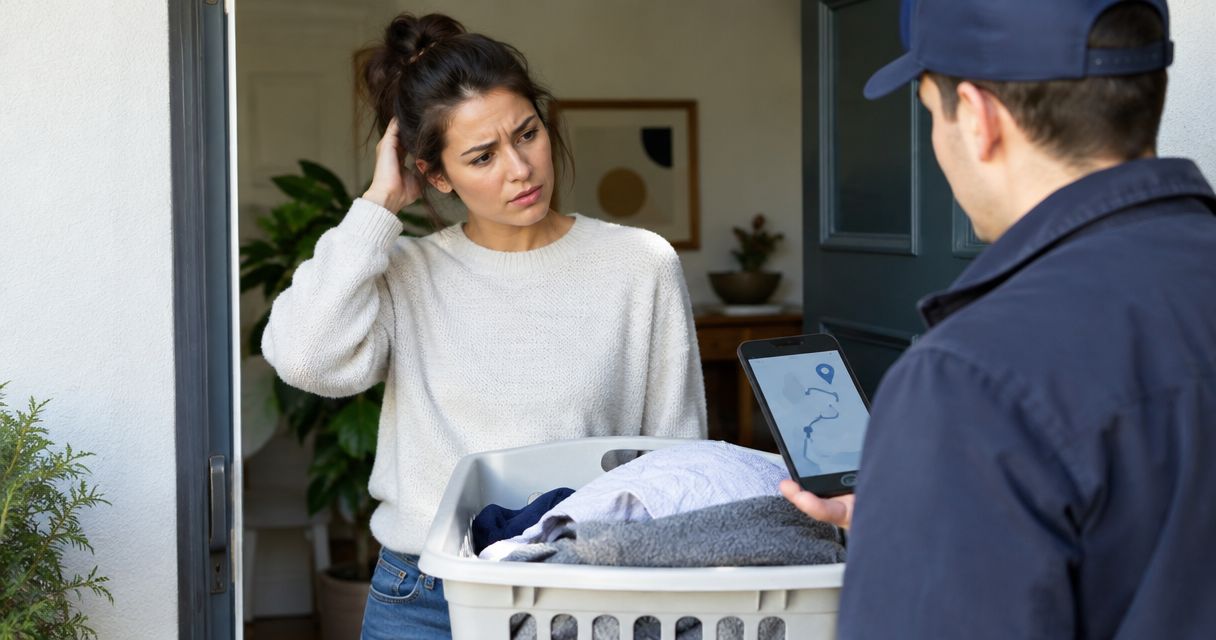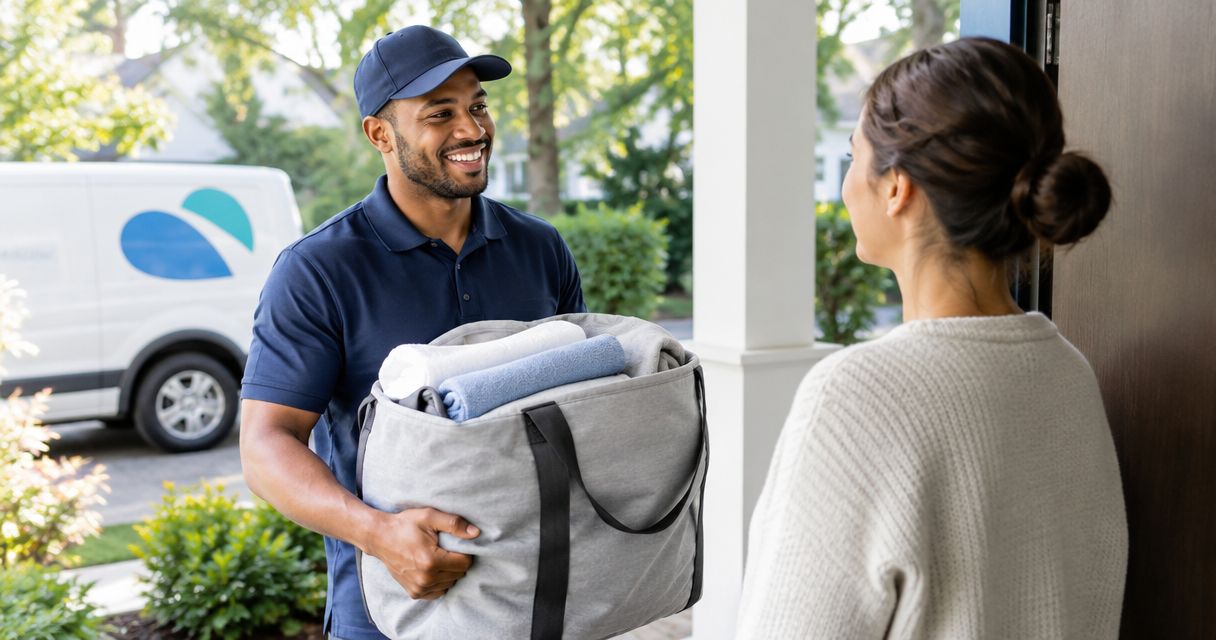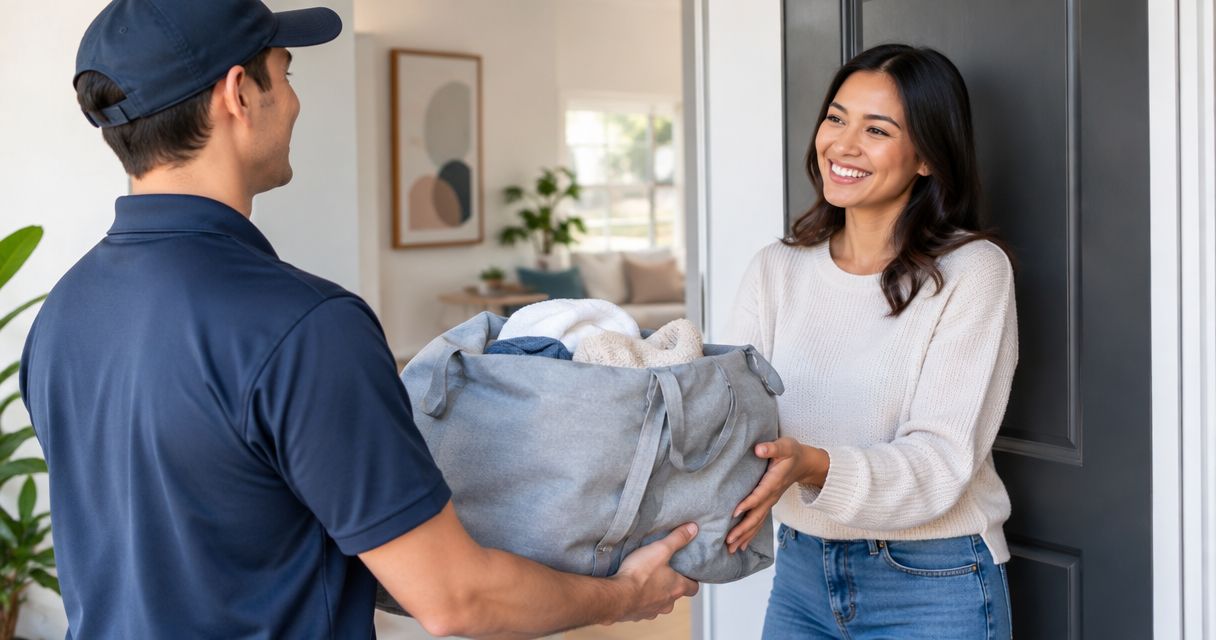
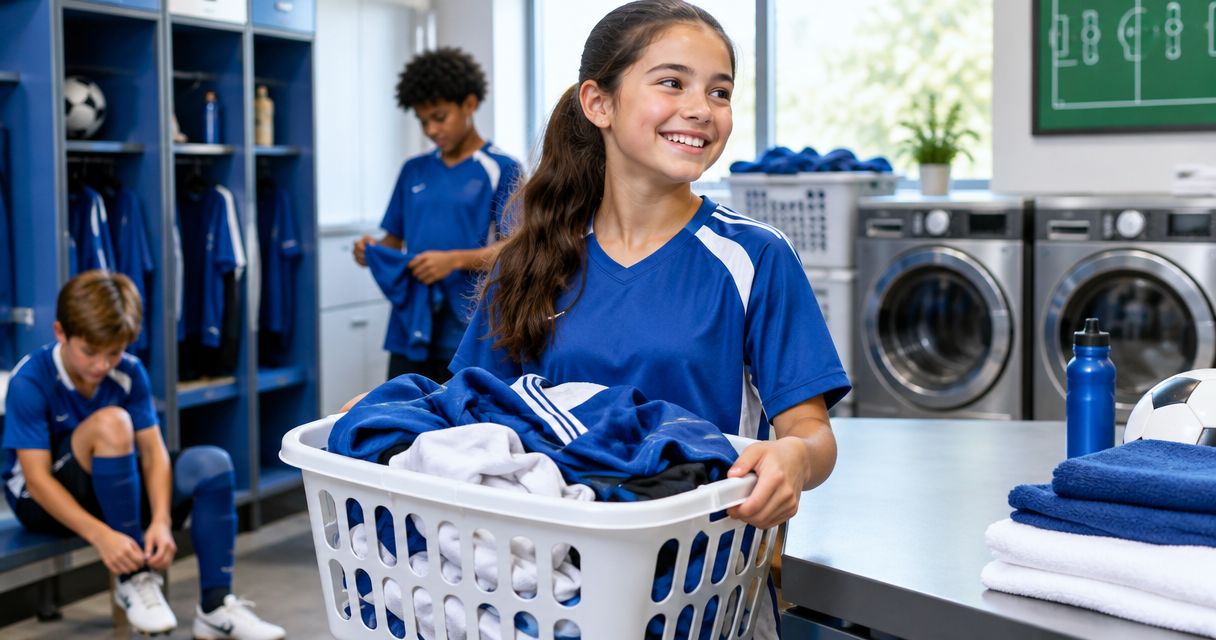
Youth sports team laundry service is pickup, washing, folding, and delivery of washable team clothing with the aim of getting uniforms ready for the next game. This guide helps you organize a 2026 team laundry routine around care labels, player ownership, and the game calendar—not just a growing pile of jerseys.
- Laundry service for youth sports teams starts with garment care labels, item counts, and a confirmed return deadline.
- Hampr offers laundry pickup, wash, fold, and delivery; confirm whether your team's garments and schedule fit.
- Keep uniforms separate from protective equipment unless the provider explicitly accepts both.
- Choose one adult coordinator and check returned clothing before handing it back to players.
Why laundry service matters for youth sports teams
The hard part of team laundry isn't pressing Start. It's getting the right jersey back to the right player before warmups, without turning a parent or coach into the permanent laundry department.
A team order adds coordination that household laundry doesn't need: numbered uniforms, borrowed clothing, different care instructions, and a shared deadline. Choose your laundry arrangement around garment handling and return timing before convenience. A neatly folded uniform still misses the point if it arrives after the team leaves.
Hampr provides laundry pickup, wash, fold, and delivery for households and businesses in select US cities. For a team organizer, that service category removes the washing task, but the team still needs an adult responsible for collection, instructions, and redistribution.
Before your 2026 season starts, settle who owns each uniform, who can authorize outside washing, and who handles exceptions. Those decisions belong with the team—not in a last-minute message thread after practice.
How to organize team laundry in 2026
Start with a shared note or spreadsheet. You don't need a paid planning tool to record jersey numbers, care instructions, and the next date each item is needed.
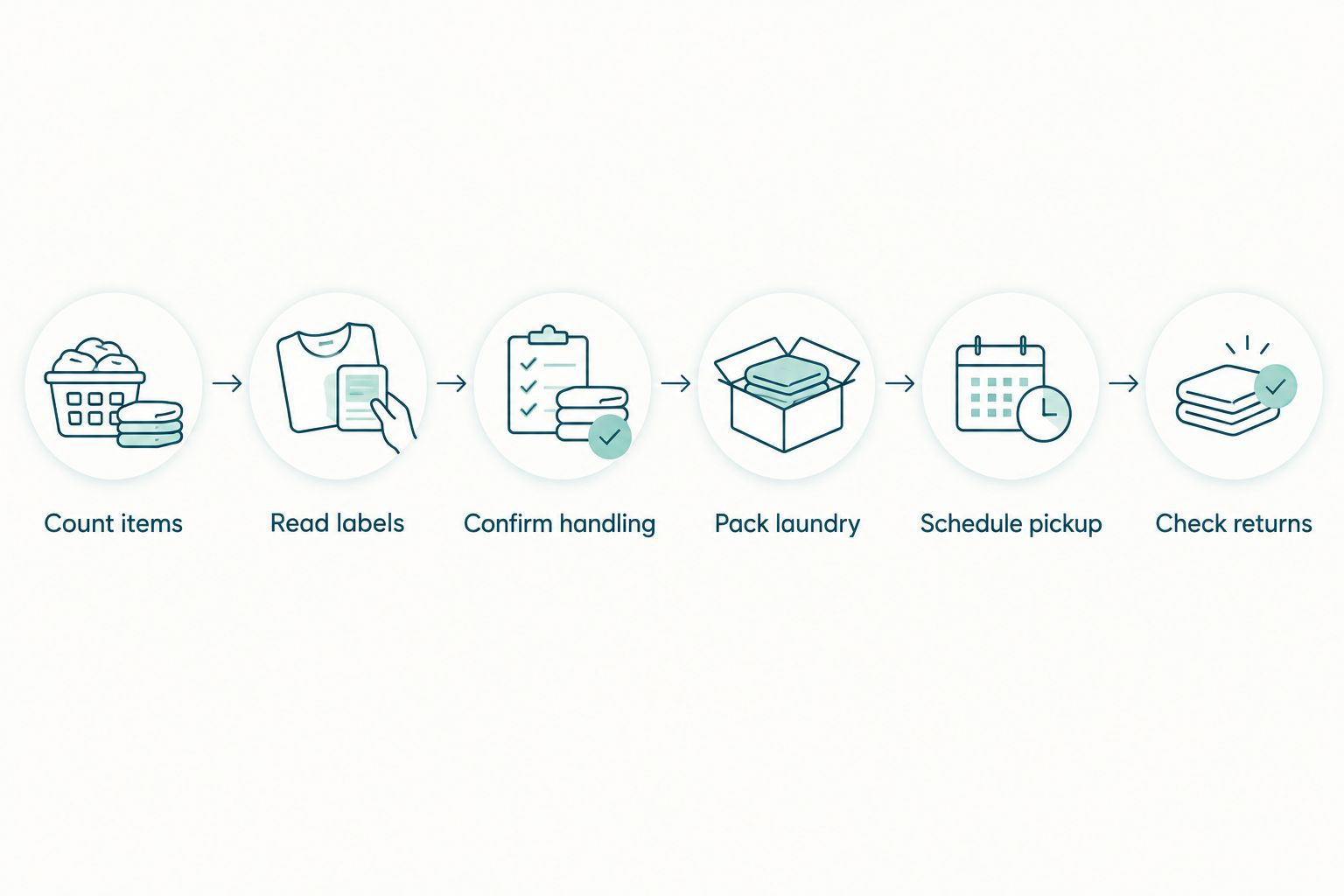
Use this sequence: Count items, Read labels, Confirm handling, Pack laundry, Schedule pickup, Check returns. Keep the same sequence whether families wash at home or you arrange outside help.
1. Count items
Build a simple inventory before collecting clothing. Record the player identifier, garment type, jersey number, and any existing damage. A jersey number helps distinguish uniforms, but it doesn't identify an unmarked pair of shorts or a borrowed practice shirt.
Name 1 adult coordinator and 2 adult contacts for handoffs. That's an organizational recommendation, not a service requirement. The coordinator owns the list; the contacts give the team a backup when practice, work, or travel interrupts the plan.
Use a private team record rather than putting children's full names and schedules on an outside bag. Keep the information needed for laundry separate from player medical information.
- List jerseys, shorts, socks, and practice clothing separately.
- Record identifying marks that already exist on each garment.
- Ask families to remove personal items before collection.
- Note tears, loose numbers, and missing pieces before washing.
- Assign an adult to resolve unidentified clothing.
2. Read labels
Sort by care instructions before you sort by player. Matching uniforms can include different materials, printed decoration, or replacement garments with different washing requirements. Don't treat the team logo as a care label.
Follow the garment manufacturer's instructions for washing, drying, bleaching, and ironing. Keep clothing that needs different treatment out of a general wash-and-fold bag unless the person washing it has agreed to handle those differences.
For stains, identify what happened and where rather than promising that a stronger wash will fix everything. Grass, mud, and food marks deserve clear notes. Tell the person washing the clothing about any treatment already applied, and don't mix cleaning products to improvise a solution.
- Read both washing and drying instructions.
- Separate hand-wash or dry-clean-only garments.
- Flag printed names, numbers, and decorative details.
- Record detergent restrictions supplied by a parent or guardian.
- Keep protective equipment outside the clothing order.
3. Confirm handling
The manual route is straightforward: give a parent volunteer the inventory and care instructions, then agree on a return date. That keeps communication direct, but washing, drying, folding, and transport still belong to the volunteer.
If you want to hand off those chores, ask whether an outside provider accepts the team's clothing and instructions. Hampr is best for team organizers seeking pickup, wash, fold, and delivery rather than equipment cleaning. Confirm the fit for your particular garments and location before collecting the whole team's laundry.
A general laundry offering isn't proof that helmets, pads, cleats, or every specialty uniform are accepted. Ask specific questions and keep the answers with the order notes. An unresolved care requirement means that item stays out until you have an answer.
- Confirm acceptance of each garment category.
- Ask how different care instructions are handled.
- Confirm whether detergent restrictions can be accommodated.
- Ask how to report missing or damaged clothing.
- Establish the return deadline before handing anything over.
4. Pack laundry
Make the handoff easy to understand. Start with empty pockets and a checked inventory, then use the provider's packing instructions. Don't assume separate player bags will stay separate through washing or that everything will return grouped by jersey number.
If clothing needs to stay grouped, ask whether the provider supports that request. Otherwise, plan to sort returned items yourself using the inventory. The bag is transportation, not an instruction sheet.
For the 2026 season, keep a reusable packing checklist beside the collection point. The guide to preparing laundry for pickup and delivery gives you a useful starting point for that handoff.
- Empty pockets and remove loose accessories.
- Let damp clothing dry before holding it for a later collection.
- Remove cleats, helmets, pads, and other equipment.
- Put care exceptions in the written order instructions.
- Photograph the packed order and save the item list.
5. Schedule pickup
Work backward from when players need their uniforms—not just the next game time. Travel, team photos, and an early departure can move the real deadline forward. An order returned on game day isn't useful if the team bus has already left.
Use a calendar reminder to collect clothing, another to complete the handoff, and a final reminder to inspect the return. You can set these manually in the calendar your team already uses. Don't assume a calendar entry creates a booking or changes an existing order.
For a 2026 tournament weekend, confirm the service schedule before relying on it for the only uniform set. Keep a fallback washing arrangement for schedule changes instead of treating an urgent request as a guaranteed return.
- Record the team's actual departure or distribution deadline.
- Confirm pickup and return arrangements with the provider.
- Choose an adult-accessible handoff location.
- Share access instructions without sharing children's schedules.
- Recheck arrangements when games or travel plans change.
6. Check returns
Inspect returned laundry before the next team gathering. Waiting until players are getting dressed leaves no room to find a missing sock, identify an unfamiliar shirt, or deal with clothing that needs more attention.
Use 3 count checkpoints: collection, handoff, and return. Compare the same inventory each time. This creates a clear record of what the team collected, what left for washing, and what came back; it doesn't replace the provider's own order process.
Check condition as well as quantity. Set aside clothing with remaining marks or damage, document the issue, and follow the provider's reporting process. Don't send an unidentified garment home with the nearest player just to empty the pile.
- Match returned items against the original inventory.
- Check names, numbers, and garment condition.
- Separate anything that needs follow-up.
- Sort clothing by player before distribution.
- Record unresolved items and contact the responsible adult.
Compare laundry options for your team
The best arrangement depends on who owns the uniforms and who can reliably manage the work. Family washing, a team volunteer, and outside pickup all solve different parts of the problem.
For your 2026 plan, compare the entire process: collection, washing, transport, checking, and distribution. Outsourcing washing doesn't remove the need for team coordination.
| Option | Best for | Main advantage | Key limitation |
|---|---|---|---|
| Each family washes its own uniforms | Teams where players keep their own clothing | No shared collection or redistribution | The team has less control over consistent care and readiness |
| A designated team volunteer | Teams with a willing adult and suitable laundry facilities | Direct control over sorting and instructions | The volunteer carries the washing and transport workload |
| A local drop-off wash-and-fold provider | Organizers who can manage both trips | Hands off washing and folding | Acceptance, handling, and return timing need confirmation |
| Hampr laundry pickup and delivery | Organizers seeking pickup, washing, folding, and delivery | Hands off washing and transportation | Serves select US cities; team garment requirements need confirmation |
Keep family washing when it already works. A shared arrangement earns its place when it solves a specific problem, such as a volunteer carrying all the washing or team-owned uniforms needing centralized collection.
Common mistakes youth sports teams make
Treating the equipment bag as a laundry bag
A washable jersey doesn't make every item beside it suitable for wash-and-fold service. Keep protective equipment and footwear out unless the provider explicitly accepts those items and can follow their care instructions.
Mixing uniforms without an ownership record
A pile of matching shorts is easy to wash and frustrating to return. Record identifiers before collection, and decide how the team will handle garments that have no identifying marks.
Planning around game time instead of departure time
The useful deadline is when the uniform needs to be in the player's hands. Include travel and distribution in your plan, and don't promise families a return time the provider hasn't confirmed.
Leaving detergent concerns in the parent chat
A parent telling the coach about a detergent restriction doesn't mean the person washing the clothing received it. Put the request in the order instructions, confirm acceptance, and keep the garment out if the requirement cannot be met.
Promising that every stain will disappear
Grass marks and old stains aren't a reason to ignore care instructions or promise a like-new return. Document existing marks, explain what you know, and keep expectations focused on the agreed cleaning service.
FAQ
What's the best laundry service for youth sports teams?
The best laundry service for youth sports teams accepts the team's garments, follows their care requirements, and confirms a return before uniforms are needed. Hampr offers pickup, wash, fold, and delivery in select US cities; confirm the fit for your team's order before booking.
Can a laundry pickup service wash team jerseys?
A laundry pickup service can wash team jerseys only when it accepts those garments and can follow their care labels. Confirm instructions for printed numbers, names, and drying before including jerseys in an order.
Should every family wash its own uniform?
Family washing is a suitable option when players keep their uniforms and families can manage the care instructions. Centralized washing adds collection and redistribution work, so use it to solve a clear team need.
Can helmets, pads, and cleats go with the uniforms?
Keep helmets, pads, and cleats out of a general clothing order unless the provider explicitly accepts them. Protective equipment and footwear have their own manufacturer care instructions.
How do we keep players' uniforms from getting mixed up?
Create an item inventory before collection and match returned clothing against it. Ask whether the provider supports player-specific grouping rather than assuming separate bags will stay separate.
Can we request a particular detergent for team laundry?
Ask the provider whether it can accommodate the exact detergent requirement before sending clothing. Get parent or guardian instructions in writing, and don't substitute a general fragrance preference for a stated restriction.
How far ahead should we arrange laundry before a tournament?
Arrange laundry around the provider's confirmed return schedule and your team's departure deadline. Keep a fallback plan when the uniforms being washed are the only set players can use.
One last thing
The easiest jersey to return is the one you can identify. Before the first collection, ask families to check existing labels and identifiers using a method compatible with the garment's care instructions.
Then test your process on a manageable collection before making it the whole team's routine. A small rehearsal exposes unclear instructions without putting every player's uniform into the same unresolved pile.