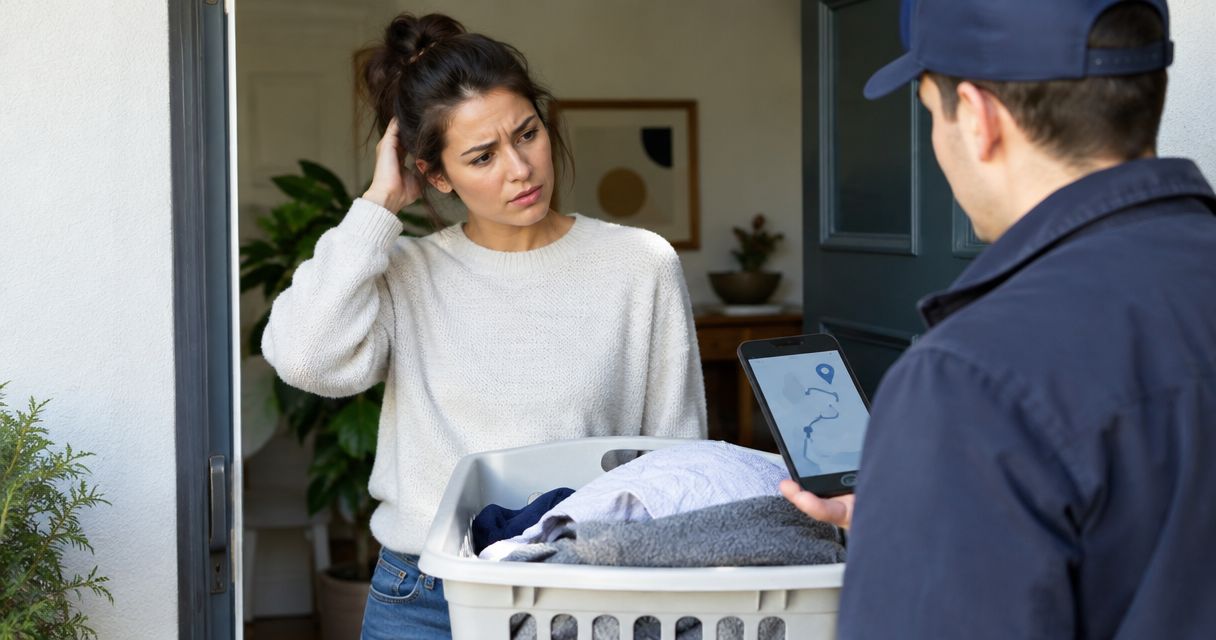
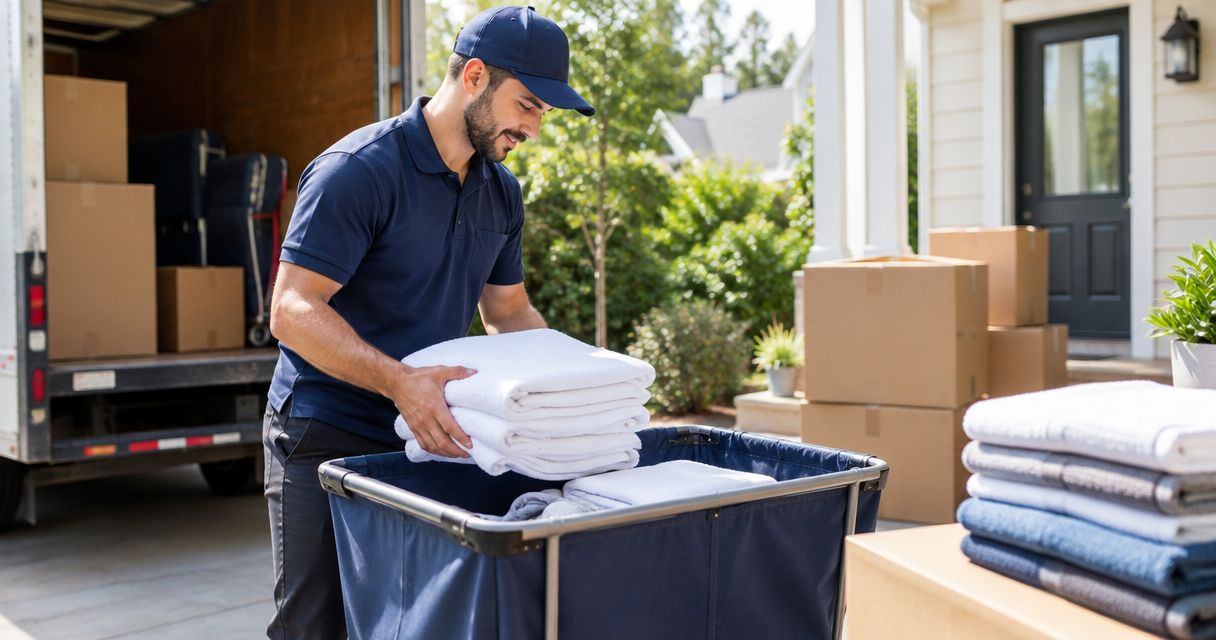
Moving-company laundry pickup is an outsourced collection, washing, folding, and return service aimed at keeping washable workwear and other accepted textiles ready for the next job. Unlike household laundry, your process needs to fit dispatch schedules, separate company items from customer property, and keep unsuitable equipment out of ordinary wash-and-fold bags.
- Laundry pickup for moving companies works best when workwear, customer belongings, and moving equipment stay separate.
- Hampr provides pickup, wash, fold, and delivery for businesses in select US cities; confirm item acceptance before booking.
- Choose a laundry process around dispatch and return deadlines, not just the collection time.
- Keep moving blankets out of ordinary wash-and-fold orders until the provider approves the exact items.
Why laundry pickup matters for moving companies
Your truck schedule and your laundry schedule serve different purposes. A clean uniform needs to reach the right crew before departure; a collected bag alone does not solve that problem.
The useful outcome is clean items back in service—not simply dirty items out of sight. For your 2026 operating plan, treat laundry as a small dispatch task with an owner, a handoff, and a return check.
Start with the basics in this guide to preparing laundry for pickup and delivery. Then add the controls that matter to movers: item ownership, care instructions, depot access, and the next scheduled use.
Pickup removes the trip to drop off and collect accepted laundry. It does not automatically cover moving pads, contaminated textiles, repairs, or customer belongings. Those distinctions belong in your process before the first bag leaves the depot.
Set up your moving-company laundry process
Identify what belongs in the laundry order
Start with a handwritten inventory or a shared spreadsheet. List the textiles your company actually owns and cleans rather than assuming every fabric item in a truck belongs in the same load.
Use 3 categories: company workwear, other company textiles, and customer property. Within the company categories, check care labels and ask the provider to approve anything outside everyday clothing. This is especially important for padded, coated, oversized, or heavily soiled items.
Customer bedding collected during a move is not automatically part of your laundry operation. Keep it attached to the customer's job record and handling instructions, not your crew's uniform bag.
- List washable shirts, trousers, and other company-issued clothing separately.
- Record care-label instructions before deciding how an item gets cleaned.
- Set aside moving blankets and pads for individual approval.
- Keep customer belongings outside the company laundry stream.
- Flag oil, chemicals, pests, or unknown contamination before collection.
Map the schedule around your next dispatch
Use your existing dispatch board or calendar first. Mark when dirty items return to the depot, when someone can hand them over, and when clean items must be ready for another crew.
Record 2 handoffs: collection and return. Assign a named employee to each, even when the same person handles both. A driver returning from a late move should not have to guess where the laundry went or whether tomorrow's shirts are ready.
For a 2026 schedule, build the laundry task around actual departure times rather than a vague promise to handle it later. Ask the provider about its collection and return process before making it part of a crew commitment.
- Write the next-use deadline beside each batch.
- Choose a collection point that does not block loading.
- Identify who can provide access when the office is closed.
- Keep clean backup workwear outside the outgoing batch.
- Record how dispatch will handle a delayed return.
Choose the right cleaning route
Handle a small, straightforward load yourself if your existing facilities and staff responsibilities make that practical. The manual route is simple: follow the care labels, assign the task, and track when the clothes are ready.
Hampr offers the outsourced route: on-demand pickup, wash, fold, and delivery for households and businesses in select US cities. Hampr is best for moving companies seeking pickup, wash, fold, and delivery for approved everyday laundry. Confirm the collection address and exact items before treating the service as part of your dispatch plan.
The limitation matters: an everyday laundry service is not a blanket approval for every textile a moving company uses. Keep unusual equipment and questionable contamination outside the order until the provider confirms its handling requirements.
- Compare doing laundry internally with outsourcing the complete handoff.
- Describe the items rather than requesting generic commercial laundry.
- Ask whether uniforms with special care instructions are accepted.
- Confirm how pickup and return work at your depot.
- Request an item-specific assessment for moving blankets or pads.
Prepare a clear handoff
Use a paper checklist or a shared note to record what leaves the depot. You do not need another system to get started. You need a bag that contains the right items and instructions someone can understand without calling the whole crew.
Separate outgoing laundry from packed customer goods. A bag beside a loading bay needs an unmistakable purpose, especially when several jobs are staged nearby. Keep names and job details to the minimum necessary for your own tracking.
Before each collection, check pockets for keys, fasteners, receipts, and anything else that belongs back with the crew. Put unusual care needs in the order instructions using the provider's accepted process; a note buried inside a pocket is not a dependable handoff.
- Keep company workwear separate from customer textiles.
- Empty pockets and remove loose objects.
- Follow the provider's bagging and labeling instructions.
- Record the batch owner and collection date.
- Keep wet or questionable items out of a sealed, forgotten bag.
Test a batch before changing the whole routine
Start with an approved batch of ordinary workwear, not every uniform your company owns. Keep enough clean clothing at the depot to cover the next dispatch while you check the process.
Use a 7-day observation log as a starting point, extending it if your laundry cycle runs longer. This is a recommended trial window, not a service turnaround promise. Record collection, return, staff handling, and whether the returned items met their next-use deadline.
For your 2026 review, judge the full process rather than folding alone. Clean shirts returned to a locked office still need someone to get them to the crew. Count that work when deciding whether the arrangement helps.
- Test only items the provider has accepted.
- Record the promised and actual handoff details.
- Check returned items against your outgoing record.
- Note whether clothing is dry and ready to store.
- Log any follow-up needed before expanding the arrangement.
Close the loop at the depot
Use a return checklist before putting clean items back into circulation. Assign a shelf or storage area to clean company textiles so they do not land beside dirty bags or packed customer belongings.
The return check is also where you spot missing items, unresolved stains, damage, or care questions. Follow the provider's reporting instructions promptly and keep the relevant order details together. Do not promise a replacement or reimbursement outcome that has not been agreed.
Make your 2026 laundry routine easy for someone else to cover. If the office manager is away, another employee should be able to find the order, receive the bag, and release clean workwear without decoding a trail of messages.
- Name the person responsible for checking returns.
- Store clean items separately from outgoing laundry.
- Match returned items to the batch record.
- Report concerns through the provider's stated process.
- Update dispatch when clean workwear is ready.
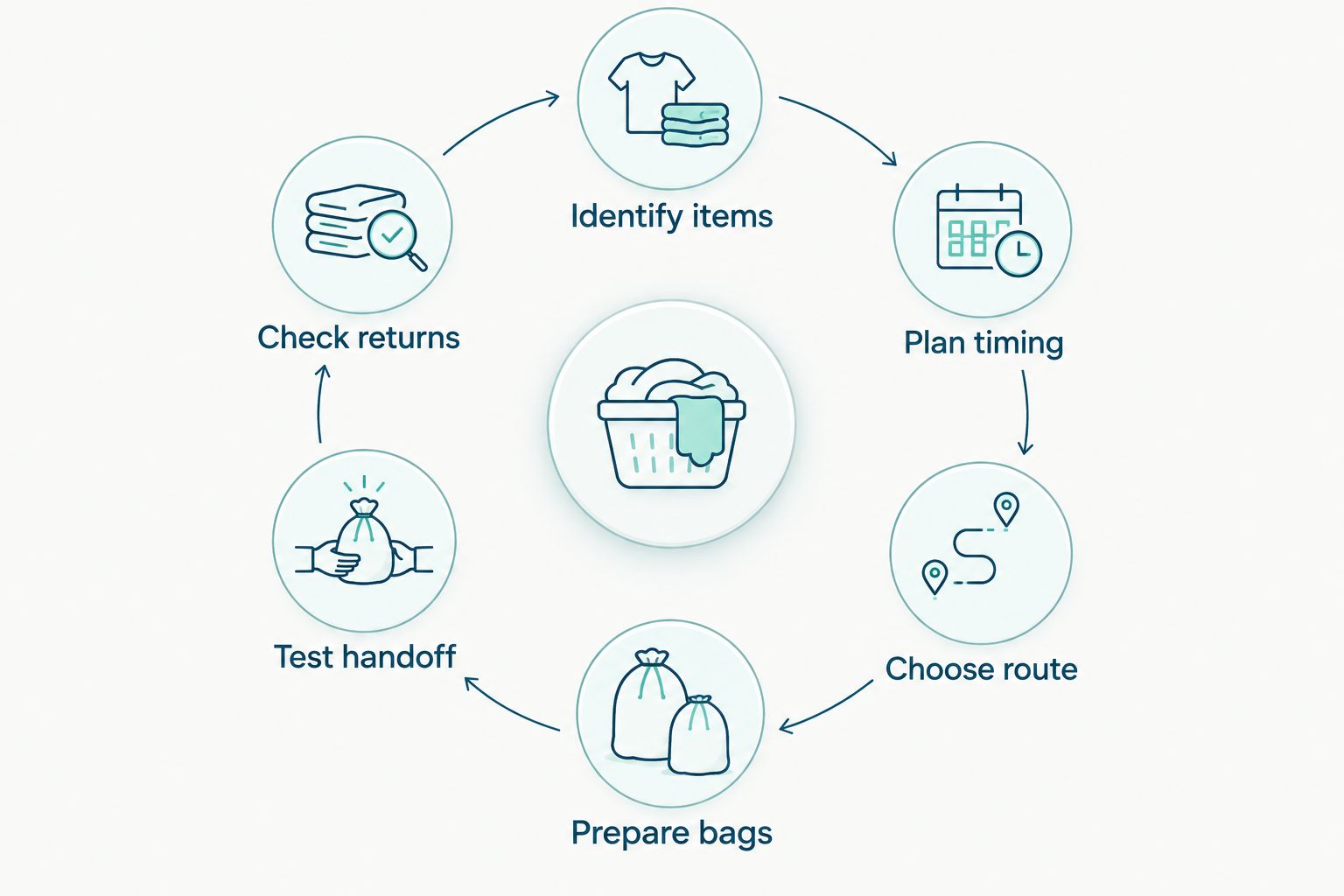
The process should read like a simple loop: identify the items, plan the timing, choose the cleaning route, prepare the bag, test the handoff, and check the return.
Compare laundry options for your moving company
Choose by textile type and staff responsibility first. A convenient handoff does not make a service suitable for equipment it has not agreed to clean.
These options solve different problems. Use the table to decide which conversation to have, then confirm handling requirements directly rather than assuming every provider follows the same process.
| Option | Best for | Main advantage | Key limitation |
|---|---|---|---|
| In-house washing | A company keeping laundry under direct staff control | Your team controls sorting and timing | Your team also handles washing, drying, folding, and equipment upkeep |
| Self-service laundromat | A company without its own laundry equipment | Staff can manage the load directly | An employee must transport and supervise the laundry |
| Hampr pickup, wash, fold, and delivery | Companies outsourcing accepted everyday laundry | Collection and return are part of the service | Operates in select US cities; confirm exact items and handling requirements |
| Specialist textile cleaning | A company seeking assessment of moving pads or unusual textiles | You can request handling advice for the exact material | Acceptance and cleaning methods require provider confirmation |
When comparing the work involved, include the entire task: sorting, transport, washing, drying, folding, checking, and putting items away. Outsourcing washing still leaves your company responsible for deciding what goes out and where clean items belong.
Keep that division of responsibility in your 2026 operating checklist. It prevents a useful service from becoming another task that everyone assumes someone else owns.
Take laundry off your task list
Explore pickup, wash, fold, and delivery for your business, then confirm your address and items.
Common mistakes moving companies make
Treating moving blankets like ordinary clothing
A moving blanket's size, construction, and care instructions need their own assessment. Do not add pads to a uniform order just because both items are made of fabric. Describe the exact textile and its condition before requesting cleaning.
Mixing customer goods with company workwear
Customer bedding and crew shirts belong to different owners and different records. Keep them physically separate. If a customer requests cleaning, document the instruction and agree on the handling route before sending anything away.
Scheduling collection without planning the return
A collection that fits the depot schedule is only half the job. Put the next-use deadline on the dispatch calendar, identify the return contact, and keep backup workwear ready. Do not leave a crew waiting for its entire uniform supply.
Passing heavily contaminated items through routine laundry
Tell the provider about suspected pests, chemical exposure, or unknown contamination before arranging collection. Keep affected items out of the routine workwear batch. Ordinary wash-and-fold should not be your default response to an unidentified cleaning risk.
Leaving laundry ownership to whoever notices it
Shared responsibility without a named owner invites missed handoffs. Give an employee responsibility for outgoing bags and returned items, with a backup contact. The routine should survive a busy moving day without depending on somebody remembering the pile.
FAQ
What's the best laundry pickup setup for a small moving company?
The best setup separates approved company workwear from customer property and moving equipment, with a named person handling collection and return. Start with an ordinary workwear batch and check whether the return fits your dispatch schedule.
Can Hampr handle laundry for a moving company?
Hampr offers pickup, wash, fold, and delivery for businesses in select US cities. Confirm your collection address, exact textiles, and handling requirements before making it part of your moving company's routine.
Can I send moving blankets with crew uniforms?
Send moving blankets with uniforms only if the provider explicitly accepts the exact blankets and the combined order. Size, construction, care instructions, and condition need separate assessment.
Is laundry pickup better than washing uniforms ourselves?
Laundry pickup is the better fit when you want to outsource collection, washing, folding, and return for accepted items. In-house washing is the better fit when your team needs direct control and accepts responsibility for the full task.
Can we include a customer's bedding in our laundry order?
Keep customer bedding outside your company laundry order unless you have documented instructions and an agreed handling process. Track the customer's items separately from crew workwear throughout the handoff.
How should movers prepare uniforms for laundry pickup?
Empty pockets, check care labels, and follow the provider's bagging instructions. Keep customer belongings and unapproved equipment out of the batch, and record who owns the collection and return handoffs.
How often should a moving company schedule laundry pickup?
Set the laundry schedule around dirty-item returns, clean-workwear needs, and the provider's confirmed process. Keep backup clothing ready rather than sending every usable uniform in the same batch.
One last thing
Choose the clean-laundry shelf before choosing the pickup spot. It sounds backward, but it forces you to answer the question that matters: where will the next crew find what it needs?
A laundry-free life for your crew does not mean an owner-free process for the business. Give clean workwear a home, give the handoff an owner, and keep customer belongings out of the loop. Then the laundry bag becomes a task you can hand over—not another mystery in the loading bay.