Best overall for washable, bleach-compatible fabrics: oxygen bleach. Best first response to fresh wine spills: liquid laundry detergent. Best for a dedicated spot-treatment kit: a wine-specific stain remover. This 2026 guide helps you choose by fabric and stain condition—not by whichever bottle makes the biggest promise.
- The best stain remover for wine stains depends on fabric care: choose oxygen bleach only for compatible washable items.
- Liquid laundry detergent is a practical first treatment for fresh wine spills on washable clothing.
- Wine-specific stain removers suit dedicated spot-treatment kits, but fabric restrictions still apply.
- Hampr handles laundry pickup, washing, folding, and delivery; identify wine stains before handing over an affected garment.
Why this matters
A splash of red wine doesn't call for the strongest cleaner in the cupboard. It calls for a treatment your fabric can tolerate. A faded patch or damaged finish is a different problem from the stain you started with.
Separate stain treatment from the rest of laundry day. Hampr offers pickup, washing, folding, and delivery for households and businesses in select US cities. Flag an affected garment and explain any treatment already used rather than letting the stain disappear into the laundry pile.
Hampr is best for busy households seeking laundry pickup, washing, folding, and delivery in supported cities. That service is separate from choosing a suitable stain remover; no bottle or wash routine guarantees that every wine mark will disappear.
What makes the best stain remover for wine stains?
For this 2026 buying guide, these criteria matter more than a long list of cleaning claims:
- Fabric compatibility: The garment's care label and the cleaner's directions must both permit the treatment.
- Stain condition: A fresh spill needs blotting and prompt attention; a dried mark needs a treatment suitable for lingering discoloration.
- Application control: You should be able to treat the affected area without unnecessarily soaking surrounding fabric.
- Clear directions: Look for instructions covering application, rinsing, washing, and fabric exclusions.
- Routine fit: Choose something you can use correctly, whether that means detergent already beside the washer or a dedicated stain-treatment bottle.
A label saying color-safe doesn't mean every dye or finish will tolerate the product. Test an inconspicuous area as directed before treating a visible stain.
Best wine stain removers at a glance
| Option | Best for | Standout feature | Key limitation |
|---|---|---|---|
| Oxygen bleach | Lingering wine discoloration on compatible washable fabrics | An oxidizing treatment for colored stains | Not suitable for every fiber, dye, or finish |
| Liquid laundry detergent | Fresh spills on everyday washable clothing | Combines pretreatment with the normal washing routine | Detergent alone doesn't guarantee removal of remaining wine color |
| Wine-specific stain remover | A dedicated spot-treatment kit | Directions focused on wine-stain treatment | Fabric permissions and aftercare vary by product |
These are treatment categories, not interchangeable formulas. Read the exact bottle you choose; a recommendation for one category doesn't approve every product within it.
1. Oxygen bleach: best for lingering wine discoloration
Oxygen bleach is the default choice here for washable garments that permit it. It uses oxidation to help break down colored staining, making it a sensible next treatment when blotting and ordinary laundering leave a wine mark behind.
The important word is compatible. Oxygen bleach is not permission to soak every shirt, dress, or tablecloth. Some products exclude wool, silk, leather, and other materials; the package and care label decide what belongs in the treatment.
Oxygen bleach pros:
- Targets colored staining rather than relying only on physical rubbing.
- Provides a separate treatment option when ordinary washing leaves discoloration.
- Can fit into a wash or soak routine when the product directions allow it.
Oxygen bleach cons:
- Requires checks for fiber, dye, and finish compatibility.
- Mixing and soaking directions differ between formulas.
- Doesn't guarantee removal of old stains or damage already caused by earlier treatment.
Best for: A washable, colorfast garment with a persistent wine mark and labels that permit oxygen bleach.
For your 2026 laundry cupboard, prioritize clear fabric exclusions and usable instructions over an oversized list of stain claims. Don't improvise a stronger mixture or extend the treatment beyond the directions because the stain looks stubborn.
Verdict: Buy for compatible washable fabrics with lingering wine discoloration; skip when either label rules it out.
2. Liquid laundry detergent: best for fresh wine spills
Liquid laundry detergent is a practical first treatment for fresh wine on everyday washable clothing. After blotting and checking the care label, use the detergent's pretreatment instructions, then wash as directed.
This option keeps the response simple. You don't need to turn a spilled drink into a countertop chemistry project, and you can avoid introducing several cleaners before you know what the fabric tolerates.
Liquid laundry detergent pros:
- Fits into the same routine used to wash the garment.
- Offers a straightforward first treatment when pretreatment is permitted.
- Avoids adding a separate product if your existing detergent suits the task.
Liquid laundry detergent cons:
- Isn't a guaranteed answer to persistent wine pigmentation.
- Not every detergent has the same pretreatment directions.
- Ordinary laundry instructions don't apply to dry-clean-only garments.
Best for: A fresh spill on washable clothing before you reach for a more involved treatment.
Apply only as directed and avoid aggressive scrubbing. Friction can roughen a fabric's surface, leaving a worn-looking patch even if the wine fades. The goal is a clean garment, not a clean spot surrounded by damage.
Verdict: Buy as your everyday laundry essential; use the bottle you already own when its directions permit pretreatment.
3. Wine-specific stain remover: best for a dedicated spot kit
A wine-specific stain remover gives you a product intended for this particular spill. The useful feature is a focused set of directions—not a promise that every wine stain on every material will vanish.
Choose the bottle by its permitted surfaces. A treatment labeled for washable clothing doesn't automatically belong on upholstery, rugs, silk, or a garment marked dry clean only.
Wine-specific stain remover pros:
- Keeps a dedicated treatment ready for a familiar household spill.
- Provides wine-focused application directions.
- Helps you organize a spot-treatment kit separately from ordinary washing supplies.
Wine-specific stain remover cons:
- Formulas and permitted fabrics differ between products.
- Spot treatment can still require rinsing or laundering afterward.
- A wine-focused label doesn't establish that it outperforms every general laundry treatment.
Best for: Someone who wants a dedicated wine-spill product and will check its fabric permissions before use.
When choosing a wine-specific remover in 2026, read the exclusions before the headline claim. Check whether the product permits your material, whether a hidden-area test is required, and what happens after application.
Verdict: Buy for a dedicated stain kit when the label matches your fabric; skip bottles with unclear treatment instructions.
How we ranked these options
The order follows fabric compatibility, stain condition, application control, clear directions, and routine fit. Oxygen bleach takes the default slot for compatible washable fabrics with lingering discoloration; detergent takes the fresh-spill slot; a wine-specific remover takes the dedicated-kit slot.
This is a use-case ranking, not a measured claim that one formula removes more wine than another. Your care label can overrule the entire list. A cleaner that doesn't belong on your garment isn't the best choice for that garment.
Treat a wine spill without making a second problem
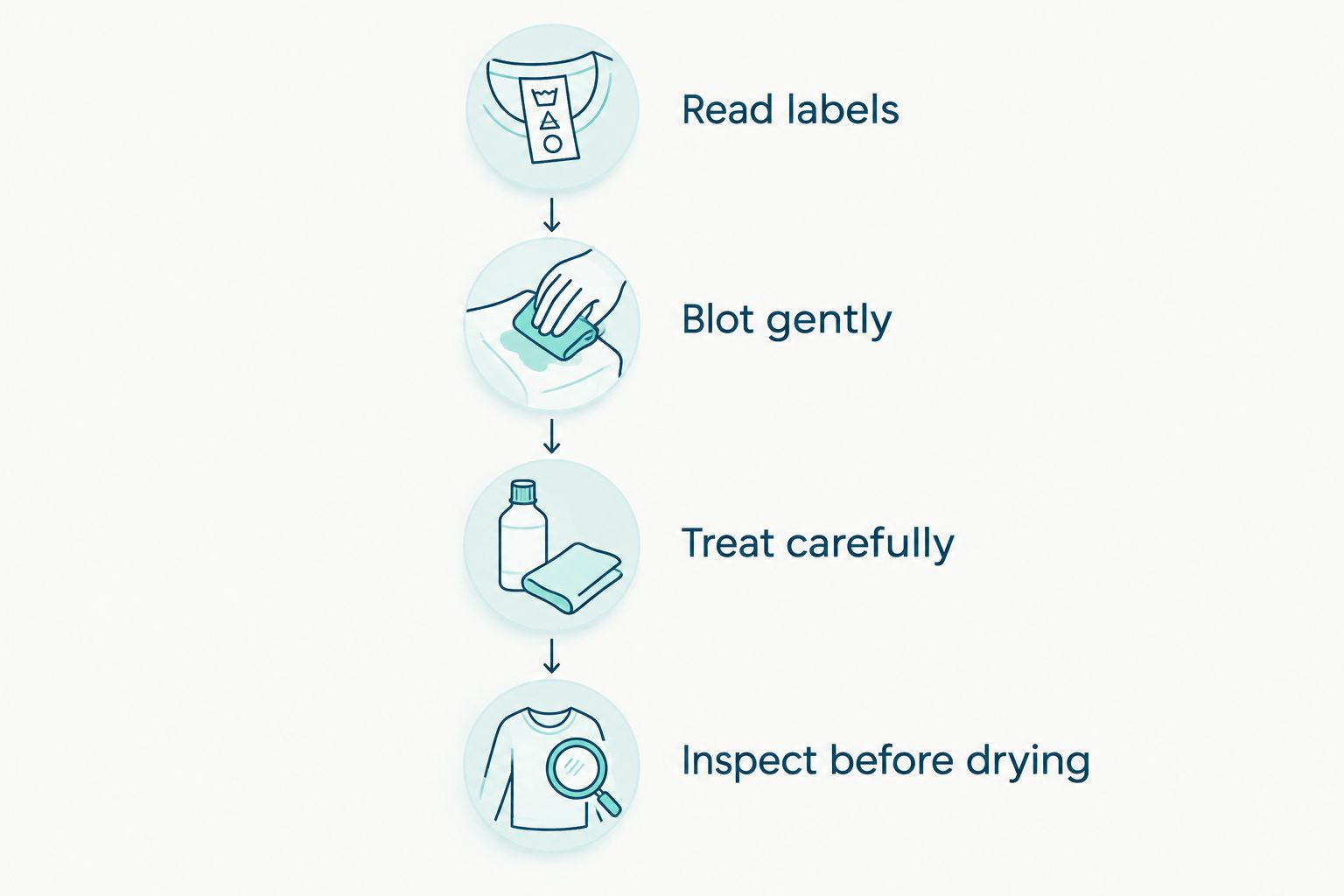
Use this sequence for washable clothing. For dry-clean-only items or uncertain materials, stop at gentle blotting and ask a cleaner about the stain.
Read labels
Check the garment first, then the treatment bottle. Look for washing restrictions, bleach restrictions, and directions that exclude the fiber or finish. If the instructions conflict, don't use that treatment.
Blot gently
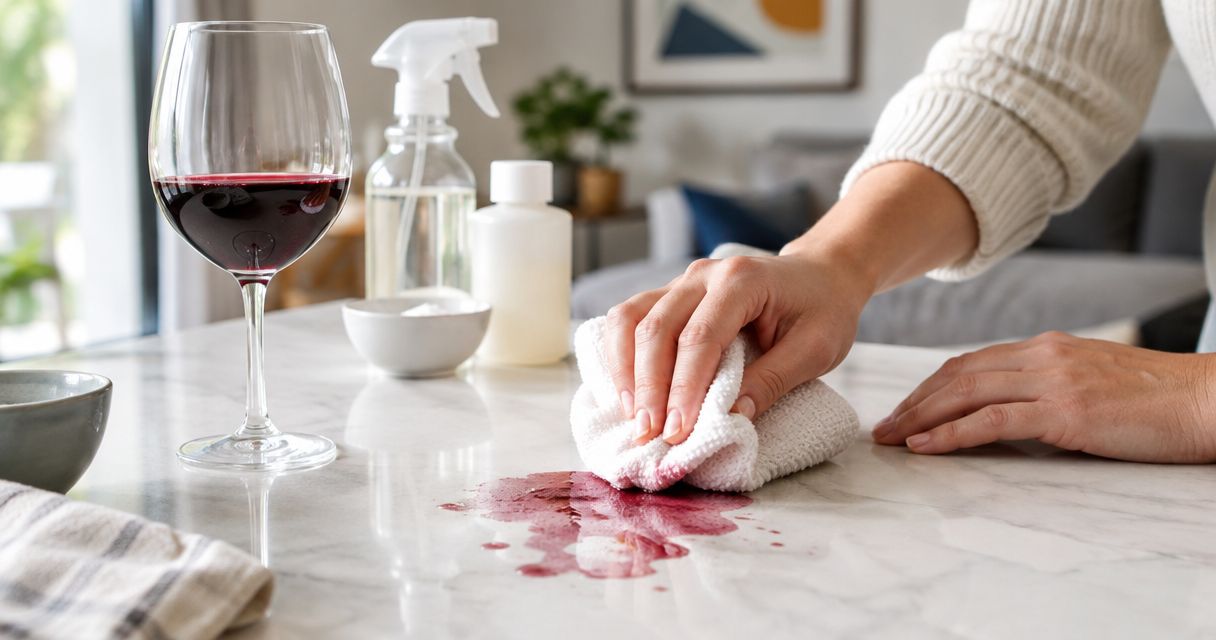
Lift excess wine with a clean, absorbent cloth. Dab rather than scrub, and move to a clean part of the cloth as it picks up liquid. Don't grind the spill into the fabric.
Treat carefully
Test as directed, then apply one suitable treatment according to its label. Use the stated amount and contact time. More cleaner isn't a substitute for compatibility, and combining products creates avoidable safety risks.
Inspect before drying
Wash according to the garment and treatment directions, then check the affected area before machine drying. Dryer heat can make remaining stains harder to remove. If a mark remains, reassess the next permitted treatment rather than repeating the same step without checking.
Keep the routine simple enough to follow when dinner is still on the table. A clean cloth and a readable care label are more useful than several open bottles competing for the same stain.
Which stain remover should you choose?
Choose oxygen bleach for lingering wine discoloration only when the garment and product labels permit it. Start with liquid detergent for a fresh spill on suitable washable clothing. Choose a wine-specific remover when you want a dedicated treatment kit with directions that match your fabric.
For wool, silk, structured clothing, unknown upholstery, or dry-clean-only pieces, don't force a household laundry solution. Ask a cleaner what treatment is appropriate and disclose what you have already applied.
If you're sending laundry to Hampr, identify the affected item and describe the spill and any pretreatment. Don't assume a stain will be noticed inside a folded sleeve or underneath a larger load.
Take laundry off your list
Explore pickup, washing, folding, and delivery for households and businesses in select US cities.
FAQ
What's the best stain remover for wine stains in 2026?
Oxygen bleach is the default recommendation here for lingering wine discoloration on compatible washable fabrics. Use liquid detergent as a first treatment for fresh spills, and let the garment care label rule out unsuitable options.
Is oxygen bleach better than detergent for red wine?
Oxygen bleach is the more targeted choice for lingering colored staining when the fabric permits it. Liquid detergent is a practical first treatment for fresh spills, but neither option guarantees complete removal.
Can I remove a dried wine stain?
A dried wine stain can still respond to treatment, but complete removal isn't guaranteed. Choose a treatment allowed by both labels, follow its directions, and inspect the garment before drying.
Should I use hot or cold water on a wine stain?
Follow the garment and stain-remover directions rather than choosing hot water automatically. Water temperature is part of the treatment instructions, and some fabrics have strict washing limits.
Can I mix stain removers to make them stronger?
No—don't combine cleaning products unless their labels explicitly direct you to do so. Never mix chlorine bleach with ammonia or acids, including vinegar; dangerous gases can result.
Can I use a wine stain remover on silk or wool?
Only use a treatment on silk or wool when both the garment label and product directions explicitly permit it. Otherwise, blot gently and ask a cleaner about the stain before applying household laundry products.
Should I tell Hampr about a wine-stained garment?
Yes—identify the garment, explain where the stain is, and disclose any treatment already used. Don't assume pickup and washing guarantee stain removal, and confirm suitable handling before sending an item with special care requirements.
One last thing
Make a note of what touched the stain. The original spill is only part of the story once detergent, bleach, or another treatment enters the picture. That information helps you avoid repeating an unsuitable treatment and gives a cleaner a clearer starting point.
Your simplest 2026 rule: treat the fabric as carefully as the stain. Getting rid of a wine mark isn't a win if the garment loses its color along the way.