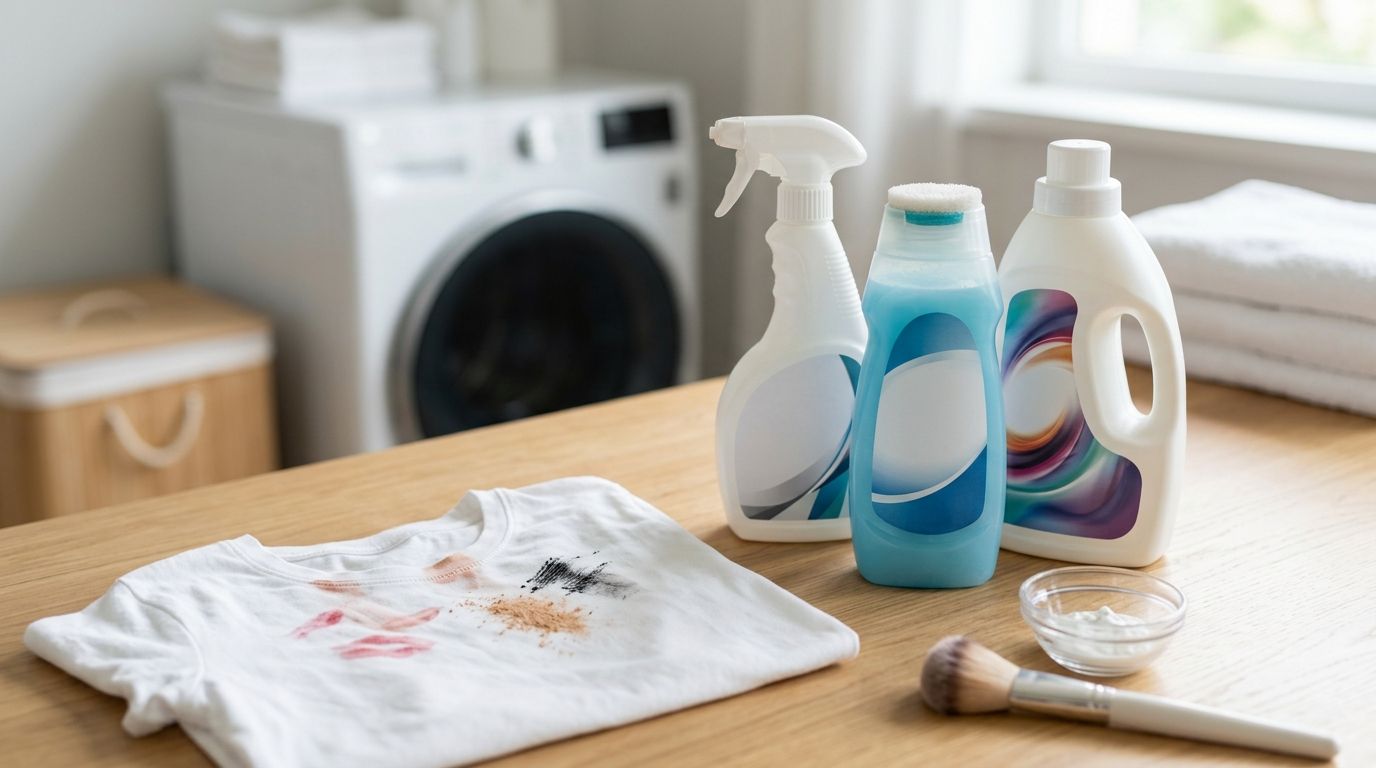
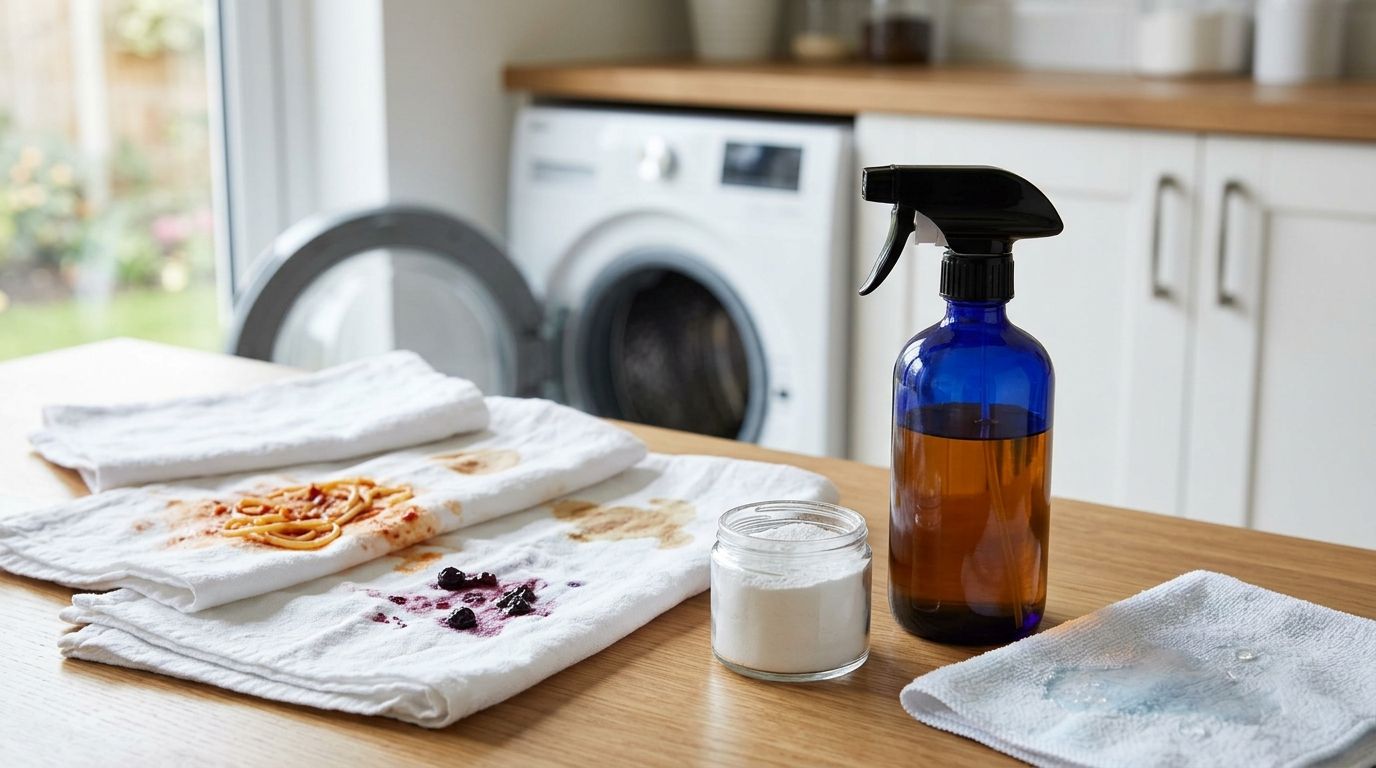
Best overall: an enzyme-based laundry stain remover for washable clothes with food residue. Best for grease: plain liquid dish soap. Best for a quick first pass: liquid laundry detergent. Best for lingering marks on colorfast washable fabrics: oxygen bleach. In 2026, the best stain remover for food stains depends on what landed on the fabric and what its care label allows.
- An enzyme-based pretreatment is the best stain remover for food stains when washable clothes have food residue.
- Use plain liquid dish soap for cooking oil or greasy dressing; rinse it out before machine washing.
- Choose oxygen bleach for lingering marks only when the garment care label permits it.
- Hampr handles laundry pickup, washing, folding, and delivery; pretreat a visible stain before pickup.
Why this matters
A drop of cooking oil and a splash of fruit juice do not call for the same first move. Oil needs help lifting grease; a colored mark can remain even after the food itself is gone. Picking a remover by the stain, then checking the garment’s care label, gives you a clearer plan than reaching for the strongest-looking bottle.
Pretreatment matters before pickup, too. Hampr picks up, washes, folds, and delivers laundry in U.S. cities where it operates. If a garment has a visible food stain, check its label and address the spot before you bag it; do not assume a regular wash will remove every stain.
This 2026 guide covers stain-remover types, not a claim that one formula works on every fabric or every dinner mishap. Start with the safest applicable method and keep heat away from a mark that has not come out.
What makes the best stain remover for food stains?
- Match the mess. An enzyme-based pretreatment targets washable food residue, while dish soap is a more direct choice for an oily spot. Name the stain before choosing the product.
- Read the care label. A washable cotton shirt and a dry-clean-only garment need different handling. If the label rules out washing or bleaching, that instruction beats this ranking.
- Check colorfastness. Before applying a remover broadly, test it on a hidden area and follow its package directions. Dye loss is a worse surprise than a stain that needs another pass.
- Consider the rinse. A product used before machine washing needs to come out of the fabric. Dish soap, in particular, belongs in a small spot treatment, not poured into the washer.
- Inspect before drying. If the mark remains after washing, skip the dryer and reassess. Heat can make a remaining stain harder to remove.
The best choice is the one that fits both the food and the fabric. In 2026, no single product type earns the top spot for every food stain; the ranking below gives each option a distinct job.
Best stain removers for food stains at a glance
| Rank and option | Best for | Standout feature | Key limitation |
|---|---|---|---|
| 1. Enzyme-based laundry stain remover | Washable food residue | Pretreatment aimed at food soils | Requires label-compatible use and time to work |
| 2. Plain liquid dish soap | Fresh greasy spots | Targets cooking oil and fatty dressing | Needs thorough rinsing before machine washing |
| 3. Liquid laundry detergent | Immediate, general pretreatment | Uses a product already intended for washable laundry | Not a targeted fix for every stain component |
| 4. Oxygen bleach | Lingering marks on colorfast washable fabrics | Offers a label-directed soak option | Unsuitable when the care label rules it out |
The table is a decision tree, not a promise of stain removal. A greasy salad-dressing mark belongs in a different slot from a remaining colored mark. If you cannot identify the food, begin with the care label, blot excess residue, and choose a gentle, label-compatible first treatment rather than combining products.
1. Enzyme-based laundry stain remover: best for food residue
Best for: Washable clothing with food residue, including marks left by sauces and meals containing protein or starch. An enzyme-based laundry pretreatment is the best overall pick because its job matches a broad set of food soils, rather than just grease or a mark left after washing. Apply it according to its own label, then wash according to the garment’s label.
This is a category recommendation, not a claim that every enzyme formula is identical. Products differ, and so do fabrics. Test a hidden area first when the garment or product directions call for it, and do not leave a treatment on longer than its instructions allow.
Enzyme-based stain remover pros:
- Gives washable food residue a targeted pretreatment before the main wash.
- Fits the common situation where you know food caused the mark but the meal had several ingredients.
- Keeps stain treatment separate from the choice of laundry detergent.
Enzyme-based stain remover cons:
- It is not permission to ignore a delicate or dry-clean-only care label.
- A grease-heavy spill can still call for a more oil-focused first step.
- The application and waiting instructions depend on the product you choose.
2026 verdict: Buy an enzyme-based laundry stain remover as your default food-stain pretreatment for compatible washable items. For a clearly oily stain, use the grease-specific option below instead.
2. Plain liquid dish soap: best for cooking oil and greasy dressing
Best for: A fresh spot from cooking oil, butter, or an oily salad dressing on washable fabric. Plain liquid dish soap is designed to deal with grease. Use a small amount on the affected area, work gently from the outside of the mark toward its center, and rinse before washing the garment as its label directs.
Do not confuse spot treatment with adding dish soap to a washing machine. The soap needs rinsing, and rubbing hard can spread a mark or stress the fabric. If a dressing also leaves color behind, removing the oily portion does not guarantee the entire stain is gone.
Plain liquid dish soap pros:
- Matches the oily part of a food stain directly.
- Makes sense when you can identify grease as the main problem.
- Works as a separate pretreatment before a label-approved wash.
Plain liquid dish soap cons:
- It is not a general solution for fruit, coffee, or other non-greasy marks.
- Incomplete rinsing can leave soap in the fabric.
- It does not replace checking the care label or testing a hidden area.
2026 verdict: Buy plain liquid dish soap for a greasy washable item, then rinse and inspect the spot. If color remains after the oil lifts, choose the next step for that remaining mark rather than adding more soap.
3. Liquid laundry detergent: best for a quick first pass
Best for: A fresh food mark on a washable garment when you want to pretreat with the detergent you already plan to use for laundry. Apply a small amount directly to the spot only if the detergent’s directions allow it. Gently work it in, then wash according to both the product instructions and the garment label.
Liquid detergent is the practical middle option in this 2026 ranking. It gives you a first pass without choosing a separate specialty remover, but convenience is not the same as a perfect match. A clearly greasy stain points to dish soap; a lingering mark on a colorfast item can call for a label-approved oxygen-bleach treatment.
Liquid laundry detergent pros:
- Serves as a pretreatment and a laundry product, depending on its directions.
- Fits a washable item when the food stain is fresh and not clearly grease-heavy.
- Lets you inspect the result after a normal, label-approved wash.
Liquid laundry detergent cons:
- A general detergent is less targeted than a grease treatment for a clearly oily spot.
- It cannot make an item machine-washable if its care label says otherwise.
- A remaining stain still needs a decision before drying.
2026 verdict: Buy liquid laundry detergent for a simple first pass on compatible washable clothing. Hold on the dryer until you have checked the result in good light.
4. Oxygen bleach: best for a lingering mark on colorfast fabric
Best for: A stain that remains on a colorfast, washable item after an initial treatment. Oxygen bleach is a follow-up option when its package directions and the garment’s care label both permit use. Follow the product’s instructions for mixing, application, and washing rather than improvising a stronger solution.
This option ranks last because it answers a narrower question: what to try when a mark remains, not what to put on every fresh spill. Check colorfastness in a hidden area. Do not treat the word bleach as proof that a product is safe for every fabric or dye.
Oxygen bleach pros:
- Gives a remaining mark a separate, label-directed treatment path.
- Can be useful after the food residue itself has been addressed.
- Makes the care-label and colorfastness checks explicit.
Oxygen bleach cons:
- It is not suitable for every garment; the care label decides.
- It adds a step when a simpler pretreatment might have done the job.
- It is not a substitute for first addressing a fresh, greasy spot.
2026 verdict: Hold oxygen bleach for a remaining mark on a compatible colorfast washable item. Skip it when either the garment label or the product directions rule it out.
How to treat a food stain before laundry pickup
You do not need to turn your laundry room into a science project. Use the same order whether you wash the item yourself or set it aside for pickup: identify the mess, check the label, treat the spot, and inspect before drying.
Identify the mess
Lift off loose food without grinding it into the fabric. Blot liquid rather than rubbing it across a larger area. If the stain looks oily, use the grease route; if food residue is the main issue, look at an enzyme-based pretreatment.
Check the label
Find the garment’s washing instructions before wetting it or applying a remover. Dry-clean-only and special-care items do not belong in a general washable-clothes routine. When a remover calls for a colorfastness test, use a hidden area.
Treat the spot
Apply one appropriate product according to its directions. Avoid mixing stain removers or stacking treatments without washing or rinsing between them. If you used dish soap, rinse it from the fabric before the machine wash.
Inspect before drying
Look at the stained area after washing and before applying heat. If the mark is still visible, choose a label-compatible follow-up rather than hoping the dryer will finish the job. For 2026 laundry pickup, pretreating a visible mark before bagging the item gives you control over this first decision; it does not guarantee a particular cleaning result.
How we ranked these options
The ranking follows the decisions you actually face with food-stained laundry: what caused the mark, whether the garment is washable, whether the dye holds, and whether the first wash leaves anything behind. Enzyme-based pretreatment takes the default slot for washable food residue. Dish soap wins the grease slot; liquid detergent covers the quick general first pass; oxygen bleach stays in the follow-up slot.
These are product types, not independently tested brands. The order does not claim that one named formula beats another, and it does not override any garment or product label. That distinction matters when a food stain contains more than one thing: an oily, colored sauce can require attention to the grease first and another decision after washing.
Which stain remover for food stains should you choose?
Choose an enzyme-based laundry stain remover if you want one default pretreatment for food residue on washable clothes. Choose plain liquid dish soap when the spot is clearly oily. Choose liquid laundry detergent for an uncomplicated first pass, and reserve oxygen bleach for a remaining mark on a compatible colorfast garment.
If the item is dry-clean-only or its label rules out your chosen treatment, skip the at-home stain remover. The best stain remover for food stains is never the one that damages the clothing while chasing the spot. Check the result before drying; that final look determines whether the job is done.
FAQ
What is the best stain remover for food stains on washable clothes?
An enzyme-based laundry pretreatment is the best default for food residue on washable clothes. Check the garment and product labels first; use a grease-focused treatment when oil is the main issue.
What should I use on a cooking oil stain?
Use a small amount of plain liquid dish soap as a spot treatment on compatible washable fabric. Rinse it out before washing, and inspect the area before drying.
Is dish soap better than laundry detergent for greasy food stains?
Plain liquid dish soap is the more targeted first choice when grease is the clear problem. Liquid laundry detergent is a practical general pretreatment when the stain is not distinctly oily and its directions permit direct application.
Can I use oxygen bleach on every food stain?
No. Use oxygen bleach only when both its directions and the garment’s care label permit it, and check colorfastness first. It fits best as a follow-up for a lingering mark on compatible washable fabric.
Should I dry clothes if a food stain is still visible?
No. Inspect the item after washing and keep it out of the dryer if the mark remains. Reassess the stain and choose a care-label-compatible next step.
Should I pretreat a food stain before laundry pickup?
Yes, if the garment label and your chosen product allow it. Hampr provides laundry pickup, washing, folding, and delivery in cities where it operates; a visible stain deserves attention before you bag the item.
What if I do not know which food caused the stain?
Start by checking the care label and gently removing loose residue. Choose a label-compatible general pretreatment, then inspect the item after washing before deciding on another treatment.
One last thing
A stain can look gone while the fabric is wet and still be visible after it dries. Check it before using the dryer. That small pause matters more than buying an extra remover you cannot match to the stain. In 2026, a simple stain routine and a dependable laundry routine solve different parts of the same pile.