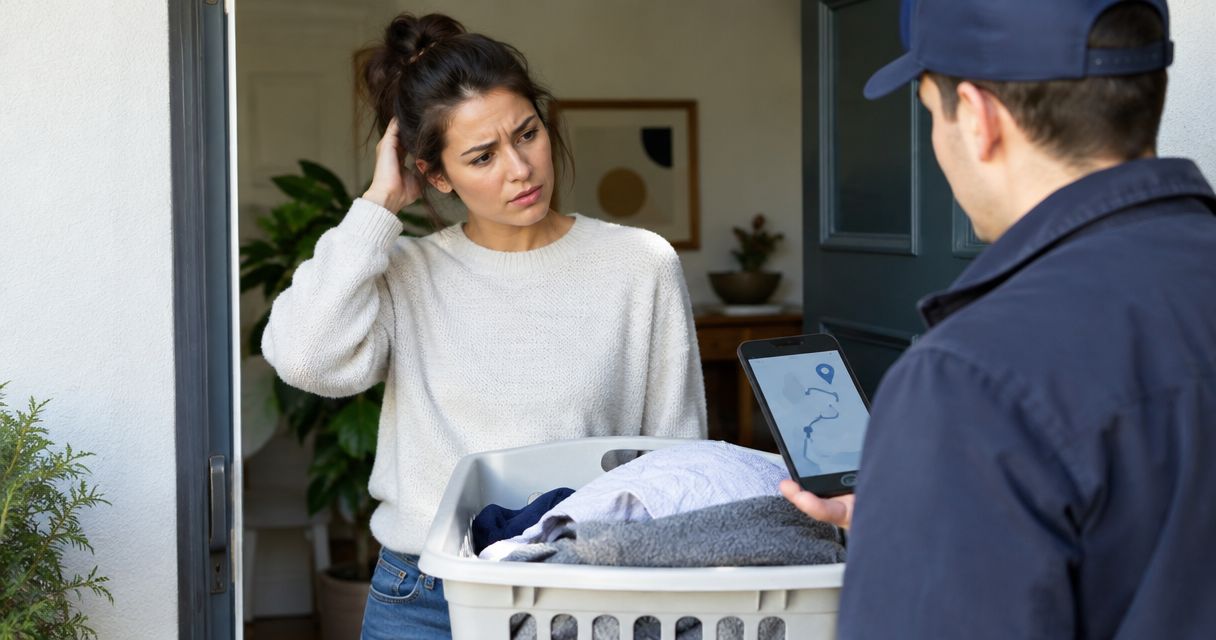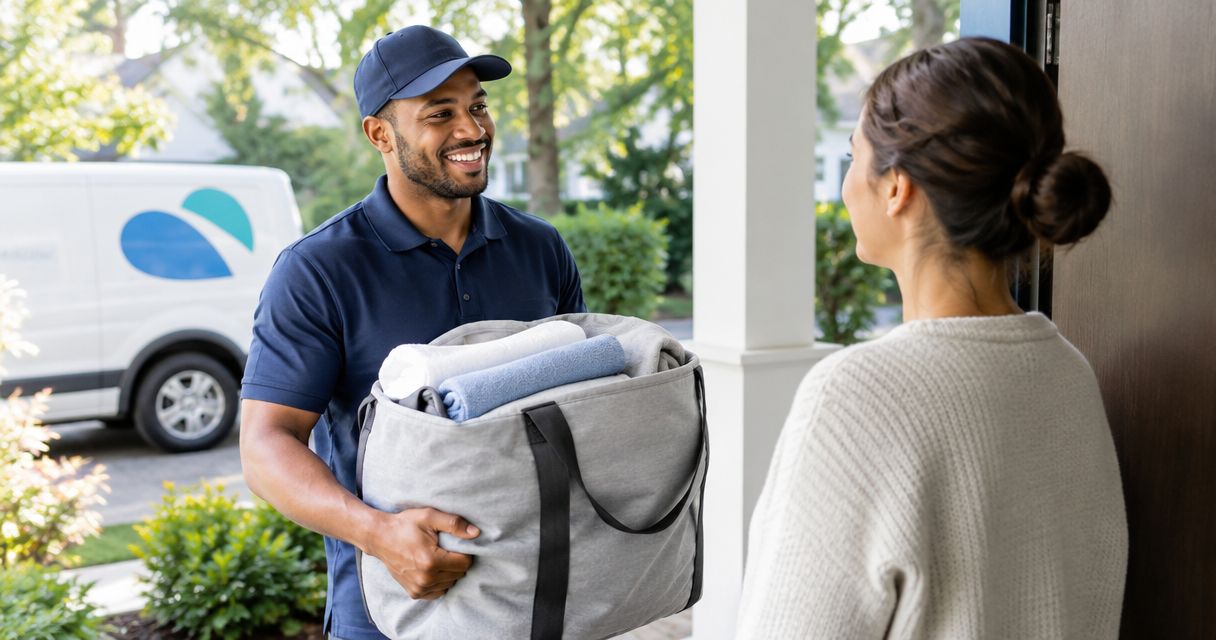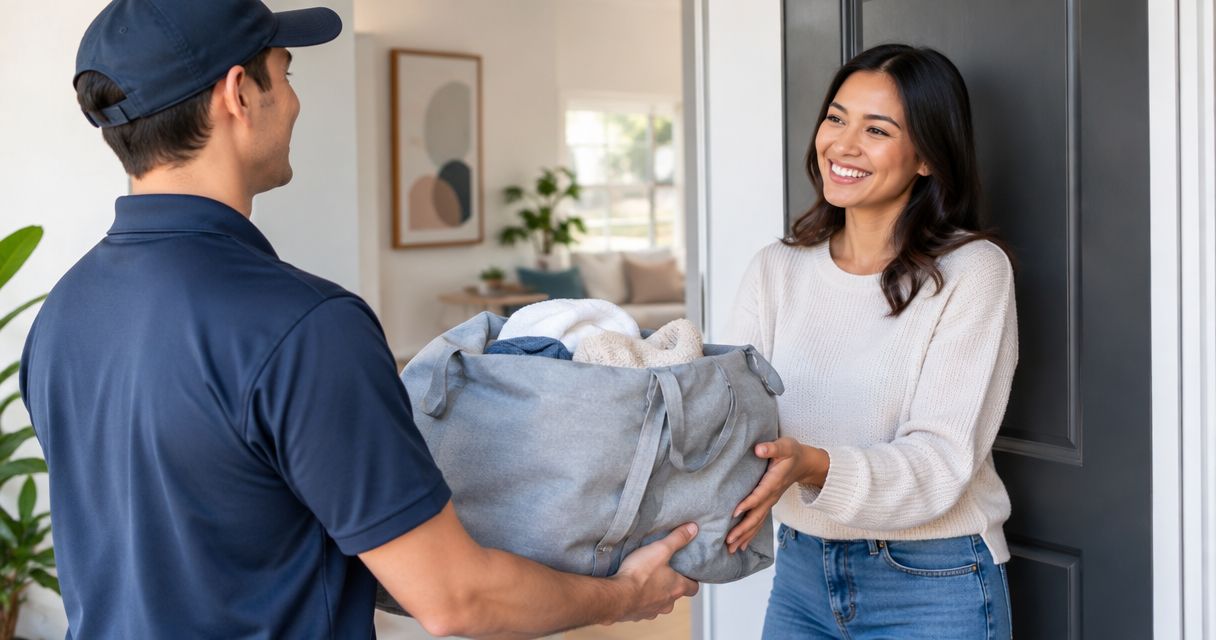
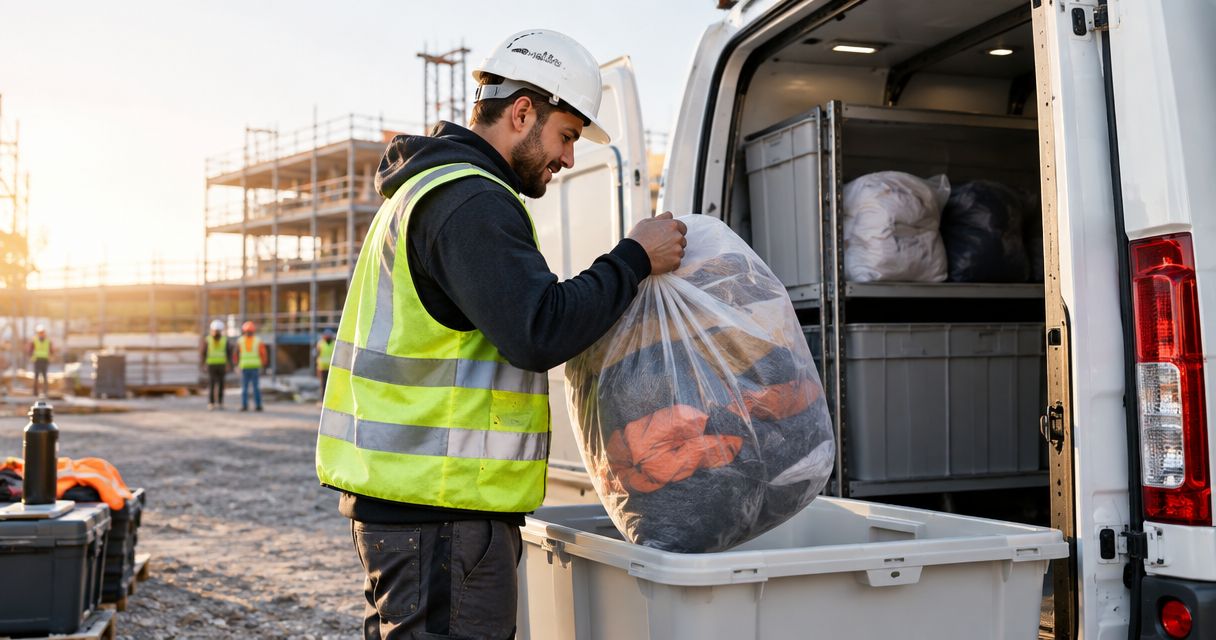
Construction crew laundry pickup is a collection, washing, folding, and delivery service aimed at keeping ordinary washable work clothes ready for the next shift. The key difference is separating everyday laundry from contaminated clothing and protective gear that needs a different cleaning process.
- Laundry pickup for construction crews suits ordinary washable workwear, not an unchecked mix of contaminated clothing and protective equipment.
- Hampr is best for crews seeking pickup, wash, fold, and delivery of ordinary laundry, subject to item acceptance.
- Check garment instructions, jobsite exposure, and provider acceptance before sending workwear.
- Keep clean replacement clothing ready while your crew's laundry is away.
Why laundry pickup matters for construction crews
A construction crew's laundry plan has to fit the work, not just the washing machine. Changing jobsites, shared accommodation, and different garment requirements all belong in the decision.
For your 2026 plan, start with a simple distinction: ordinary work clothes and jobsite-contaminated clothing are not the same laundry problem. Pickup removes the collection and washing tasks; it does not replace an employer's responsibility to assess exposure or follow protective-clothing requirements.
Before booking, review how to prepare laundry for pickup and delivery. Then build a crew-specific process around what belongs in the bag, who hands it over, and where clean clothing returns.
The payoff you should measure is practical: fewer laundry errands, a clear handoff, and clean garments ready when needed. Do not assume a pickup service accepts everything worn on a construction site.
How to set up laundry pickup for construction crews
1. Define which clothing belongs in ordinary laundry
Start with a written list. A shared note or paper checklist works; you do not need a new system to decide which garments belong in routine washing.
Separate washable everyday clothing from items that need exposure assessment, special handling, or manufacturer-directed cleaning. Work pants with ordinary soil and clothing exposed to a hazardous substance require different decisions. A stain's appearance does not establish whether a garment is safe to send.
If the job involves lead, asbestos, chemicals, or other hazardous materials, have the responsible safety lead determine the cleaning route. Do not send suspected contaminated clothing through ordinary wash-and-fold or take it home for household washing.
Use these 3 checks before a garment enters the pickup bag:
- Care instructions: Read the label and any manufacturer cleaning guidance.
- Exposure history: Identify what the garment encountered during the workday.
- Provider acceptance: Describe the item and its condition before sending it.
2. Separate laundry before anyone bags it
Set up a clearly explained sorting point where your crew changes or stores workwear. Keep it outside active work areas and away from clean clothing storage.
For your 2026 setup, give workers a sorting rule they can follow without guessing. Do not ask a laundry driver to identify hazards at the door, and do not treat a sealed bag as permission to send questionable clothing.
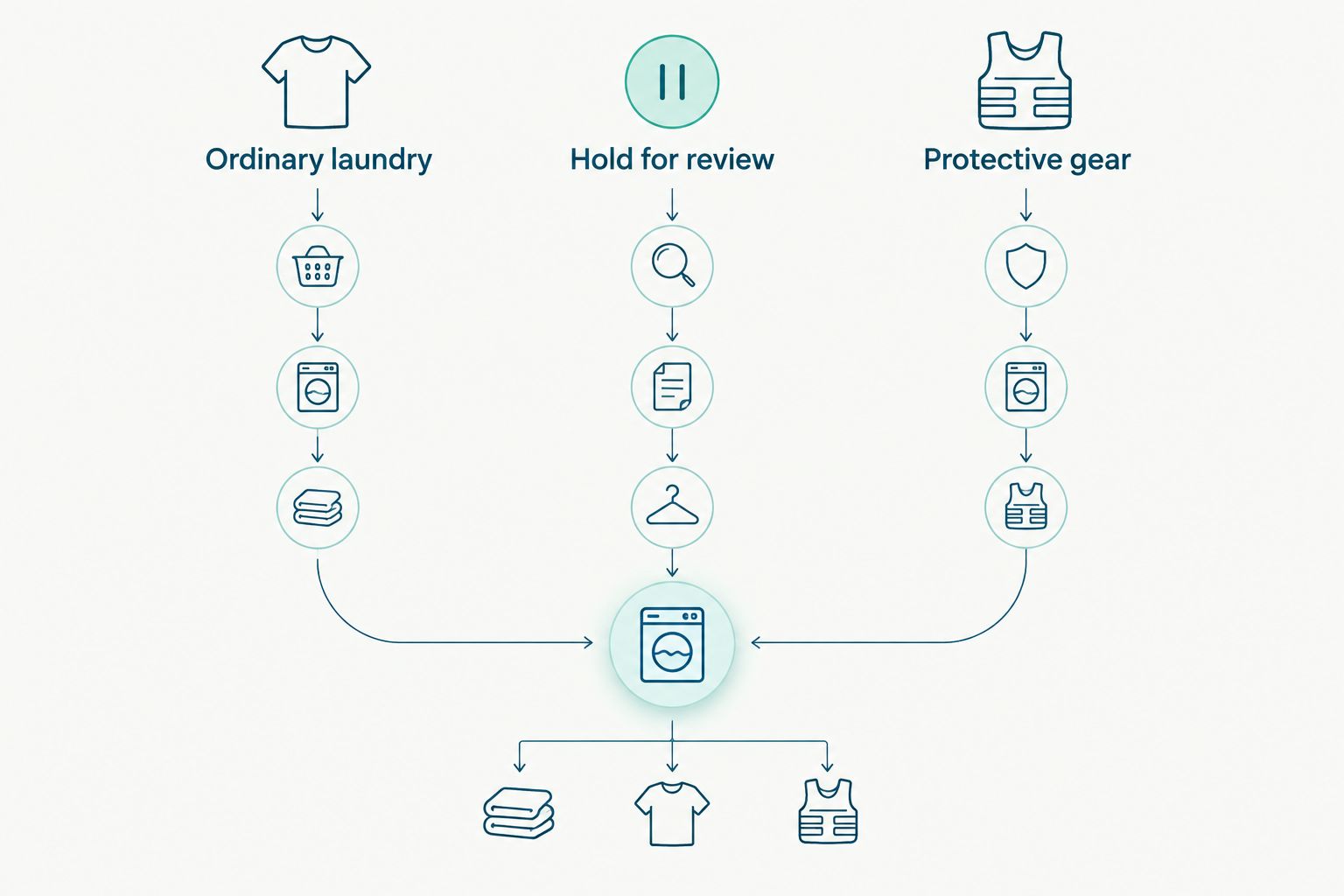
Use separate routes for ordinary laundry, garments needing a decision, and protective equipment. Follow your site's safety procedures for anything suspected of contamination; a household laundry bag is not a substitute for required containment or labeling.
- Ordinary laundry: Include only accepted, washable clothing cleared for routine cleaning.
- Hold for review: Keep uncertain items out of the pickup order pending assessment.
- Protective gear: Follow the equipment manufacturer's instructions and your employer's program.
- Empty pockets of screws, blades, batteries, markers, and other loose objects.
3. Confirm the service fits your actual load
Write down your requirements before comparing providers. Include garment types, soil conditions, collection address, bag quantities, and the day the crew needs clean clothing back.
A manual route is to assign someone to wash accepted garments or take them to a laundromat. That keeps transport and washing under your control, but somebody still owns the errand. Pickup is the alternative when you want collection, washing, folding, and return handled outside the crew.
Hampr provides on-demand laundry pickup, wash, fold, and delivery for households and businesses in select US cities. For construction workwear, confirm acceptance of the actual garments and soil conditions rather than treating a general laundry service as a specialist industrial cleaner.
Before choosing a provider for 2026, ask questions that produce clear answers:
- Describe the garments and ask whether the provider accepts them in their current condition.
- Explain whether clothing is ordinary workwear or has special cleaning requirements.
- Confirm collection and return arrangements for the exact address.
- Ask how the provider handles care instructions and items it cannot process.
- Confirm the return timing before committing clothing needed for a shift.
- Request a clear explanation of billing and order requirements before booking.
4. Assign the collection and return handoffs
Use a shared calendar and appoint a contact before setting a collection date. A simple reminder is enough if it tells the right person what to do.
Plan 2 handoffs: dirty laundry leaving and clean laundry returning. Both need an owner. A driver reaching a locked gate is not a laundry plan, and clean clothes left beside dusty equipment are not ready for the next shift.
Choose a handoff point that does not require entering an active construction area. If the crew moves between projects, update the address and instructions before the next collection rather than relying on an old order.
Keep the instructions short enough to read on a phone:
- Name a primary contact and a backup contact.
- Specify an agreed handoff point with appropriate access.
- Record which bags belong to which worker or crew, using the provider's accepted labeling method.
- Keep clean returns in a designated clean storage area.
- Update the collection details whenever the crew changes location.
5. Keep replacement workwear ready
Build your clothing rotation around the agreed return timing, not the return timing you hope for. Count what each worker needs while laundry is away and what remains usable if a garment needs repair.
Start with a manual inventory. List shirts, pants, and other accepted items by worker, then identify the next shift that depends on them. Personal clothing and employer-issued garments should have clear ownership so clean returns do not become a guessing game.
For a 2026 crew clothing plan, treat spare garments as a scheduling decision rather than choosing an arbitrary number of sets. Protective clothing also needs inspection and replacement decisions beyond simply being clean.
- Count garments needed before the confirmed return.
- Keep a separate reserve for the next scheduled shift.
- Identify damaged clothing before packing the order.
- Keep personal and shared garments distinguishable.
- Recheck the rotation when shift patterns or crew size change.
6. Test the process before expanding it
Run 1 pilot pickup using accepted ordinary laundry before moving the whole crew onto the process. Keep the test narrow enough that a delayed return or sorting mistake does not leave everyone without work clothes.
Record the handoff, the return, and the condition of the garments. Check whether workers can find their clothing without opening every bag. A tidy fold is useful; returning the right items to the right people matters more.
Hampr laundry pickup belongs in this comparison when your need is ordinary washing, folding, and delivery. Keep specialist cleaning outside that scope unless the required handling is explicitly confirmed.
Judge the pilot against the process you actually need:
- Record whether collection and return matched the agreed arrangements.
- Check returned garments against your item record.
- Inspect clothing for remaining soil, damage, and care-label concerns.
- Note how much crew coordination the order required.
- Resolve problems before adding more workers or garments.
Compare your crew's laundry options
Choose the cleaning route by garment and exposure first, convenience second. A mixed approach is appropriate when everyday clothing and specialist workwear have different requirements.
For your 2026 decision, compare the full task: sorting, transporting, washing, returning, and distributing clothing. The table below separates what each option helps with from the work it leaves with you.
| Option | Best for | Main advantage | Key limitation |
|---|---|---|---|
| Crew-managed washing | Ordinary washable clothing with a designated person responsible | Direct control over the washing routine | Your crew retains the washing, drying, and sorting tasks |
| Laundromat washing | Ordinary laundry when someone can transport and supervise it | Keeps the process in the assigned person's hands | Travel, machine use, and collection still require coordination |
| Hampr laundry pickup | Crews seeking pickup, wash, fold, and delivery for accepted ordinary laundry | Moves collection and routine laundering outside the crew | Serves select US cities; garment and soil acceptance need confirmation |
| Specialist workwear cleaning | Garments requiring an assessed, specialized cleaning process | Lets you match the provider to the required handling | You must verify the provider's capability for the specific garment and exposure |
Do not choose a specialist cleaner by its name alone. Explain the exposure, identify the garment requirements, and ask how the proposed process meets them.
Make a plan for ordinary laundry
Explore pickup, wash, fold, and delivery, then confirm your crew's garment requirements.
Common mistakes construction crews make
Treating every dirty garment as routine laundry
Mud, paint, dust, and chemical residues are not interchangeable. Identify the exposure before deciding where clothing goes, and keep uncertain items out of an ordinary pickup order until the safety lead assesses them.
Sending protective clothing without checking its instructions
High-visibility and flame-resistant garments can carry specific care requirements. Clean appearance alone does not establish protective performance. Follow the manufacturer and employer instructions, including inspection and replacement requirements.
Using the jobsite address without planning access
An address does not tell a driver where to stop or whom to contact. Agree on a handoff point outside active work areas, and check that the person named on the order will actually be there.
Letting clean and dirty clothing share storage
Returning folded clothing to a dusty truck bed or the dirty-laundry corner defeats your sorting effort. Designate clean storage before the first return and keep it separate from used workwear.
Expanding before testing the return process
A successful collection is only half the job. Test distribution too: workers should receive their own garments, understand where returns go, and have clothing ready for the next shift.
FAQ
What's the best laundry pickup option for a construction crew?
The best option is the provider that accepts your specific garments and soil conditions and meets your handoff and return requirements. Use ordinary pickup for accepted routine laundry and a verified specialist process for clothing that requires it.
Can Hampr wash construction work clothes?
Hampr provides pickup, wash, fold, and delivery, but you should confirm acceptance of your specific work clothes and their condition before booking. Do not assume ordinary laundry service includes hazardous contamination or specialized protective-clothing care.
Can I send lead- or asbestos-contaminated clothing with regular laundry?
No, do not send lead- or asbestos-contaminated clothing through ordinary laundry pickup or household washing. Follow your employer's exposure-control procedures and the applicable requirements for handling and laundering contaminated clothing.
Can laundry pickup clean high-visibility or flame-resistant workwear?
Only use a cleaning process that follows the garment manufacturer's instructions and your employer's requirements. Ask the provider about the specific garment rather than assuming a normal wash-and-fold order is suitable.
How many work uniforms should each crew member keep?
Keep enough accepted workwear to cover scheduled shifts while laundry is away, plus a reserve based on your operating needs. Base the count on confirmed return timing, garment condition, and your crew's schedule.
Can laundry be collected directly from a construction site?
A jobsite collection requires the provider's agreement and a suitable handoff arrangement. Confirm the exact address, access instructions, contact person, and a collection point outside active work areas.
What should a construction crew test before starting regular pickups?
Test garment acceptance, collection, return, item tracking, and distribution with a limited pilot order. Expand only after the process gives workers the right clothing back when they need it.
One last thing
Clean is not the same as ready for work. After laundering, check that garments are identifiable, intact, and suitable for their intended use; protective clothing also needs the inspections required by its manufacturer and your employer.
Before your next pickup, appoint the person responsible for accepting clean returns. That small decision closes the gap between a delivered bag and a crew dressed for the next shift.