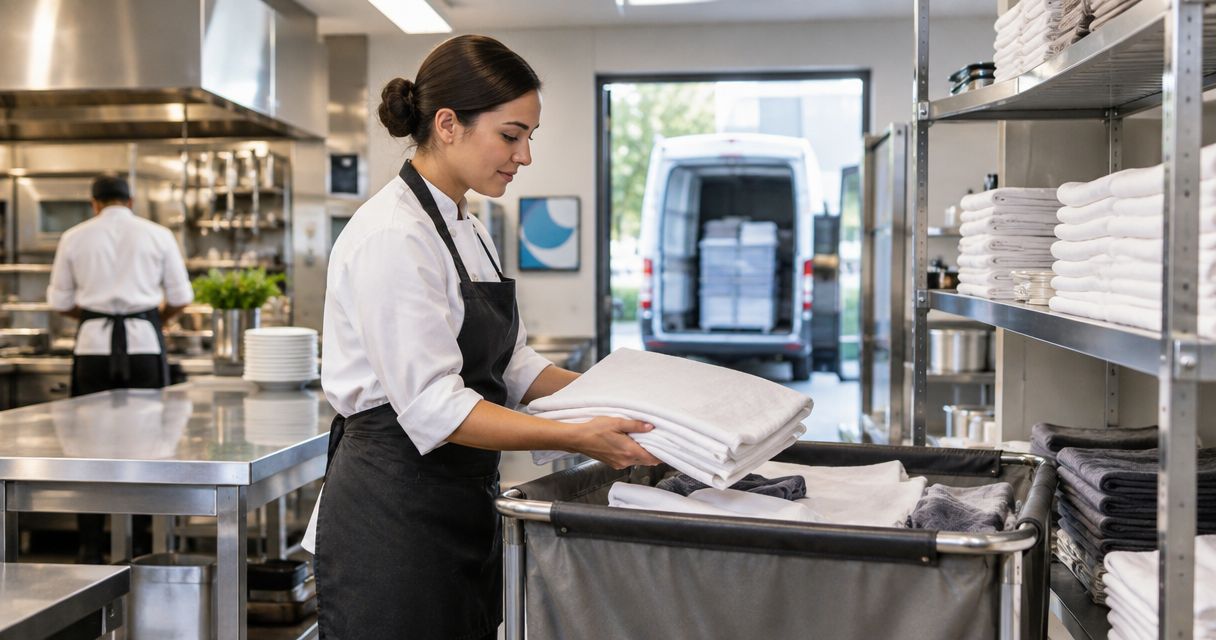
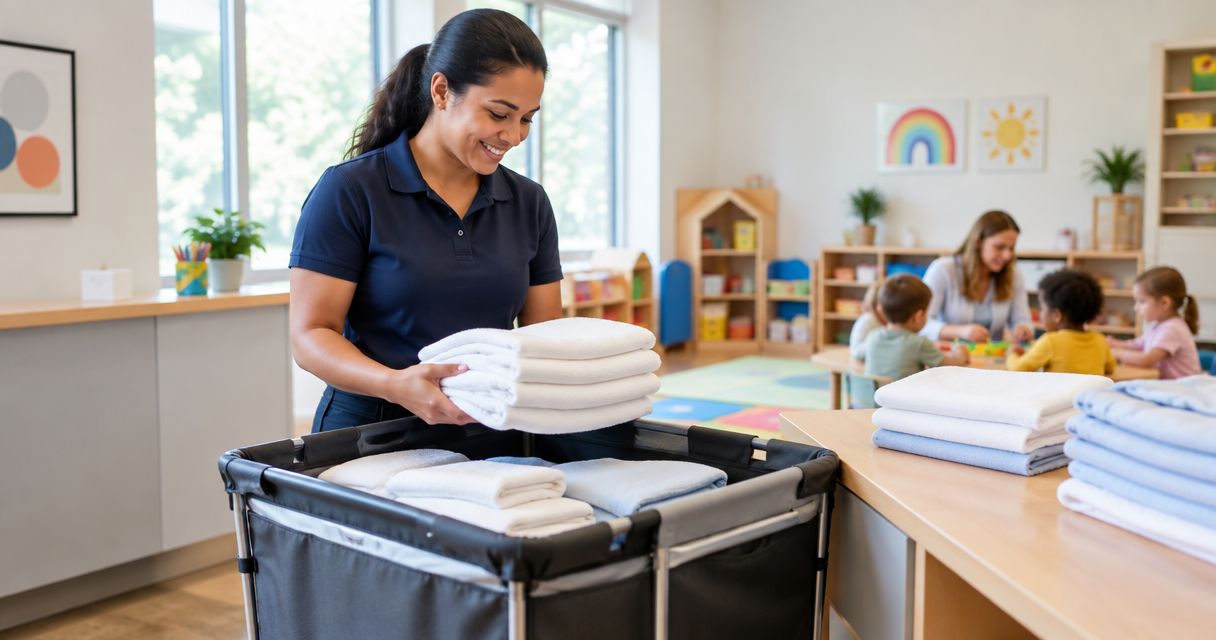
Daycare laundry service is pickup, washing, folding, and return delivery for childcare textiles, with the aim of keeping clean linens ready without pulling staff away from children. Choosing a laundry service for daycare centers means planning around classroom ownership, care labels, hygiene procedures, and pickup access—not just getting another basket of clothes washed.
- Hampr provides pickup, wash, fold, and delivery; daycare teams should confirm textile requirements before booking.
- Choose a laundry service for daycare centers around linen handling, classroom sorting, and dependable handoffs.
- Keep routine wash-and-fold separate from items requiring special handling under your childcare procedures.
- Start with a controlled pickup cycle and check returned counts before expanding the service.
Why laundry service matters for daycare centers
A daycare's laundry belongs to a working classroom, not an overflowing weekend hamper. Nap linens need to find their way back to the right room, reusable cloths need an agreed handling process, and staff need clean replacements while another batch is away.
The job includes more than pressing the washer button. Someone collects textiles, checks pockets, sorts loads, transfers them, folds them, and puts them back where teachers can find them. Moving washing off-site does not remove those handoffs; it changes who owns them.
Hampr provides on-demand laundry pickup, wash, fold, and delivery for households and businesses in select US cities. Hampr is best for daycare teams seeking pickup, wash, fold, and delivery instead of handling every routine load themselves. Match that service to your center's requirements before handing over classroom linens.
For your 2026 laundry plan, separate convenience from compliance. A wash-and-fold service is not automatically a substitute for the handling, cleaning, or disinfection procedures your center must follow. Use your applicable childcare requirements and textile care instructions to decide what belongs in a routine pickup.
How to organize daycare laundry pickup and delivery
1. Map the textiles your center actually uses
Start with a paper list or a shared spreadsheet. Walk through each classroom and record what gets washed, who owns it, and where it returns. Include only items your center actually uses; a generic laundry checklist should not become an accidental shopping list.
Separate center-owned textiles from children's belongings. A communal stack of nap sheets is a different tracking problem from a child's labeled blanket. Also distinguish washable textiles from equipment that needs a separate cleaning process. Laundry pickup does not replace cleaning a cot frame or another classroom surface.
Review care labels before you group items together. Different washing or drying instructions create different jobs, even when everything fits in the same bag. The goal is a clear scope that a substitute teacher can understand without asking around.
- List classroom linens, reusable cloths, and other washable items separately.
- Record whether each item belongs to the center or a child.
- Note care-label restrictions next to the relevant textile.
- Identify items that need special handling under center procedures.
- Name the classroom or storage area where each group returns.
2. Measure the workload before choosing a schedule
Use a simple log for 5 operating days as a starting planning exercise. Record what enters the laundry, when it is needed again, and which tasks interrupt staff. This is a recommended observation window, not a benchmark for how much laundry a daycare produces.
Count by textile type rather than using one vague description such as a big bag. Sheets, blankets, and cloths occupy different amounts of space, and their return deadlines can differ. If your observation period misses a recurring event, add that event to the plan separately.
Build your 2026 schedule around the earliest genuine need for clean replacements. Do not assume that a provider's pickup rhythm matches your classroom rhythm. Ask about the return arrangement, then work backward from when staff need the items ready to use.
- Log the items collected each operating day.
- Record the next time each group needs to be ready.
- Note sorting, washing, folding, and put-away work separately.
- Check the clean replacements already on hand.
- Identify who covers laundry tasks when the usual person is absent.
3. Match the service to the laundry, not the other way around
Keep the workload log as your free comparison tool. Write your requirements beside each provider's answers so you can compare the same job, rather than comparing broad promises about convenience.
Hampr's laundry service offers the pickup, wash, fold, and delivery steps that a daycare can otherwise manage internally. That makes it an option for outsourcing routine laundry work. It does not establish a particular sanitation process, classroom sorting arrangement, detergent accommodation, or return deadline; agree on the details you need before booking.
Choose the provider that accepts your actual requirements, not the provider with the shortest booking process. If an item needs treatment outside routine laundering, ask about that item specifically. Do not bury it inside a general question about whether the service handles daycare laundry.
- Confirm that your address falls within the service area.
- Describe the textile types and any care restrictions.
- Ask how separate classroom groups stay identifiable.
- Confirm pickup access and the return arrangement.
- Ask about detergent requirements and whether they can be accommodated.
- Clarify how to report a missing, damaged, or incorrectly returned item.
4. Separate routine laundry from special-handling items
Create a written sorting rule before the first pickup. Staff should know which textiles belong in routine laundry and which require a different process. Follow applicable childcare requirements, your center's procedures, and the item's care instructions rather than treating every washable object alike.
Food-stained cloths, ordinary nap linens, and items affected by bodily fluids should not enter the same workflow simply because they all need attention. Define the required handling for each category. Ask the provider what it accepts and how it wants accepted items prepared; do not assume it will identify exceptions after collection.
Keep detergent preferences separate from sanitation claims. A requested fragrance preference describes a washing requirement. It does not prove that an item meets a cleaning or disinfection requirement, and it does not establish suitability for every child's needs.
- Define routine pickup items in your written procedure.
- Set aside items requiring special handling.
- Follow staff protection requirements when handling soiled textiles.
- Keep clean returns separate from soiled laundry.
- Record approved detergent instructions without promising allergy prevention.
- Tell staff what to do when they are unsure about an item.
5. Set up a safe, repeatable pickup handoff
Use a designated collection area and a short handoff checklist. Staff can manage both without special software. The collection point should fit your access rules and avoid placing laundry where it interferes with supervision, entrances, or classroom activity.
Agree on who prepares the order and who handles the actual exchange. These can be different people, but the responsibilities should be clear. Assign 2 staff roles: a primary owner and a backup so a day off does not turn pickup into a guessing game.
For your 2026 procedure, write down the location and access instructions once. Share them through the center's approved process, and update them when access changes. A provider's arrival is not permission to bypass your visitor procedures or enter child-occupied areas.
- Choose a pickup point consistent with center access rules.
- Keep prepared laundry out of children's reach.
- Identify classroom groups using the provider's accepted method.
- Record the items handed over without unnecessary child information.
- Name a primary staff owner and a backup.
- Confirm how staff handle a missed or changed handoff.
6. Check returns before putting linens away
Treat delivery as a receiving task, not the finish line. Use this sequence: Count returns, Check condition, Store linens. Staff should compare the returned items with the handoff record before the laundry disappears into classroom cupboards.
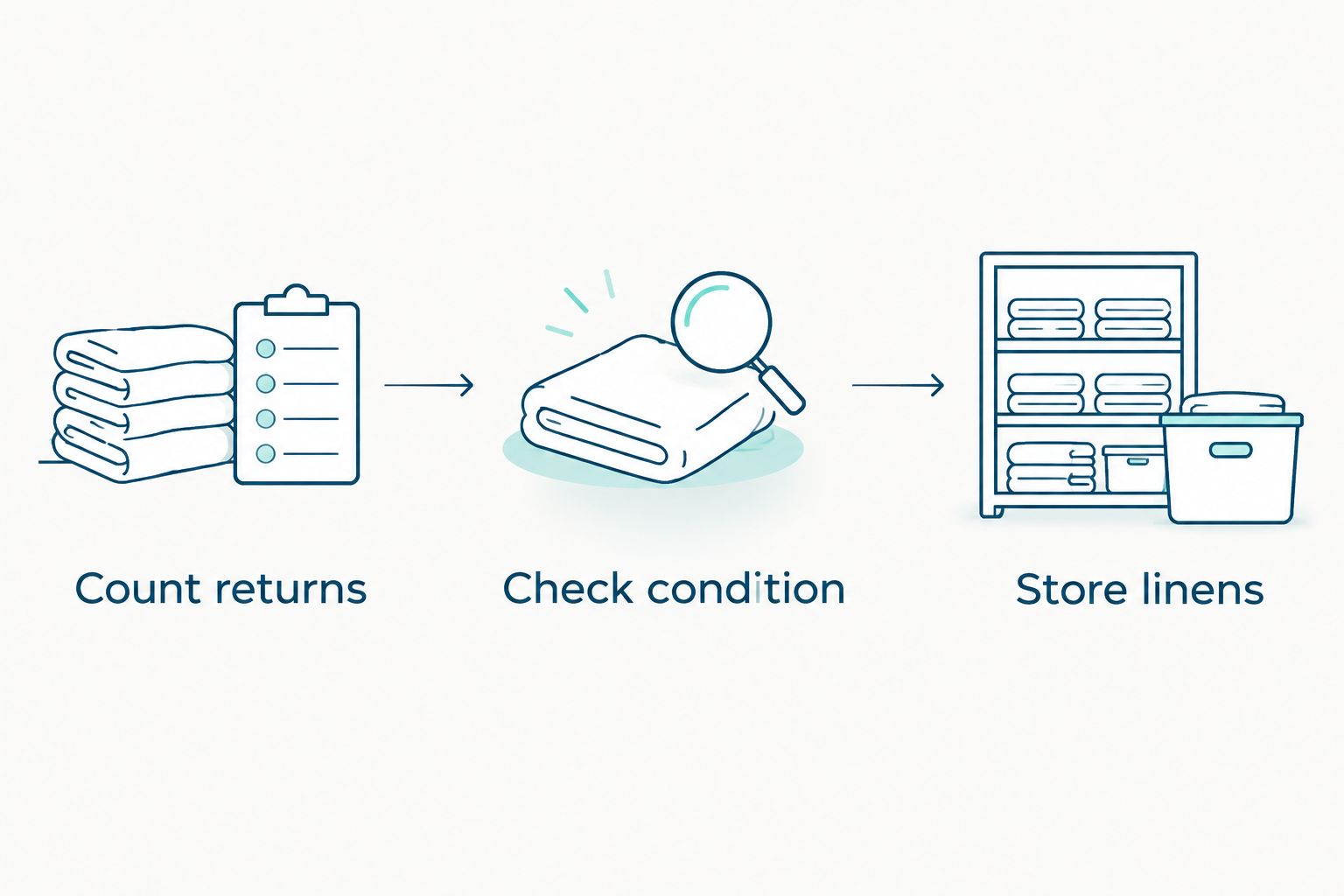
Look for visible concerns such as an unexpected stain, damage, or dampness. A visual check helps you catch a service issue; it does not verify a sanitation process. If something does not match your agreed requirements, keep it out of circulation and follow your reporting procedure.
Return linens to their assigned storage location after checking them. Clean items left beside the collection area are still waiting for someone to finish the job. Give the put-away task an owner so delivery does not create a second pile.
- Count returned items against the handoff record.
- Check for visible stains, damage, or dampness.
- Confirm that classroom groups remain identifiable.
- Separate items that need follow-up from usable returns.
- Record concerns and report them through the agreed process.
- Put accepted linens into clean, designated storage.
7. Test a pickup cycle before expanding the plan
Begin with 1 pickup cycle of clearly identified routine textiles. Keep enough clean replacements for the classroom to function while those items are away. A controlled start lets you examine the handoff without making every room depend on an untested arrangement.
Use the same log from your workload check. Record what staff still do, whether items return as agreed, and whether the put-away process works. Outsourcing washing is useful only when the remaining tasks fit your operation.
Review the 2026 plan with classroom staff, not just the person who placed the order. Teachers notice missing blankets, confusing labels, and inconvenient storage. Expand the arrangement only after the routine works from collection through classroom reuse.
- Start with routine textiles that have clear care instructions.
- Keep usable replacements ready during the trial.
- Track preparation and receiving work that remains with staff.
- Compare the return with the agreed requirements.
- Ask classroom staff what caused extra work.
- Adjust the scope before adding more textile groups.
Explore pickup for your daycare
Review Hampr's pickup, wash, fold, and delivery service before planning your center's laundry handoff.
Compare daycare laundry options
The best option depends on the work you need done and the control you need to retain. Use these distinctions when reviewing your 2026 laundry arrangement. None of these options removes the center's responsibility to define its own textile-handling requirements.
| Option | Best for | Main advantage | Key limitation |
|---|---|---|---|
| On-site staff laundry | Centers keeping washing within their own operation | Staff manage sorting and washing directly | Washing, transfers, folding, and put-away remain staff tasks |
| Hampr pickup, wash, fold, and delivery | Teams outsourcing routine laundry transport and washing | Combines collection, washing, folding, and return delivery | Daycare-specific handling requirements need confirmation before use |
| Drop-off wash-and-fold | Centers able to manage transport themselves | Moves washing and folding outside the center | Staff still transport laundry and organize classroom returns |
| Specialized commercial laundry | Centers seeking a documented process for specific textile requirements | Lets the center request a defined handling specification | The provider's actual process must match that specification |
Keep on-site laundry when direct process control is the deciding requirement. Choose pickup when transport is part of the workload you want to remove. Seek a specialized process when ordinary wash-and-fold does not match the documented handling your textiles require.
Common mistakes daycare centers make
Sending every textile through the same process
A care label and a center's handling procedure both matter. A convenient pickup arrangement does not make incompatible wash instructions disappear. Define the accepted routine-laundry list and keep exceptions out of that collection.
Forgetting the linen gap
Laundry in transit is not ready for nap time. Plan around the agreed return arrangement and keep clean replacements for the period when items are away. Do not build the classroom routine around an assumed turnaround.
Losing classroom ownership during sorting
Neatly folded laundry can still create extra work if nobody knows which room it belongs to. Keep group identification consistent from collection through storage. Avoid putting unnecessary identifying information about children on bags or handoff records.
Treating a fresh smell as proof of sanitation
Fragrance is not evidence that a required cleaning or disinfection process occurred. Ask about the actual process when your procedure calls for one. Keep sensory preferences and hygiene requirements as separate questions.
Counting only the work done off-site
Pickup removes some tasks, but preparation and receiving remain. Track those tasks during the trial so you can judge the complete arrangement. If staff spend the afternoon untangling classroom returns, fix the sorting agreement before expanding service.
FAQ
What's the best laundry service for daycare centers?
The best laundry service for daycare centers is one that accepts your textiles and meets your handling, pickup, and return requirements. Confirm those details before testing a routine batch.
Can Hampr handle laundry for a daycare business?
Hampr offers pickup, wash, fold, and delivery for businesses in select US cities. Confirm your address, textile types, and daycare-specific requirements before booking.
Does wash-and-fold mean daycare linens are disinfected?
Wash-and-fold does not, by itself, establish that a required disinfection process has occurred. Match the provider's stated process to your applicable childcare requirements and center procedures.
How often should a daycare schedule laundry pickup?
Schedule pickup around how quickly textiles enter the laundry and when clean replacements are needed. Use a workload log and the agreed return arrangement rather than assuming a universal schedule.
Should children's blankets go in the same bag as classroom linens?
Group children's blankets only when their care instructions and your handling procedure allow it. Keep ownership identifiable and confirm how the provider preserves separate groups.
Can a daycare request a particular detergent?
Ask the provider whether it can accommodate your detergent requirements before booking. Record the agreed instructions and do not treat a detergent preference as a sanitation or allergy-prevention guarantee.
What should staff check when daycare laundry comes back?
Staff should check item counts, visible condition, and classroom identification before storing returned laundry. Separate anything that needs follow-up and report it through the agreed process.
One last thing
Write the return instructions before the pickup instructions. Deciding where clean items belong exposes sorting problems early: whose blanket is this, which classroom needs it, and who puts it away?
That is the useful test of a laundry plan. The job is finished when the right clean textile reaches the right classroom—not when a folded stack reaches the door.