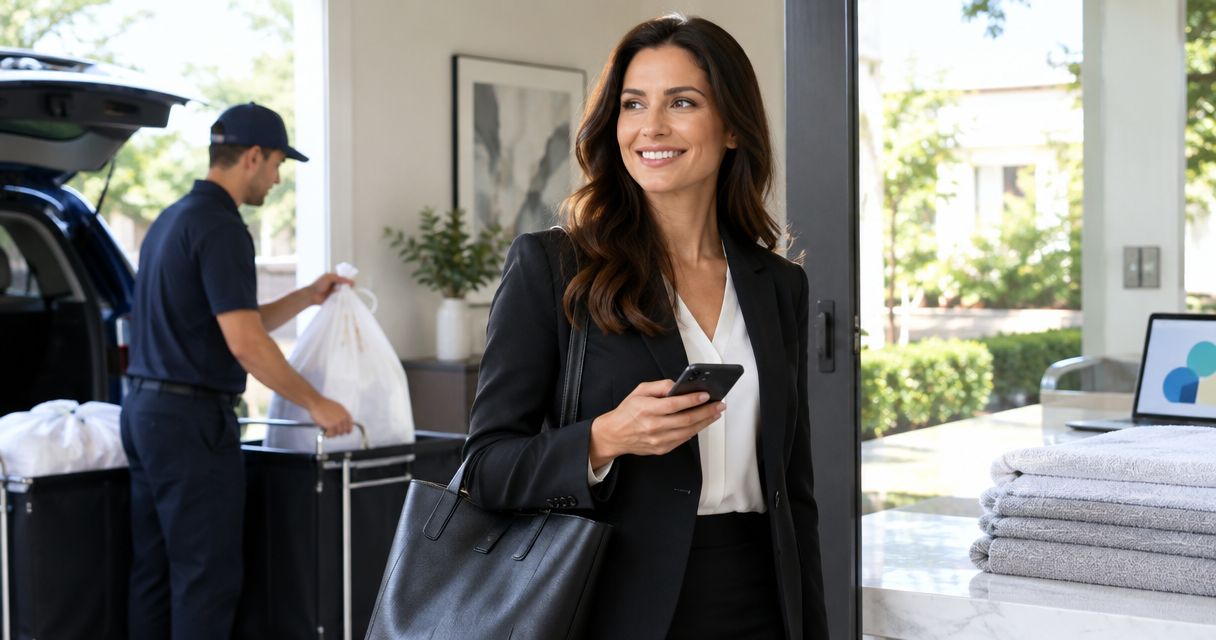
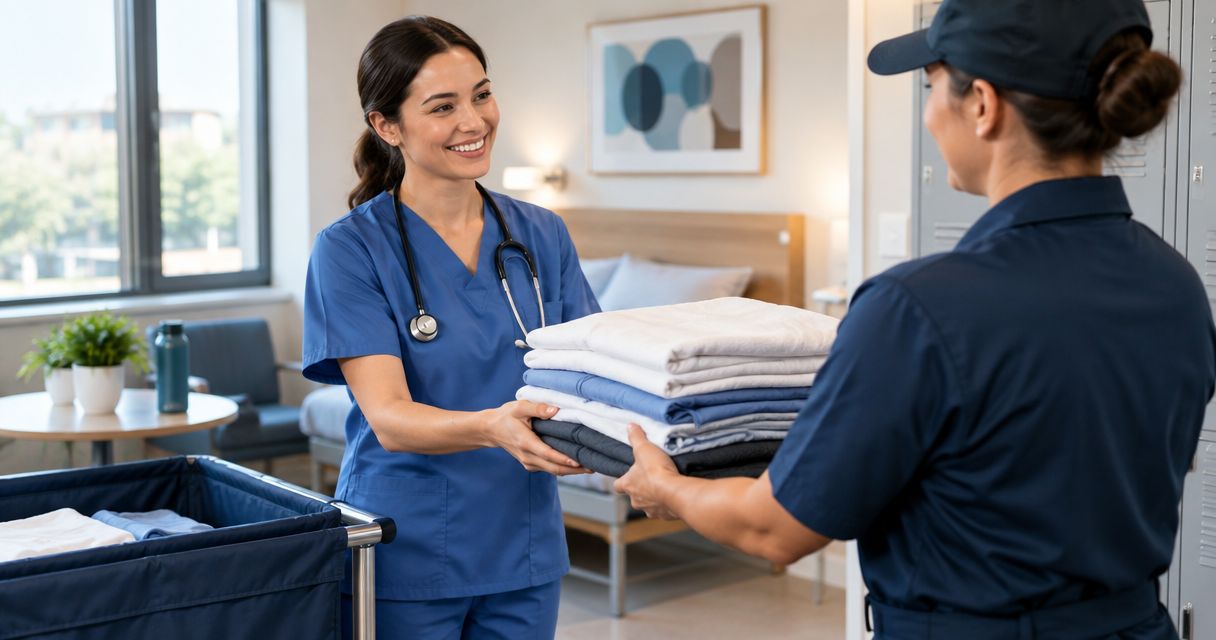
Nurses’ laundry delivery is a pickup, wash, fold, and return service aimed at keeping everyday clothes and eligible workwear ready around changing shifts. This 2026 guide helps you build a routine that protects your sleep, fits your roster, and keeps employer-controlled healthcare laundry out of an ordinary household order.
- Hampr laundry delivery suits nurses who want household washing and folding handled around shift work.
- Choose laundry delivery for nurses by pickup arrangements, return timing, garment care, and workplace rules—not speed alone.
- Keep employer-controlled clinical laundry out of household wash-and-fold orders.
- Plan a clean-scrub buffer before sending a bag away, especially when your shifts change.
Why laundry delivery matters for nurses
A laundry routine built around weekends does not fit every nursing roster. Your next shift can arrive before your next useful washing window, and a day off is not much of a break when it starts with sorting socks.
The practical goal is not to outsource every garment. It is to stop routine household laundry from competing with sleep, meals, and getting ready for work. Hampr laundry delivery is best for nurses who want household washing and folding handled instead of doing it themselves. Hampr provides pickup, washing, folding, and delivery in select US cities; it is not a substitute for your employer’s healthcare-laundry process.
Start with Hampr for the service overview, then use the checks below to decide whether a particular order fits your schedule and clothing. A good 2026 laundry plan has a clear handoff, a confirmed return arrangement, and enough clean clothes left at home.
Build a laundry routine around your shifts
1. Check what you are allowed to send
Start with your employer’s uniform and infection-control instructions, then read each garment’s care label. Ordinary personal clothing and employer-controlled clinical laundry need different decisions. A scrub top’s appearance alone does not tell you which process applies.
Do not assume that all scrubs belong in household wash-and-fold. OSHA’s Bloodborne Pathogens Standard places requirements on handling contaminated laundry in covered workplaces. If an item falls under your facility’s controlled process, follow that process rather than putting it in a household pickup bag.
This first check is free and needs no app: ask the appropriate workplace contact and keep the answer somewhere you can find it. Permission to take a garment home and permission to send it to a household service are separate questions.
- Check your facility’s rules for personally owned scrubs.
- Leave employer-issued textiles in the required workplace system.
- Ask about clothing exposed to blood or other potentially infectious material.
- Read labels for washing, drying, and special-care restrictions.
- Set aside anything requiring a process the service has not confirmed.
2. Map laundry onto your actual roster
Open your calendar before opening a laundry app. Mark your next work block, your sleep periods, and when you can prepare a bag without rushing. A pickup that lands in the middle of daytime sleep is not automatically convenient just because you are home.
For your 2026 routine, work backward from the first shift that needs the returned clothes. Confirm the return arrangement before choosing the pickup. Do not build your plan around an advertised speed unless the service confirms that arrangement for your order.
Use a 7-day planning window as a simple starting exercise, not as a required service schedule. Look at the week ahead and choose the least disruptive handoff. If your roster changes, revisit the order instead of assuming last week’s plan still works.
- Mark upcoming shifts and protected sleep periods.
- Identify when you can pack and hand over laundry.
- Confirm pickup and return arrangements before committing.
- Check building access requirements if you live in an apartment.
- Keep essential workwear home when timing is unresolved.
3. Separate the work you want to outsource
Try a simple handwritten sorting list first: everyday clothes, eligible workwear, household linens, and special-care items. This shows you which part of laundry is taking over your free time without turning the kitchen table into a sorting office.
If washing and folding ordinary household items is the sticking point, Hampr offers a service path that handles pickup, washing, folding, and delivery. The benefit is removing those tasks from your own routine. The limitation is that you still need to check garment eligibility, care requirements, and the arrangements for your order.
A mixed routine is perfectly sensible. You can send everyday items while keeping a particular uniform or delicate garment under your own care. Outsource a defined job, not an unexplained pile. That makes it easier to judge whether the service solves the problem you actually have.
- Name the items you want handled for you.
- Keep workplace-controlled laundry outside the order.
- Separate garments with different care requirements.
- Confirm whether the service accepts each item category.
- Choose household-only delivery if workwear rules remain unclear.
4. Pack the bag and write clear instructions
Make preparation repeatable with a note on your phone or a paper checklist near the hamper. Empty pockets, check labels, and identify anything that needs separate handling. Nursing pockets have a talent for collecting pens, tissues, and things you meant to put down hours ago.
Tell the provider what matters, then ask whether those instructions can be followed. A preference entered into an order is not the same as a confirmed service capability. This applies to detergent requests, drying instructions, stain treatment, and any item that needs special care.
Keep workplace-related exposure questions with your employer’s process; do not treat a note in a household order as a substitute. For ordinary clothing stains, describe the problem accurately and avoid promising yourself a result before treatment has been assessed.
- Empty every pocket before packing.
- Close fasteners according to the garment’s care needs.
- Identify special-care items before they enter the bag.
- State detergent or drying preferences clearly.
- Confirm instructions the provider can actually follow.
- Record which essential garments you are sending.
5. Make the handoff compatible with sleep
Agree on a handoff plan before the pickup day. The manual version is straightforward: decide where the bag goes, who can access it, and how you will know the exchange happened. Do not assume unattended pickup or building entry is supported.
If you work nights, ask how communication works during your sleep window. If you share a home, make sure another person understands which bag is leaving and which items must stay. A beautifully packed bag is no help if it is still behind a locked door.
The following sequence keeps the moving parts visible. It is a planning checklist, not a promise about any provider’s operating process. Your confirmed order instructions take priority over a generic routine.
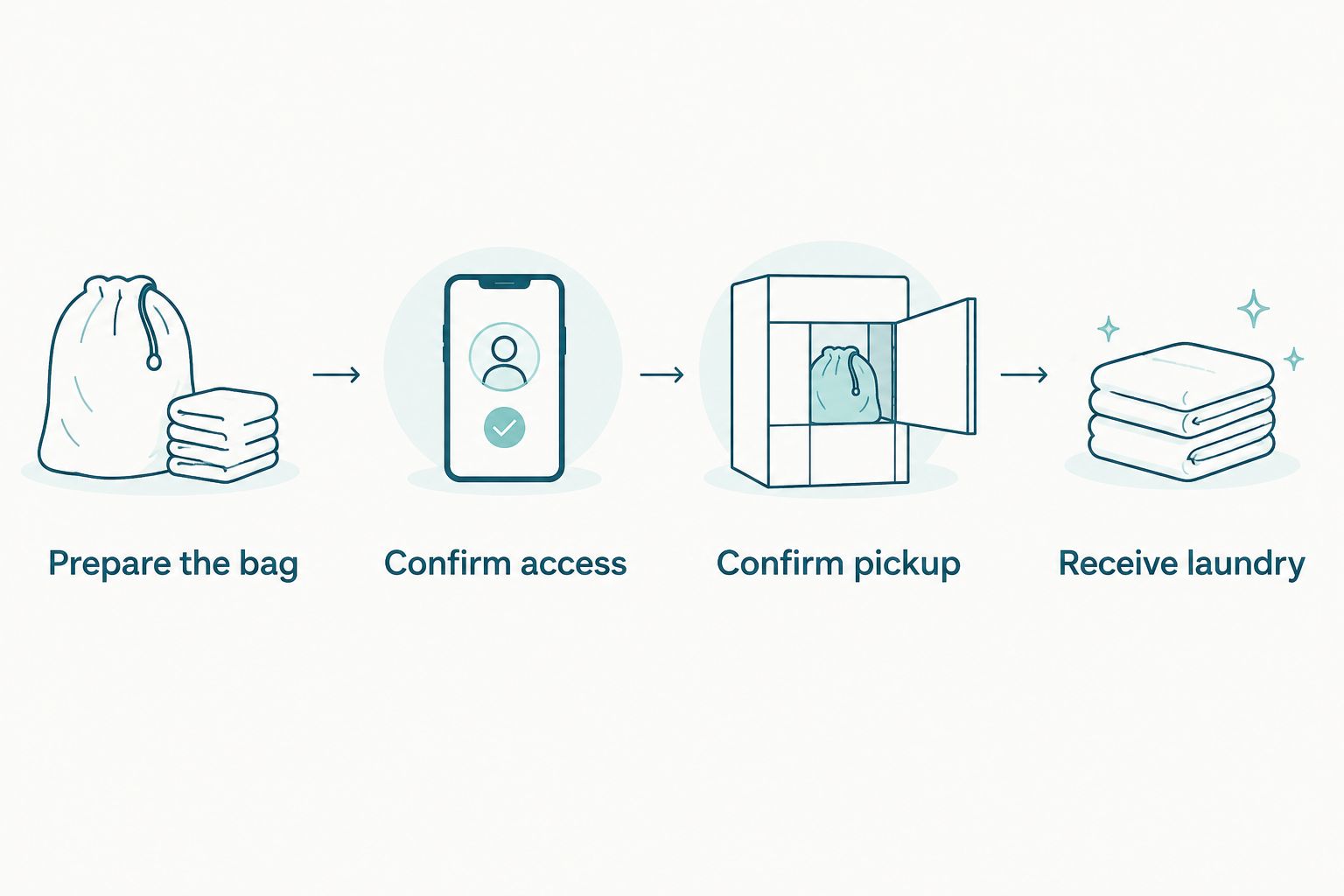
For 2026, keep the handoff instructions in one place so you can update them when your roster or living arrangements change. Clear instructions beat a last-minute message sent while walking into work.
- Prepare the bag before your sleep period begins.
- Confirm access rather than assuming entry is possible.
- Confirm pickup using the provider’s stated process.
- Receive laundry using the agreed return arrangement.
- Keep household members informed about the handoff.
6. Keep a clean-clothes buffer at home
Count what you need before sending workwear away. The free method is a quick inventory: clean garments at home, garments leaving in the order, and upcoming shifts before the confirmed return. Include clothing for commuting and life outside work, not just uniforms.
Keep at least 1 complete shift outfit outside the order as a planning safeguard. That is a suggested buffer, not a guarantee that one outfit covers every schedule. Increase it when your roster or confirmed return arrangement requires more.
A laundry service reduces washing work; it does not remove the need to manage what is in your wardrobe. Never send your entire usable uniform rotation simply because the bag has room. If you cannot cover your next shifts without the returning order, hold those garments back or choose another confirmed plan.
- Count complete outfits, including required layers.
- Match clean garments to shifts before the return.
- Keep a separate reserve outfit ready to wear.
- Leave essential items out of an uncertain order.
- Recheck your buffer when your roster changes.
7. Review the routine after the return
Check the returned order before you need to dress for work. Start with completeness, garment condition, and whether the care instructions you confirmed were followed. Put the clothes away while the order is fresh in your mind; a delivery bag should not become a second hamper.
Then ask whether the routine actually reduced your workload. Did packing fit your evening? Did the handoff interrupt sleep? Were the clothes back when the confirmed arrangement said they would be? These observations tell you more than a general promise of convenience.
Review your 2026 setup after a roster change, move, or change in uniform requirements. Keep the parts that work and change the weak point. You do not need to abandon delivery because one arrangement needs adjusting, but you should not repeat an arrangement that leaves you short of clothes.
- Check that your expected items came back.
- Inspect garments before wearing or storing them.
- Raise order issues through the provider’s stated channel.
- Record any care instructions that need clarification.
- Adjust the next pickup around what disrupted your routine.
Compare laundry options for shift-based nurses
The right option depends on which task you want removed. Washing at home gives you direct control. Household delivery removes washing and folding work. A workplace process addresses employer-controlled textiles, which is a different job entirely.
Choose by garment responsibility first, then by scheduling fit. These options are not interchangeable, and combining them often makes more sense than forcing all your laundry into one system.
| Option | Best for | Main advantage | Key limitation |
|---|---|---|---|
| Washing at home | Nurses who need direct control over eligible garments | You choose the sequence and follow care labels yourself | Washing, drying, and folding remain your responsibility |
| Self-service laundromat | Nurses who need access to laundry equipment | Provides a place to wash when home equipment is not an option | Travel and attendance still take effort |
| Hampr household laundry delivery | Nurses who want pickup, washing, folding, and return handled | Removes household washing and folding from your task list | You must confirm order arrangements and garment suitability; it does not replace workplace protocols |
| Employer-designated laundry process | Nurses handling textiles covered by facility rules | Keeps those items within the required workplace process | It is not a general household-laundry solution |
There is no need to choose one option forever. Keep special-care garments under direct control, use the required workplace system for controlled textiles, and consider delivery for the ordinary pile that keeps stealing your downtime.
Common laundry mistakes nurses make
Sending every scrub through the same process
Two garments that look alike can have different handling requirements because of workplace rules, exposure, or care labels. Check the rule for the garment and its use, not just the word “scrubs.” Keep controlled clinical laundry out of a household order.
Scheduling pickup without checking the return
Getting the bag out of your home is only half the job. If the clothes are needed for your next work block, confirm the return arrangement first. Keep enough clothing home to cover that block without relying on an unconfirmed turnaround.
Treating daytime presence as daytime availability
Being home after a night shift does not mean you are available for a doorbell, call, or access problem. Tell the provider what handoff you need and confirm whether it is supported. Protect your sleep as deliberately as you protect your shift start time.
Writing care requests without checking support
A note asking for a particular detergent or drying method does not establish that the service can provide it. Ask before sending garments that depend on those instructions. Keep them out of the order if the answer does not meet their care needs.
Outsourcing only scrubs when household laundry is the burden
Your workwear might already have a workable routine while towels, bedding, and everyday clothes create the backlog. Identify the real bottleneck. A household-only order can remove chores without changing how you handle uniforms.
FAQ
What is the best laundry delivery setup for nurses who work rotating shifts?
The best setup uses confirmed pickup and return arrangements around your roster, with enough clean clothing kept at home. Choose a provider that can meet your handoff needs, and check workwear rules before including scrubs.
Can nurses send scrubs to a household laundry delivery service?
Nurses should send scrubs only when employer rules, garment care instructions, and the service’s accepted-item rules permit it. Employer-controlled or contaminated clinical laundry belongs in the required workplace process, not an ordinary household order.
Is Hampr a healthcare laundry service for contaminated uniforms?
Hampr is described as an on-demand pickup, wash, fold, and delivery service for households and businesses in select US cities. Do not treat that description as approval to send contaminated uniforms; follow your employer’s required process.
How do I arrange laundry pickup if I sleep during the day?
Confirm a handoff and communication arrangement that does not require interrupting your sleep. Check access requirements before booking, and do not assume unattended pickup is supported.
Should I send all my cleanable uniforms in one laundry order?
Keep enough usable uniforms at home for the shifts before your confirmed return. A separate reserve outfit adds a planning safeguard, but your roster determines how much clothing you need.
Is laundry delivery better than washing scrubs at home?
Laundry delivery removes washing and folding tasks, while home washing gives you direct control over garment care and timing. Workplace rules and care requirements decide whether either option is appropriate for your scrubs.
What should I check before booking laundry delivery in 2026?
Check garment eligibility, pickup access, the return arrangement, and support for your care instructions. Make sure the clothes left at home cover your upcoming shifts before sending the bag.
One last thing
Your first delivery order does not have to include a single scrub. Start with the ordinary household laundry that gets in the way of rest, while leaving your established uniform routine alone.
That gives you a clear way to judge the service: did it remove washing and folding work without creating a new scheduling problem? Once that part works, review eligible workwear separately. Your laundry routine should fit your nursing schedule—not become another shift you have to cover.