Laundry service for new parents is laundry pickup, washing, folding, and delivery with the aim of keeping everyday clothes and linens clean without making parents manage every load. This 2026 guide explains how to protect your supply of baby essentials, communicate care preferences, and hand off laundry without creating another household project.
- Hampr suits new parents seeking laundry pickup, wash, fold, and delivery in supported US cities.
- Choose a laundry service for new parents around care instructions, pickup access, and your supply of clean essentials.
- Keep urgent baby clothes at home; send everyday wash-and-fold laundry that can wait for the confirmed return.
- Start with one manageable load and review the handoff before making laundry pickup part of your routine.
Hampr is best for new parents who want household laundry picked up, washed, folded, and delivered in supported cities. You can explore Hampr while deciding which chores to hand off. Keep the decision practical: the service should remove washing and folding from your plate, not leave you chasing clean pajamas when you need them.
Why laundry pickup matters for new parents
Baby laundry creates a planning problem, not just a washing problem. A burp cloth can become urgent while the adult clothes sit forgotten in the dryer. Your routine needs to distinguish what must stay within reach from what can leave the house.
Laundry pickup lets you hand off the washing and folding of eligible items. The trade-off is simple: those items are away from home until their confirmed return. Choose the service around your household's needs, not the size of the laundry pile.
For your 2026 routine, define what a successful handoff looks like. Perhaps it means clean adult clothes without an evening of folding, or towels returned before your cupboard runs low. Those are useful goals because you can check them after an order without estimating hours saved.
The right arrangement also depends on access. A parent in an apartment needs clear building-entry instructions; a household with a porch needs an agreed pickup location. Neither setup works well if the person managing laundry has to solve those details while holding a tired baby.
How to set up laundry pickup without extra stress
1. Sort your laundry by urgency
Start with the manual version: look through your laundry and decide what you can comfortably send away. You do not need an elaborate sorting system. You need to know which items belong in the next pickup and which ones your household will need before the return.
Use 3 piles: send, keep, and check. The send pile contains ordinary machine-washable items that fit the provider's rules. The keep pile holds immediate essentials. The check pile catches anything with unfamiliar care instructions, sentimental value, or uncertain service eligibility.
Do this before selecting a pickup. Otherwise, a full basket can make every item look equally suitable, even when tomorrow's only clean sleepwear is buried inside it. The point is not to send everything; it is to send the right things.
- Put everyday clothing and eligible linens in the send pile.
- Keep outfits and cloths needed before the confirmed return.
- Set aside delicate or unfamiliar items for a care-label check.
- Let the other caregiver know which essentials are staying home.
2. Write down care instructions once
Before booking anything, make a short household laundry note on paper or in a shared phone note. Read garment labels first. Then record the preferences that matter to you, such as avoiding a particular fragrance or following an item's drying instructions.
Separate a preference from a requirement. A preferred fold style is not the same as a garment that must not go in a dryer. If an instruction is essential, ask whether the provider can follow it before handing over the item. Do not assume a notes field guarantees acceptance.
For your first 2026 order, clarity beats a long paragraph. A short, specific instruction is easier to check than a story about every previous laundry mishap. Keep the note useful enough that another caregiver can manage the next order without starting over.
- Copy essential washing and drying instructions from care labels.
- Identify fragrance or detergent requests you need confirmed.
- Ask how the provider receives and acknowledges instructions.
- Keep unsupported special-care items out of the pickup.
3. Match the service to your address and laundry
The manual path is to wash eligible items at home or arrange help from someone you trust. If washing and folding are the jobs you want off your plate, a pickup service removes those stages from your own to-do list. Hampr offers laundry pickup, wash, fold, and delivery for households in select US cities.
Check your address and requirements before choosing a service. A service description is not confirmation that a particular item, care request, or pickup arrangement is accepted. Ask about the details that would make an order workable for you, rather than collecting features you do not need.
Treat timing the same way. Confirm the expected return for your order instead of planning around an assumed turnaround. Your baby does not know that a delivery is on the way; keep necessary clothes and linens at home.
- Confirm that the provider serves your address.
- Check which clothing and household linens it accepts.
- Confirm any essential care requests before booking.
- Establish the pickup arrangement and expected return.
4. Plan the handoff before pickup day
Choose a pickup location and decide who is responsible for preparing the laundry. If you have 2 caregivers, assign one person to check the order details and one person to check the bag. That is a suggested division of work, not a requirement; one person can handle both.
Walk through the sequence before your first pickup: check items, bag laundry, confirm access, then handle the handoff. The preparation can happen while you already have the laundry out. There is no benefit in leaving every decision until the pickup window.
Keep pickup preparation separate from baby supplies. The person collecting laundry needs the agreed items and instructions, not access to the rest of your household routine. A clear location and a clear bag reduce confusion for everyone involved.
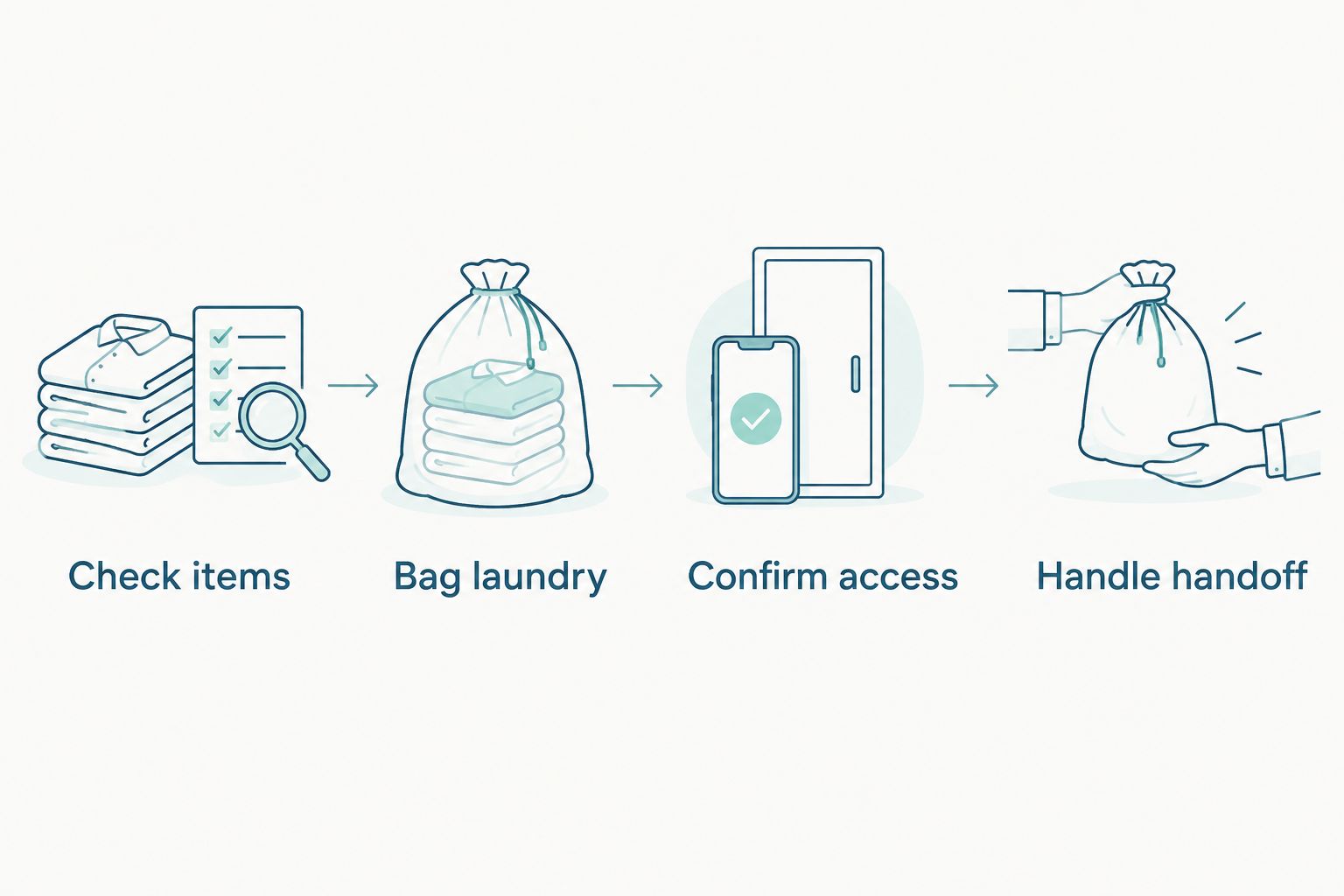
Make the handoff repeatable, but follow the provider's current instructions rather than assuming any container or drop location is acceptable.
- Use the container or bag specified by the provider.
- Empty pockets and check that only intended items are included.
- Confirm building-entry or pickup-location instructions.
- Keep the prepared laundry separate from items staying home.
5. Keep a clean reserve you can actually find
Before sending laundry away, gather the clothes and linens your household needs until the confirmed return. Do this manually by checking drawers and cupboards. You do not need to buy more items simply to try a service; first see whether your existing supply covers the gap.
A useful reserve is accessible, not just technically clean. Put baby essentials where the caregiver using them can find them, and keep adult basics in their usual place. Clean clothes buried in an unsorted basket are still another task at an inconvenient moment.
There is no universal number of spare outfits that suits every baby or delivery arrangement. Base the reserve on your own recent use and the order's confirmed timing. If your clean supply looks tight, send a smaller selection or wash the urgent items at home.
- Check clean baby clothes, burp cloths, and household towels.
- Keep items needed before the scheduled return.
- Put the reserve in familiar, reachable storage.
- Leave a backup washing option for unexpected messes.
6. Test one manageable load
For your first order, send 1 manageable load of ordinary, eligible laundry rather than everything in the house. This is a suggested trial size, not a statement about a provider's ordering unit. Follow its actual booking and bagging instructions.
A smaller first handoff lets you check whether the arrangement fits your home. Notice whether pickup instructions were clear, your confirmed care requests were followed, and the returned items were ready to put away. Keep the test focused on things you can observe.
Evaluate the whole task, including preparation and unpacking. A good fit removes work you wanted to hand off without making you supervise unfamiliar instructions every time. If something needs correction, describe the specific issue before sending another order.
- Choose everyday items with straightforward care instructions.
- Keep sentimental and special-care pieces out of the trial.
- Check returned items against the agreed instructions.
- Resolve any handoff or care problems before repeating.
7. Build a routine around your clean supply
Once the first order works, decide when you will check your laundry and prepare another pickup. Start with a reminder you control rather than assuming you need a fixed recurring arrangement. Your household's use will tell you when sending laundry makes sense.
For the rest of 2026, review the routine when your needs change. Returning to work, sharing caregiving differently, or using different baby clothes can change what belongs in the pickup bag. Keep the process simple enough to adjust without rebuilding it.
Judge success by the result you wanted: clean everyday laundry with less washing and folding on your own list. A service does not need to handle every item to be useful. Adult clothing and towels alone can be a sensible handoff if baby essentials are easier to manage at home.
- Set a reminder to check laundry before clean supplies run low.
- Share the care note and pickup instructions with another caregiver.
- Adjust the items you send as household needs change.
- Keep special-care and urgent laundry on a separate plan.
Compare your laundry options for 2026
Choose by the task you need removed. Home washing keeps items close but leaves you responsible for the process. Help from family divides the work, while a pickup service hands off washing and folding without requiring you to transport the laundry yourself.
These options can work together. There is no need to commit every garment to one method, especially while you are learning what your household needs between pickups.
| Option | Best for | Main advantage | Key limitation |
|---|---|---|---|
| Home washing | Parents who need direct control over care and timing | You manage each item's treatment and keep laundry at home | Washing, drying, and folding remain household tasks |
| Help from family or friends | Parents with someone willing to take on laundry | You can divide tasks without adopting a service routine | You must agree on instructions, responsibilities, and handoff |
| Local wash-and-fold drop-off | Parents who can transport laundry but want washing and folding handled | You hand off the processing work | You still arrange drop-off and collection |
| Hampr laundry pickup and delivery | Parents seeking household pickup, wash, fold, and delivery in supported cities | The service handles collection, washing, folding, and delivery | Service is limited to select US cities; confirm your address and care requirements |
The deciding question is practical: does transporting laundry fit your day? If not, compare pickup arrangements first. If garment care is your main concern, start with accepted items and confirmed instructions instead.
Common mistakes new parents make
Sending every usable baby outfit
A large pickup is not automatically a useful pickup. If it leaves you short of essentials before the confirmed return, you have traded a laundry pile for an urgent washing job. Keep the items you need between pickup and delivery at home.
Treating every baby item as ordinary laundry
Clothes, washable accessories, and equipment covers do not automatically share care requirements. Check each item's label and the provider's accepted-item rules. Keep anything requiring an unconfirmed treatment out of the bag rather than expecting the service to work it out.
Assuming a care request was accepted
Writing down a request is preparation, not confirmation. Before sending an item that depends on that request, establish whether the provider can follow it. This matters more than having a beautifully organized laundry note that nobody has acknowledged.
Making one parent the laundry coordinator forever
Handing off washing while keeping every planning task with one parent leaves part of the job untouched. Share the instructions and the location of clean reserves. A second caregiver should be able to prepare the pickup without asking where everything goes.
Measuring success only by the empty hamper
An empty hamper looks satisfying, but it does not tell you whether tomorrow's clothes are ready. Review the clean supply, the returned laundry, and the work still left to do. Your 2026 routine should support the household, not just clear a basket.
FAQ
What's the best laundry service for new parents?
The best laundry service for new parents fits their address, care requirements, and need for clean essentials between pickups. Hampr is a fit for parents seeking pickup, wash, fold, and delivery in supported US cities. Confirm your specific requirements before booking.
Can I send baby clothes to a laundry pickup service?
Send baby clothes only when their care labels and the provider's accepted-item rules permit it. Confirm any essential washing or drying instructions before pickup, and keep the clothes needed before delivery at home.
Do I need to wash newborn clothes separately?
Follow the clothes' care labels and any relevant guidance from your child's healthcare professional rather than assuming every item needs a separate load. If you want separate processing, ask whether the provider accepts that request before sending the clothes.
What should I keep at home before laundry pickup?
Keep the clothes, cloths, and linens your household needs before the confirmed return. Check your clean supply against recent use, and put the reserve where every caregiver can find it.
Can I request a particular detergent or no fragrance?
Ask the provider whether it can accept your detergent or fragrance request before booking. A preference written in an order note is not confirmation that the service can meet it.
Is laundry pickup better than doing laundry at home?
Laundry pickup is better suited to parents who want collection, washing, folding, and delivery handled for them. Home washing gives you direct control and keeps items close, but the work stays with your household. Combining the two is a practical option.
How often should new parents schedule laundry pickup?
Schedule pickup around your actual laundry use and the provider's confirmed return timing. Start with a manageable order, then adjust the routine before your clean essentials run low.
One last thing
You do not have to outsource baby laundry to make pickup useful. Keep baby items at home if that feels simpler, and hand off eligible adult clothes and household linens instead. The best first step is the one you can repeat without a fresh set of decisions.
Before your next pickup, ask one question: what will we need while this laundry is away? Answering that is more useful than trying to build the perfect laundry system. Bag the rest according to the provider's instructions, and leave the laundry project there.