
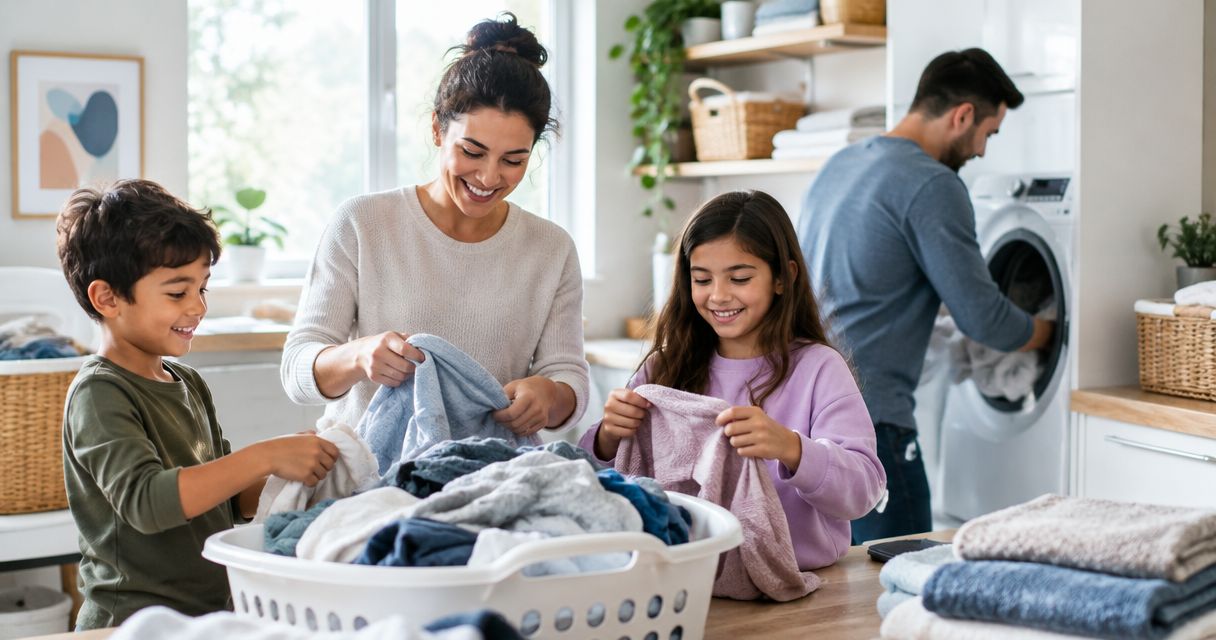
Laundry pickup pricing for large families depends on the billing unit—such as weight, bags, or a recurring plan—and how much laundry you send. Compare the full order terms, not just the advertised rate: minimum charges, separately handled items, and pickup arrangements all belong in your 2026 household budget.
- Laundry pickup pricing for large families is easiest to compare using the same laundry basket and pickup schedule.
- Hampr offers laundry pickup, washing, folding, and delivery for households in select US cities.
- Compare per-pound, per-bag, and recurring-plan terms before choosing a wash-and-fold service.
- Ask about minimums, bedding, and service fees before booking; do not assume they are included.
How does laundry pickup pricing work for large families?
Start with what gets counted, then check what gets included. A weight-based quote counts laundry by weight. A bag-based quote counts qualifying bags. A recurring plan follows its stated billing and usage terms; recurring does not automatically mean unlimited.
Hampr provides on-demand laundry pickup, washing, folding, and delivery for households and businesses in select US cities. When comparing any service, use its current terms for your address rather than assuming another household's arrangement applies to yours.
These are billing structures to look for, not a statement that every provider offers each one:
| Billing structure | What determines the bill | Best for | Benefit | Trade-off to check |
|---|---|---|---|---|
| Per pound | Billable laundry weight and the applicable rate | Families comfortable tracking laundry weight | Connects the laundry charge to measured weight | Bag count alone does not establish the bill |
| Per bag | Number of bags meeting the service's rules | Families who prefer counting bags | Gives you a visible unit to plan around | Bag dimensions and filling rules matter |
| Recurring plan | Plan terms, included usage, and any additional usage | Families with a repeatable laundry routine | Provides a standing budgeting framework | Included usage must match your actual laundry |
A large household is not automatically best served by one model. The useful comparison is the same clothing, towels, and accepted bedding handled under each set of terms.
Why this matters
A full hamper tells you laundry needs doing. It does not tell you what a pickup service will bill. Two bags can contain very different mixes of lightweight shirts, heavy towels, or bedding, so bag count and laundry weight answer different questions.
For your 2026 comparison, define the job before comparing providers: what leaves the house, how often it leaves, and when it needs to return. Otherwise, you risk comparing routine clothes with a quote that also covers household linens.
Choose the service arrangement that fits your laundry, not a laundry routine built around an attractive headline. The point is to get the pile handled without turning laundry day into another admin job.
Per-pound billing: measure the laundry you actually send
With weight-based billing, the basic calculation uses billable weight and the stated rate. Ask how the service establishes that weight, whether packaging is included, and how any minimum order applies. Do not translate your home washer's load count into billable pounds.
Best for: families willing to track weight to understand their orders. The benefit is a measurable billing unit. The limitation is that looking at a bag does not establish its billable weight.
For a useful comparison, separate ordinary clothing from anything the service handles under different terms. If a comforter receives separate treatment, counting it as ordinary wash-and-fold laundry makes your estimate less useful.
Keep the measurement consistent. Weighing one order with its container and another without it creates an avoidable mismatch in your own records. Your measurement is a planning aid; the provider's stated measurement process determines the actual bill.
Per-bag billing: read the filling rules first
Bag-based billing uses a defined bag or qualifying container as the unit. Ask which bag is accepted, how it must close, and whether different items have different handling rules. A household hamper is not automatically an accepted service bag.
Best for: families who want a visible unit they can count before pickup. The benefit is straightforward planning around bags. The limitation is that a bag count only means something when you understand the packing rules.
Do not build a budget around squeezing in every last sock. Pack to the service's instructions rather than assuming a stretched closure or an extra bundle counts as part of the same unit.
Keep a note of what a normal bag contains for your household. That makes future planning more useful than comparing your bags with someone else's description of a family-sized load.
Recurring plans: match the commitment to your routine
A recurring arrangement needs two separate checks: how billing repeats and how laundry pickups repeat. Confirm both. A scheduled pickup does not, by itself, tell you whether the laundry charge is fixed or based on actual usage.
Best for: families whose laundry routine repeats consistently. The benefit is having a standing arrangement to plan around. The trade-off is managing the plan when your household's routine changes.
Before choosing a recurring arrangement in 2026, read the terms covering included usage, additional laundry, skipped pickups, and cancellation. Ask whether unused allowances carry over if the plan has an allowance; do not assume that feature exists.
The guide to how recurring laundry pickup subscriptions work covers the questions to bring to that comparison. Keep your decision tied to your own laundry pattern rather than the word subscription.
Why laundry pickup totals vary
Use these questions to identify the drivers in the terms you receive. They are checks to make before booking, not a claim that every service adds each charge.
- Laundry quantity: What unit is billed, and how is that unit measured? Keep clothing, towels, and any separately handled items clear in your estimate.
- Minimum orders: Does a minimum apply to each pickup, each order, or another billing period? That distinction matters when deciding whether to split laundry.
- Item handling: Are bedding, delicate garments, or special-care items accepted under ordinary wash-and-fold terms? Confirm exceptions before packing.
- Pickup frequency: Does changing the number of collections change the charges or plan requirements? Compare schedules using the same total laundry.
- Timing and transport: Are collection, return delivery, and your requested turnaround included in the quoted terms? Ask rather than treating them as automatic inclusions.
- Recurring commitments: Are there membership terms, usage limits, or rules for skipped orders? Separate the ongoing commitment from the charge for laundry itself.
Ask for the complete order terms before handing over the bags. A clear answer is more useful than trying to reconstruct the bill afterward.
Build a family laundry budget without guessing
You do not need to count every sock. You do need a repeatable picture of the laundry you intend to send, especially if your 2026 goal is a predictable household expense rather than an occasional rescue pickup.
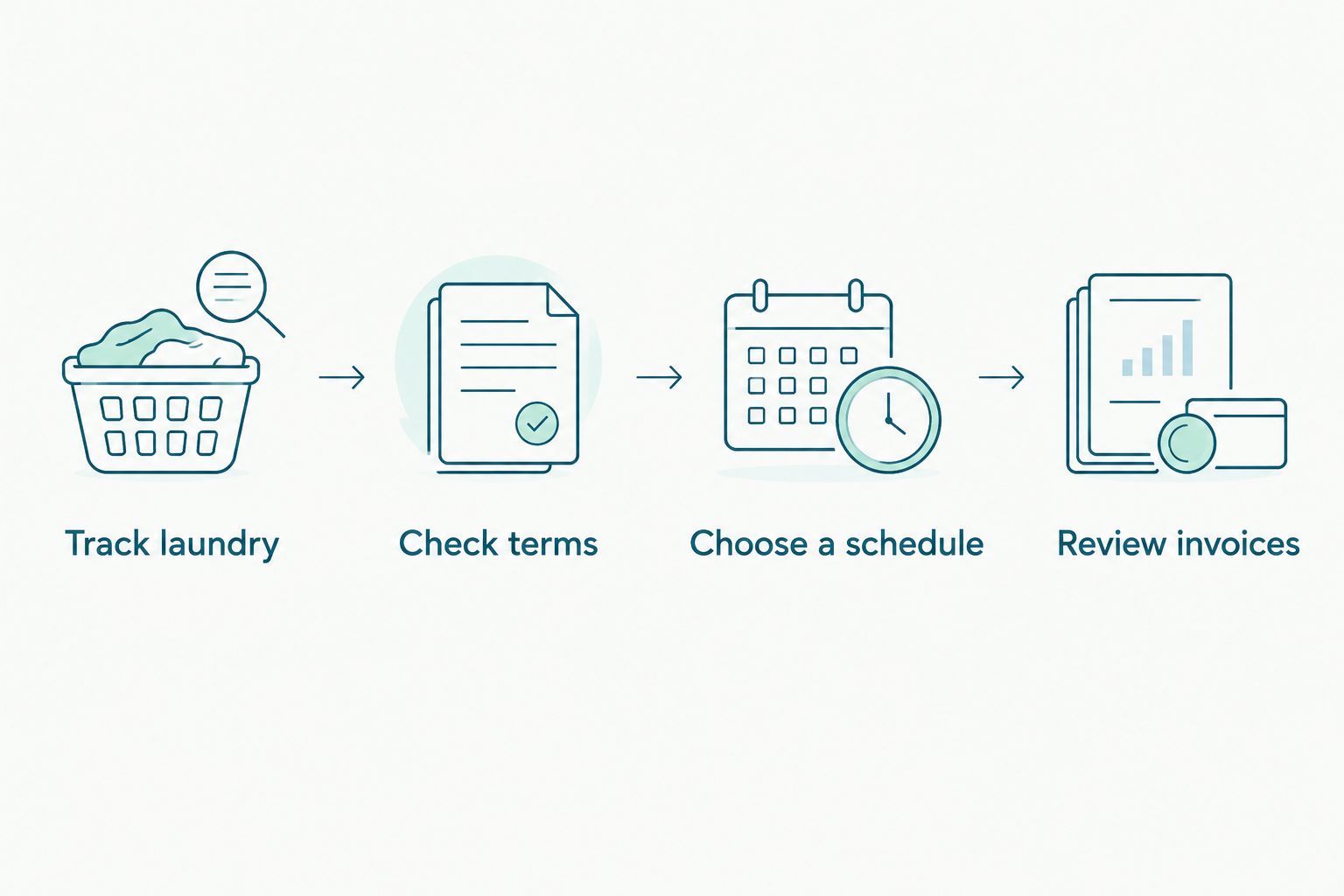
Track laundry
Track 7 days of laundry as a starting exercise. Record the clothes, towels, and linens you would actually send out, using the provider's billing unit where possible. Mark an unusual week as unusual rather than treating it as your normal baseline.
Include only the laundry you plan to outsource. If you intend to keep special-care clothing at home, leave it out of the service estimate instead of counting the entire household pile.
Check terms
Request terms for the same batch from each service you consider. Ask the provider to distinguish ordinary wash-and-fold laundry from items handled differently, and clarify where the final billable quantity is established.
Write down the answers in plain language. You should be able to explain what gets counted, what gets handled separately, and what happens when an order is smaller than expected.
Choose a schedule
Build a 4-week planning calendar showing the pickups you expect to book. Count the actual appointments on that calendar; do not treat it as proof that every calendar month contains the same number of pickups.
Then check the clean-clothes side of the plan. A schedule only works if your household has the clothes and linens it needs while the laundry is away.
Review invoices
Compare your first 2 completed orders with your plan. Check the recorded quantity, item handling, and any other line items against the terms you accepted.
If the bills differ from your estimate, identify the reason before changing services. A larger batch, a different item mix, and misunderstood terms call for different fixes.
Decide what to send, not just when to send it
You can define a narrower job than all the laundry in the house. Start with the task you most want off your plate: washing everyday clothes, dealing with towels, or getting routine laundry folded and returned.
Partial outsourcing is a useful starting recommendation when you want to evaluate the service before changing your whole routine. Its benefit is a clearly defined job. Its drawback is that you still manage the laundry you keep at home.
Sending all accepted routine laundry simplifies that division of work. The trade-off is a larger quantity to account for, plus the need to keep unsuitable or special-care items separate. Neither approach is automatically the better budget choice; compare the actual terms for the batch you intend to send.
For households seeking on-demand laundry pickup, washing, folding, and delivery in select US cities, Hampr is a service to consider. Confirm service for your address and the current order terms before making it part of your routine.
Is one large pickup better than several smaller pickups?
Compare the same total laundry under both schedules. If the terms include a per-order minimum, splitting the batch changes how often that minimum applies. Without that condition, a larger pickup is not automatically a better deal.
Also account for clothing rotation and storage. A consolidated pickup is only practical if you can manage the laundry waiting to leave and have enough clean items while it is being handled.
Should a large family choose a recurring plan?
Choose a recurring plan when its terms fit your repeatable laundry needs. Review the commitment, included usage, and skipped-pickup rules alongside your household calendar. Routine matters more than household size alone.
If your 2026 schedule changes often, compare the plan with booking individual orders. Flexibility has practical value, but it does not establish which arrangement has the lower total for your family.
FAQ
What's the best way to compare laundry pickup pricing for large families?
Compare the same laundry batch and pickup schedule under each service's complete terms. Check the billing unit, minimum order, separately handled items, and collection and return arrangements.
Does having a large family qualify me for a laundry discount?
Do not assume household size qualifies you for a discount. Use only an offer explicitly included in the service's current terms for your order.
Is per-bag laundry billing better than per-pound billing?
Neither billing model is automatically better for a large family. Compare your actual laundry using the accepted bag rules or billable weight, then check the rest of the order terms.
Are comforters included with regular wash-and-fold laundry?
Confirm comforter acceptance and handling before adding one to an order. Do not assume bedding follows the same terms as everyday clothing.
Does a recurring pickup mean unlimited laundry?
A recurring pickup does not establish unlimited laundry. Read the billing and usage terms separately from the collection schedule.
Can I send only part of my family's laundry?
Ask whether the service accepts the specific batch you want to send and whether a minimum applies. Keeping special-care items at home can make the outsourced job easier to define.
Does Hampr provide laundry pickup for households?
Hampr provides on-demand laundry pickup, washing, folding, and delivery for households in select US cities. Confirm service for your address and current order terms before booking.
One last thing
Count pickups on the calendar before turning an order estimate into a monthly budget. Multiplying by a convenient number is not the same as counting the collections you will actually book.
Save the terms you accept for your first 2026 order alongside the invoice. When your family finds a workable routine, that pair gives you a concrete reference for checking later orders—without having to remember what you thought was included.