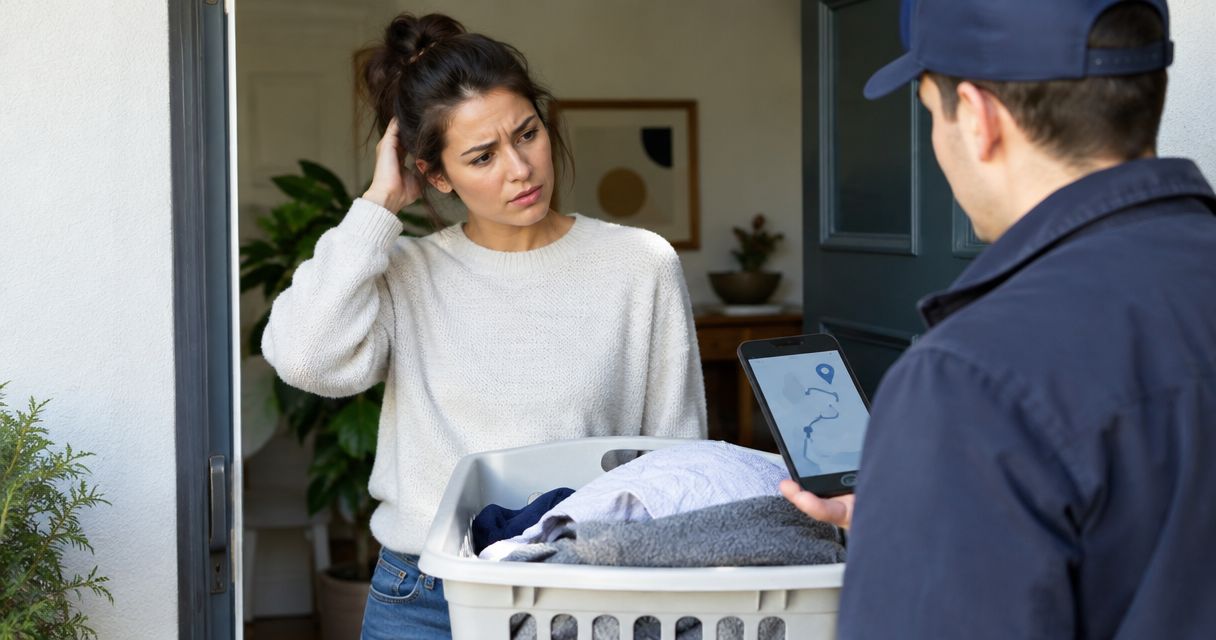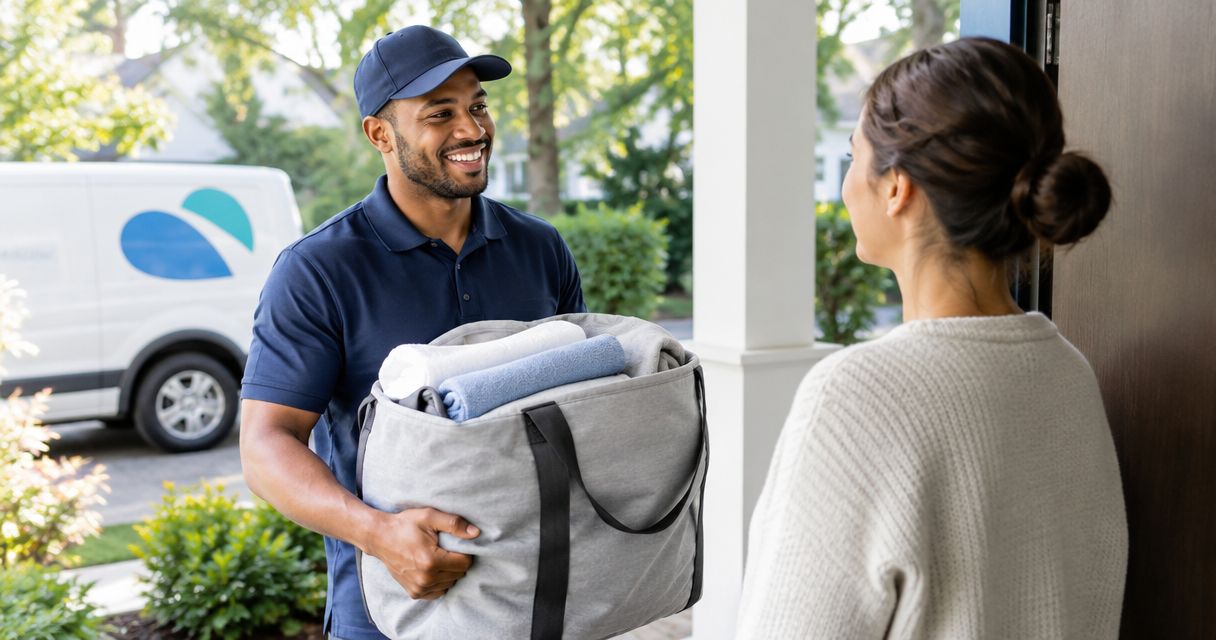

Laundry pickup services address detergent allergies through product requests and handling instructions, but you need the provider to confirm exactly what it can accommodate before pickup. Ask about the detergent, stain treatments, fabric softeners, dryer sheets, and shared equipment—not just whether a fragrance-free option exists. A detergent preference alone is not a guarantee against exposure or a skin reaction.
- Laundry pickup services detergent allergies checklist: confirm the exact detergent, added products, and shared-equipment practices before pickup.
- Fragrance-free detergent does not establish that stain treatments, dryer sheets, or packaging are fragrance-free.
- Hampr offers laundry pickup and delivery; confirm allergy-related accommodations directly before booking.
- Ask a clinician about suspected detergent allergies rather than testing unfamiliar products on sensitive skin.
How do laundry pickup services handle detergent allergies?
The useful answer is a confirmed care plan, not a sensitive-skin label. A provider needs to understand what you must avoid, identify the products it would use, and explain any handling limits before accepting your instructions.
Start with the exact product request. The guide to requesting specific detergent for laundry pickup covers that part of the conversation; allergy precautions also need to cover everything added afterward.
For your 2026 booking, use this sequence:
- Name the restriction. Give the ingredient you have been told to avoid or the exact detergent you already tolerate. Describe an unexplained reaction as a concern, not a confirmed diagnosis.
- Identify every product. Ask about detergent, pretreatment, bleach, softener, dryer sheets, and fragrance additives.
- Ask about handling. Confirm whether loads, equipment, folding surfaces, and bags are shared and what separation is possible.
- Get confirmation. Ask the provider to acknowledge the instructions before you leave your bag out.
- Resolve uncertainty. If the provider cannot confirm an essential requirement, keep the affected laundry out of that order.
Do not treat silence as agreement. An instruction submitted with an order and an instruction explicitly accepted by the provider are different things.
Why this matters
Clothing, towels, and bedding stay in contact with your skin. That makes the whole wash-and-fold process relevant when you are trying to avoid a known trigger.
A rash after wearing freshly washed clothing does not, by itself, prove a detergent allergy. Irritation and allergic contact dermatitis are different problems, and a clinician can help identify what is happening. Product names, ingredient information, and a clear account of the reaction are more useful than guessing.
Your 2026 laundry plan should separate two questions: what your skin needs, and what the service can actually do. A laundry provider can answer questions about its products and process; it cannot diagnose the cause of your symptoms.
Fragrance-free detergent: best for avoiding added fragrance
Fragrance-free detergent is a useful starting point when you need to avoid fragrance. It is not a promise that every ingredient suits your skin, and it says nothing about other products used during the order.
Ask for the exact detergent name and current ingredient information. Formulas and product variants matter, so a brand name alone does not settle the question.
Also distinguish fragrance-free from unscented. Unscented products can contain ingredients that mask odors; a lack of noticeable smell does not establish that a product contains no fragrance ingredients.
The benefit: you can evaluate a specific formula rather than rely on a general sensitive-skin description. The limitation: other ingredients and later treatments still need checking.
Your usual detergent: best for keeping the formula familiar
If you already tolerate a particular detergent, ask whether the provider accepts customer-supplied products. Do not assume it does, and do not pack a bottle without instructions for how to supply it.
Confirm the exact variant, not just the manufacturer. Ask whether the provider would use only that detergent or also apply its usual pretreatments and finishing products.
The benefit: a familiar product removes one change from your routine. The limitation: using your detergent does not establish that equipment, additives, or handling match your home setup.
If the provider cannot accept your product, ask what it uses instead. Do not approve a substitute simply because its label sounds reassuring.
Standard detergent: best for people without product restrictions
A provider's standard detergent is an option when you have no ingredient restrictions and are comfortable with the disclosed formula. It is not the right default when you have a known avoidance requirement that the provider has not addressed.
The benefit: you do not need a separate product arrangement. The limitation: accepting the standard process leaves less control over the formula and any routine extras unless you ask about them.
Compare the arrangements before choosing:
| Arrangement | Best for | Main benefit | Main limitation |
|---|---|---|---|
| Confirmed fragrance-free detergent | Avoiding added fragrance | Gives you a specific formula to review | Does not cover every possible trigger or finishing product |
| Your usual detergent, if accepted | Keeping a familiar formula | Avoids changing the detergent itself | Does not establish equivalent equipment or handling |
| Provider's standard detergent | People without product restrictions | Requires no separate detergent arrangement | Still needs ingredient review if a sensitivity is suspected |
None of these arrangements is an allergy-free certification. Choose according to your actual restriction and the provider's confirmed process, not the most comforting label.
Why allergy accommodations vary
Different answers to these questions change whether a service meets your needs. Use them as your 2026 screening checklist:
- Product choice: Can the provider identify and use the exact formula you request, or only offer a general category?
- Added treatments: Can it omit unwanted stain removers, fabric softeners, dryer sheets, and scent products?
- Equipment practices: What does the provider say about shared washers, dryers, and product dispensers?
- Order separation: Can it keep your instructions attached to the correct laundry throughout washing, drying, and folding?
- Return handling: What bags, folding surfaces, or other materials will your clean clothes contact?
These are questions to verify, not features to assume. A service that openly explains a limitation gives you more useful information than an unsupported promise that everything is safe.
Be specific about what is essential. Avoiding added fragrance and requiring dedicated equipment are different requests; approval of one does not imply approval of the other.
What should I put in my pickup instructions?
Write instructions someone can follow without interpreting your medical history. Name the allowed product, list the products to omit, and explain what should happen if the request cannot be met.
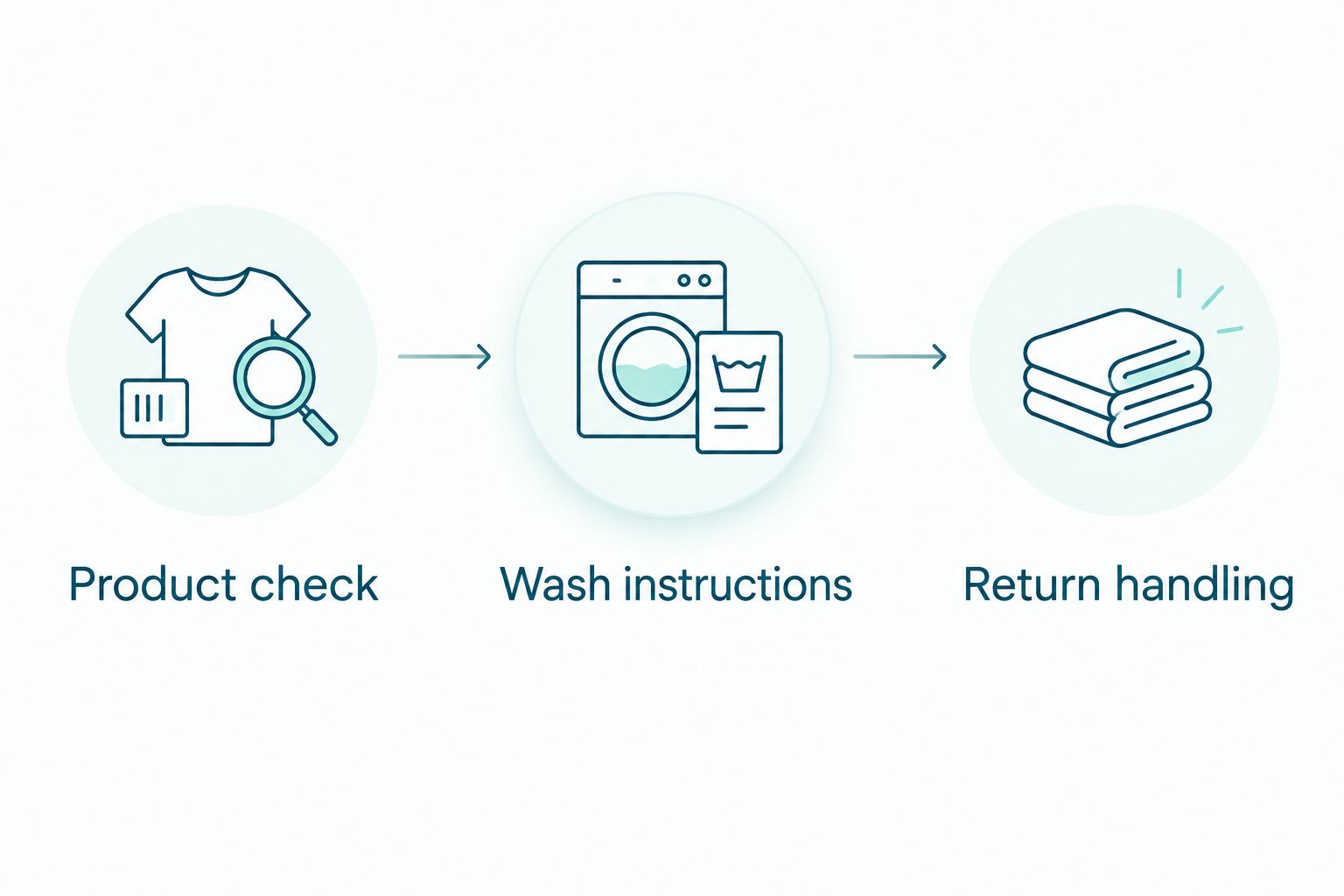
Use these 3 stages to organize the note:
- Product check: Identify the detergent and any ingredient restrictions. Ask the provider to confirm the exact product before washing.
- Wash instructions: State which treatments must be omitted. Include stain sprays, softener, dryer sheets, and scent additives where relevant.
- Return handling: Ask about separation during folding and packing, and request contact before any unapproved substitution.
A short, explicit note beats a long paragraph that only says sensitive skin. Keep private medical details out of the message unless they are necessary to explain the request.
Keep a copy of the accepted instructions. For repeat orders in 2026, confirm that the same requirements still apply rather than assuming a previous conversation covers every future pickup.
Is fragrance-free detergent enough for a detergent allergy?
Fragrance-free detergent alone is not enough to establish that a laundry order meets your allergy requirements. The relevant trigger might be another ingredient, and other products used on the clothing need separate review.
Check the full process, not just the bottle. If a clinician has identified an ingredient to avoid, use that ingredient as your screening criterion rather than relying only on front-label wording.
Can an extra rinse replace the right detergent?
An extra rinse does not replace avoiding a known trigger. Rinsing helps remove detergent from fabric, but it does not establish that the finished clothing is free of an ingredient you need to avoid.
Ask whether an extra rinse is available if it is part of your preferred care routine. Keep the detergent and additive restrictions in place rather than treating the rinse as permission to use an unsuitable product.
Can shared laundry equipment affect my decision?
Shared equipment matters when your avoidance requirements include contact with products used on other loads. Ask how dispensers, washers, dryers, and folding areas are handled; a separate load is not the same as dedicated equipment.
There is no universal answer that fits every sensitivity. If your clinician recommends strict avoidance and the provider cannot explain its process, choose a laundry arrangement whose handling you can confirm.
Where Hampr fits
Hampr is best for households and businesses seeking pickup, wash, fold, and delivery in its select US service cities. The convenience is having the laundry handled for you; the allergy-related decision still depends on confirmed product and handling arrangements.
For a 2026 order, start with Hampr and ask whether your specific requirements can be accommodated before scheduling. Do not infer an allergy policy from the fact that a company offers wash-and-fold service.
You deserve a clear answer before the bag leaves your door. If an essential requirement cannot be confirmed, hold back the affected items rather than hoping a general note will cover it.
What should I do when the laundry comes back?
Review the returned order before putting everything away. Check any care information or messages against the instructions you agreed on, especially if the provider reported a substitution or another change.
A strong fragrance is a reason to ask what was used, but smell is not a safety test. Clothing with no noticeable scent can still contain ingredients relevant to your restriction.
If something does not match the agreement, contact the provider before wearing or using the affected items. Ask which products were used and discuss the next step; do not assume another wash with the same process resolves the concern.
If you develop a rash, stop using the suspected items and seek medical advice. Keep the product details and the timing of symptoms available for that conversation instead of trying to diagnose the cause through repeated exposure.
FAQ
Can I use laundry pickup if I have a detergent allergy?
Use laundry pickup only when the provider confirms it can meet your specific product and handling requirements. For a diagnosed allergy, base those requirements on your clinician's guidance rather than a sensitive-skin label.
Does Hampr offer an allergy-safe laundry guarantee?
Do not treat Hampr laundry pickup and delivery as an allergy-safe guarantee. Confirm the exact detergent, added products, and handling arrangements directly before booking.
Can I send my own laundry detergent with my pickup?
Ask the provider whether it accepts customer-supplied detergent before including it. If accepted, confirm the exact product and whether any additional treatments would be used.
Is unscented detergent the same as fragrance-free detergent?
Unscented and fragrance-free are not interchangeable descriptions. Unscented products can contain odor-masking ingredients, so review the exact formula when avoiding fragrance.
Should I ask the laundry service to skip dryer sheets?
Ask the laundry service to skip dryer sheets if their ingredients conflict with your avoidance requirements. Confirm fabric softener and scent additives separately rather than assuming a detergent request covers them.
Will a separate load prevent contact with other detergents?
A separate load does not establish that equipment is dedicated or free of previously used products. Ask about washers, dispensers, dryers, and folding surfaces if those details affect your care requirements.
What if my clothes come back smelling scented?
Contact the provider and ask which products were used before wearing the affected clothing. A fragrance-free detergent request does not, by itself, confirm that every treatment and handling material was fragrance-free.
One last thing
The easiest product to overlook is the one added after washing. A carefully chosen detergent does not settle what happens in the dryer or during packing.
Before your next pickup, ask one final question: What touches my clothes after the wash? That keeps the conversation focused on the whole order—and helps you decide whether you can hand over the bag with confidence.