
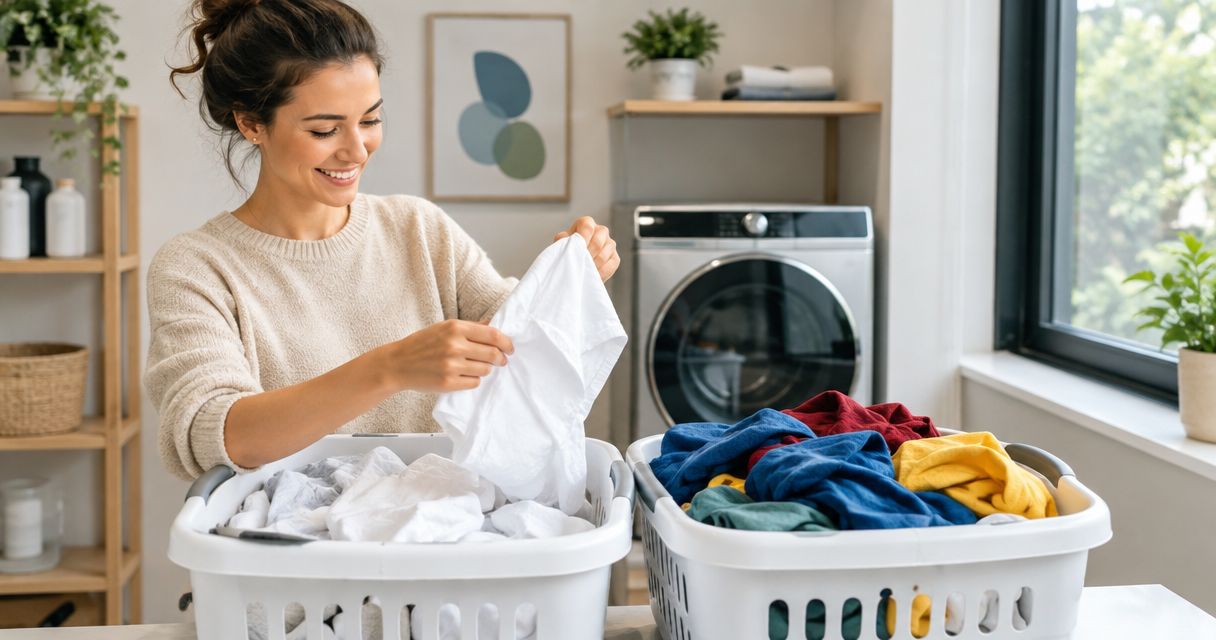
Yes, laundry pickup services can separate colors and whites, but you should confirm that your chosen service washes those groups separately rather than simply sorting them before folding. Separate bags do not, by themselves, establish how your clothes will be washed. Before booking in 2026, ask whether color separation is standard, whether you must sort at home, and how to submit special care instructions.
- Can laundry pickup services separate colors and whites? Yes, but confirm separate wash loads before booking.
- Keep whites, lights, and darks apart when preparing wash-and-fold laundry; follow each garment’s care label.
- Hampr provides laundry pickup, washing, folding, and delivery; confirm color-sorting instructions before sending your clothes.
- Cold water does not guarantee that a garment will not release dye.
Can laundry pickup services separate colors and whites?
Yes. The useful question is not just whether a laundry pickup service sorts clothing, but whether your whites and colors stay separate through washing. Ask for that distinction explicitly, especially when sending white shirts alongside dark jeans or brightly colored clothing.
You can also prepare your laundry for pickup and delivery by checking care labels and setting aside items that need different treatment. A little sorting before pickup makes your instructions easier to follow.
| Preparation approach | Best for | Benefit | Limitation |
|---|---|---|---|
| Service-managed sorting | People who want less preparation at home | Leaves color sorting to the provider when that service is confirmed | Requires a clear understanding of the provider’s process |
| Customer-sorted bags | People who want to identify color groups themselves | Makes your intended separation visible | Separate bags do not automatically mean separate wash loads |
| Holding special-care items back | People with garments needing different care | Keeps unsuitable items out of a standard wash-and-fold order | Leaves those items for a different cleaning routine |
These are preparation choices, not promises about a particular provider. Choose the approach that matches both your clothes and the service’s written instructions.
Why this matters
Color transfer happens when dye released from one fabric reaches another. A white shirt can pick up unwanted color even when the rest of the load looks fine. Sorting helps reduce that risk, but fabric care involves more than matching shades.
A white wool sweater and a white cotton towel share a color, not necessarily a washing method. Care labels come before color groups. Otherwise, a neatly sorted bag can still contain clothes that should not share a wash or dryer cycle.
For your 2026 laundry routine, the goal is simple: let the service take the chore off your hands without leaving important garment instructions to guesswork. Your clothes do not need a lengthy biography, but they do need clear directions.
Whites: keep the group clear
Start your sorting with genuinely white items whose care instructions allow compatible washing. Do not assume a mostly white garment belongs in this group: dark trim, colored embroidery, and contrasting panels deserve a closer look.
Check the label before requesting bleach. White fabric does not automatically mean chlorine bleach is appropriate, and a color-separation request is not permission to use it.
If keeping white work shirts or household linens separate matters to you, say so directly. Ask whether the provider can honor that instruction before including the items, rather than relying on the bag’s contents to communicate your preference.
Lights: check more than the shade
Pale gray, cream, and pastel garments form a useful light-color group, provided their care instructions are compatible. Treat this as a starting point, not a guarantee that everything light-colored can share a load.
Look for garments that are new, have contrasting details, or carry a warning about washing separately. A pale garment with unstable dye still needs special attention.
Separating lights adds a preparation step at home. The benefit is clearer grouping; the limitation is that color alone cannot settle questions about temperature, fabric, or drying.
Darks and brights: flag unfamiliar dyes
Dark jeans and strongly colored garments deserve attention when they are new or have previously released dye. Read any wash-separately instructions and tell the service about known color bleeding.
Do not treat the darks bag as a catch-all. A dark washable T-shirt and a dark dry-clean-only jacket need different care, even though their colors match.
If an item’s dye behavior is uncertain, hold it back until you understand its care requirements. Pickup convenience is not a reason to send a garment into a washing process that does not suit it.
Why color-sorting instructions vary
The right instructions depend on what is in your bag and how the provider handles orders. These are the factors to clarify:
- Garment care labels: Washing, bleaching, and drying instructions determine which items can receive the same treatment.
- Colorfastness: A garment that releases dye needs different consideration from one with stable color.
- New clothing: An unfamiliar garment has no washing history in your household; check its label before combining it with other items.
- Fabric and construction: Delicate fabrics, trims, and embellishments can require care beyond color separation.
- Stains: Point out a stain and identify its cause when you know it; sorting alone does not communicate treatment needs.
- Provider instructions: Confirm how to package separate groups and where to record handling requests.
A useful 2026 booking checklist covers both garment care and the provider’s process. Asking only whether the service separates colors leaves too much unanswered.
How should I prepare colors and whites for pickup?
Use 3 color groups as your starting point: whites, lights, and darks or brights. Then remove anything whose care label does not fit the intended wash-and-fold process. Follow the provider’s packaging instructions rather than assuming any bag or label will work.
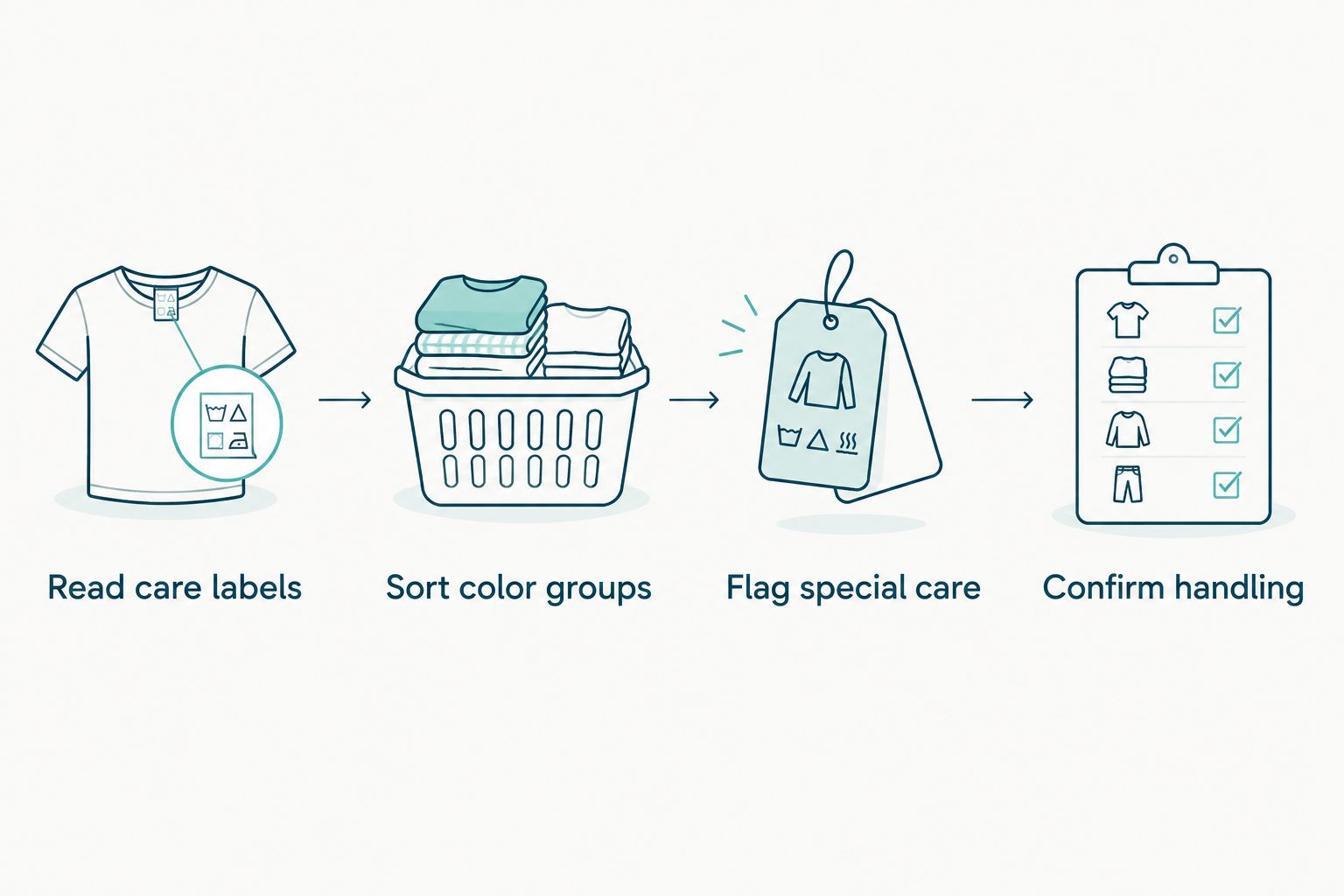
- Read care labels. Check washing and drying directions, including instructions to wash separately. Keep dry-clean-only items out of a standard washable load.
- Sort color groups. Separate whites, lights, and darks or brights. Check contrasting trims instead of judging only the garment’s main color.
- Flag special care. Identify known dye bleeding, stains, or drying restrictions. Confirm that the provider accepts the required treatment.
- Confirm handling. Ask how separate groups should be packed and how instructions reach the person washing your clothes.
Before handing over the bag, make 2 checks: are the groups clearly identified, and has the service confirmed how it will handle them? That is more useful than adding a vague request to take extra care.
Keep damp clothing out of a sealed bag while it waits for pickup. If an item is wet, follow the provider’s instructions for handling it rather than letting it sit bundled with dry laundry.
What should my sorting note say?
Keep 1 written note with the order’s relevant instructions, using the communication method the provider accepts. State the requested action, identify the affected items, and ask for confirmation when the action is essential.
For example, request that white items be washed separately from colored items, then identify any garment that must not be tumble-dried. Do not bury a drying restriction inside a general preference about sorting.
Avoid instructions that conflict with care labels. Asking for a hotter wash does not make that temperature suitable for every item in the bag, and requesting bleach does not make every white garment bleach-safe.
Does cold water mean colors and whites can go together?
No. Cold water does not guarantee protection against dye transfer, so it is not a substitute for sorting or checking care labels. A garment with unstable dye can still cause problems in a mixed load.
Ask the service to follow compatible care instructions rather than treating a cold wash as a universal solution. Water temperature, detergent, fabric, and dye behavior all affect the washing process.
Color-catching sheets are not permission to ignore a wash-separately label, either. If you want an additive used, confirm that the provider accepts it; do not tuck it into the bag and assume the washer will understand your intention.
Do separate bags guarantee separate wash loads?
No. Separate bags communicate your intended groups, but you still need confirmation that the service will keep those groups separate during washing. Packaging and washing are different steps.
This distinction matters when you are comparing laundry pickup options in 2026. Ask what happens after collection: whether bags are opened for sorting, how instructions are recorded, and whether your requested separation can be maintained.
Also distinguish separating colors within your order from keeping your order separate from other customers’ laundry. Those are different questions. If both matter to you, ask both rather than assuming one answer covers the other.
Where Hampr fits into your laundry routine
Hampr is best for households and businesses seeking laundry pickup, washing, folding, and delivery together. The benefit is handing off those chores; the trade-off is that you still need to identify special-care garments and confirm any essential handling requests.
For a 2026 booking, start with Hampr and ask how to communicate color separation and garment-care instructions. Do not treat a general wash-and-fold description as confirmation of a specific sorting method.
Once the instructions are settled, keep your preparation routine simple. Bag compatible items as directed, hold back anything unsuitable, and make important requests easy to find. The laundry pile can leave without taking your peace of mind with it.
FAQ
Can laundry pickup services separate colors and whites automatically?
A laundry pickup service can separate colors and whites, but automatic sorting must be confirmed with the provider. Ask whether sorting includes separate wash loads and whether you need to prepare separate bags.
Do I need to sort my laundry before pickup?
Follow your provider’s preparation instructions rather than assuming sorting is included. If you sort at home, separate compatible color groups and flag garments with special washing or drying requirements.
Can I put white towels and white shirts in the same laundry bag?
White towels and white shirts do not automatically belong in the same wash just because they share a color. Check their care labels and confirm how the provider handles different fabrics and drying needs.
Will a cold wash stop my clothes from bleeding color?
A cold wash does not guarantee that clothes will not bleed color. Follow wash-separately instructions and keep garments with known dye-transfer problems away from whites and lights.
Should I send new jeans with white laundry?
Keep new jeans separate from white laundry while checking their care instructions and dye behavior. Tell the provider if the jeans have released dye before, and confirm how they will be handled.
Does Hampr separate colors and whites?
Confirm Hampr’s color-separation process before placing your order. Ask whether whites and colors receive separate washes, whether you should sort beforehand, and how to record special care instructions.
Can I request bleach for all my white clothes?
Do not request bleach for all white clothes without checking their care labels. White garments can have different fabric, trim, and bleaching restrictions, so identify suitable items and confirm the provider’s process.
One last thing
The item to watch is not always the brightest one. A white garment with dark trim can need more attention than a solid-colored shirt with familiar washing instructions.
Before your next pickup, check the pieces that do not fit neatly into a color group. When the label says to wash separately, that instruction outranks the color of the bag. Make that your final check for a calmer laundry routine in 2026.