
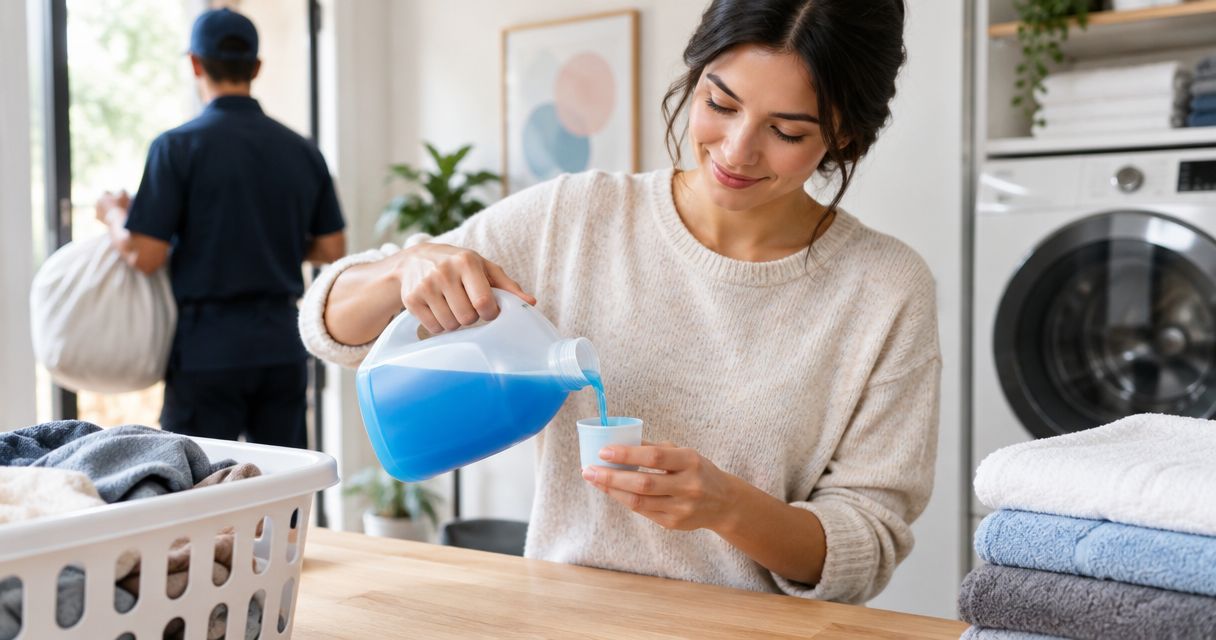
You can use your own detergent only when your laundry pickup service explicitly accepts customer-supplied products. Before your 2026 pickup, confirm the exact detergent, how to send it, and whether the service can follow your instructions; including a bottle does not establish an agreement.
- Can I use my own detergent with laundry pickup? Get explicit approval before sending customer-supplied detergent.
- Confirm the exact detergent, packaging instructions, and any restrictions on fabric softener or dryer sheets.
- Hampr laundry pickup serves households and businesses; confirm detergent requirements before handing over clothes.
- A detergent preference and a requirement to avoid a particular ingredient need different instructions.
Can I use my own detergent with a laundry pickup service?
Use your own detergent only after the service agrees to use that exact product. Ask before booking or handing over your laundry, rather than leaving the decision to whoever opens the bag.
Hampr provides laundry pickup, washing, folding, and delivery for households and businesses in select US cities. When arranging laundry pickup, treat detergent approval as a separate question from whether the service handles your address or your laundry.
There are 3 options to discuss: supplying your detergent, requesting a product the service provides, or accepting its usual wash process. These are questions to ask, not promises that every service offers every option.
| Approach | Best for | Main advantage | Limitation to confirm |
|---|---|---|---|
| Supply your detergent, if accepted | Keeping an established detergent routine | You identify the exact product you want used | Acceptance, packaging, and washing instructions still need approval |
| Request a service-provided detergent, if offered | Avoiding the need to send a container | You leave product handling to the service | The available product must match your requirements |
| Accept the usual wash process | People without a specific detergent requirement | You have fewer special instructions to arrange | You need to understand what products the process includes |
The useful answer is not simply that a service accepts special requests. It is that your particular request has been understood and accepted for your order.
Why this matters
A favorite scent is a preference. Avoiding a particular ingredient is a different instruction, and a detergent request alone does not explain that difference.
Your washing instructions also need to cover the whole routine. Supplying detergent does not, by itself, tell someone whether to use stain treatment, fabric softener, scent boosters, or dryer sheets.
For your 2026 laundry routine, decide what is essential and what is optional before asking about a pickup. That makes the conversation shorter and gives the service a clear question to answer.
If you have a diagnosed allergy or a medical reason for avoiding an ingredient, follow your clinician's guidance. Do not treat customer-supplied detergent as proof that a wash process meets a medical requirement.
How do I arrange a pickup using my own detergent?
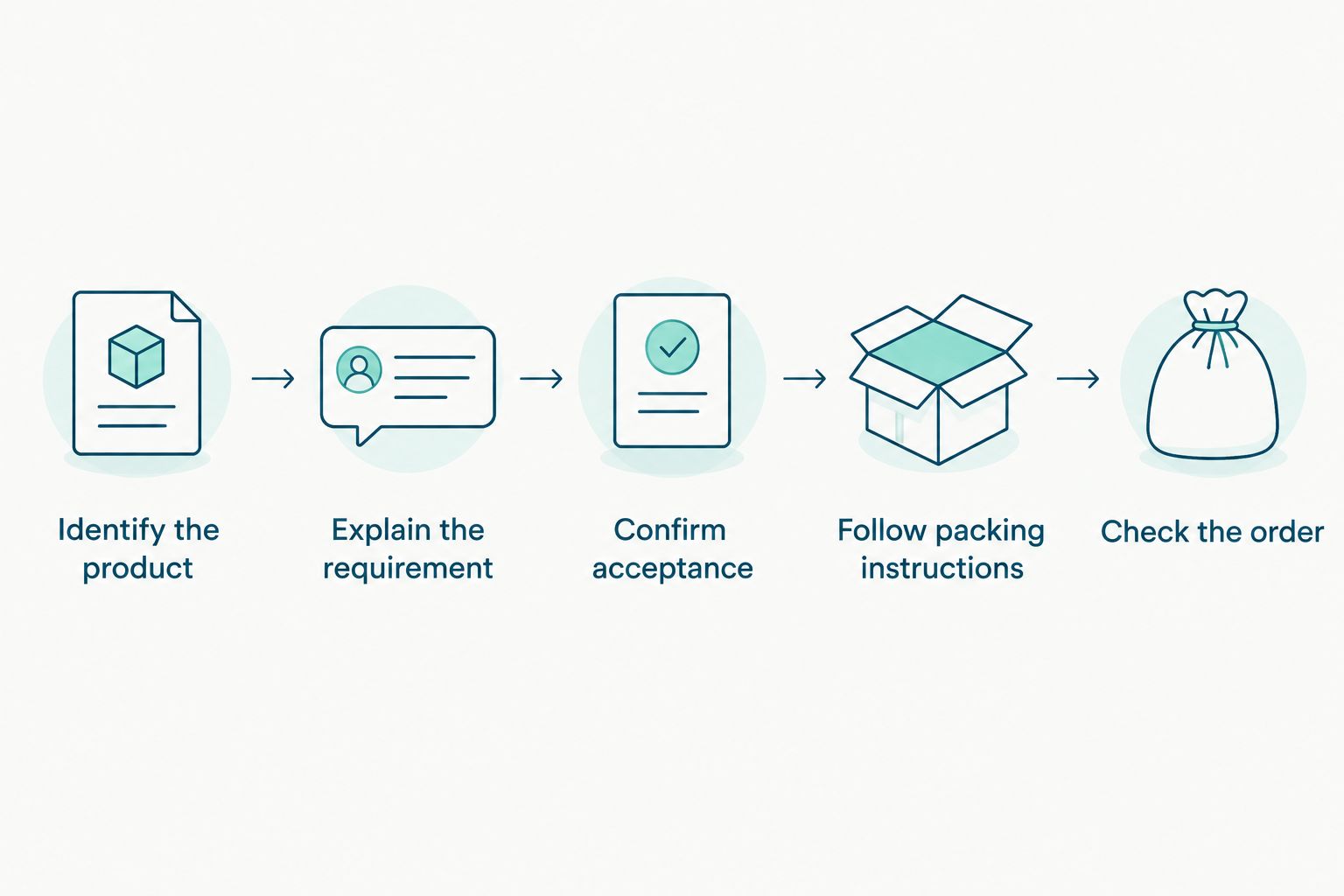
Use these 5 steps before the laundry leaves your hands. The goal is a confirmed instruction, not a surprise bottle at the bottom of the bag.
1. Identify the product
Write down the detergent's exact name and formula from its label. Describe the product itself rather than relying on a general phrase such as gentle detergent or the sensitive one.
Check the label for machine-use directions and dosing instructions. If the product has different versions, make sure your request identifies the version you actually intend to send.
There is no need to turn your laundry note into a chemistry lesson. A clear product name, relevant label information, and a plain statement of your requirement give the service something specific to review.
2. Explain the requirement
Say whether you prefer the detergent or require it. If a substitute is unacceptable, state that directly and ask the service to confirm what happens if it cannot follow the instruction.
Keep unrelated details out of the request. The useful information is which product to use, which products to avoid, and whether the service should stop and contact you rather than substitute something else.
For a shared household order, identify which clothes the instruction covers. Do not assume the person washing can tell which items belong to the person with the detergent requirement.
3. Confirm acceptance
Ask whether the service accepts customer-supplied detergent for your order. Then ask whether it can follow the accompanying restrictions, including any instructions about other laundry products.
Get 2 confirmations: acceptance of the detergent and acceptance of the washing instructions. A yes to the bottle is not automatically a yes to every condition attached to it.
Keep the confirmation somewhere you can refer to when preparing the order. If the answer is unclear, resolve it before pickup rather than expecting a note inside the bag to settle the question.
4. Follow packing instructions
Ask how the detergent should travel with the order. Confirm whether the service wants an original container, where it should be placed, and how it should be identified.
Avoid improvising with an unmarked container. Whoever handles the laundry needs to know what the product is and which order it belongs to; a mystery liquid creates another question instead of answering one.
Keep containers closed and follow the service's handling directions. Do not pour detergent onto clothes or into the laundry bag as a way of making sure it gets used.
5. Check the order
Before handoff, make sure your laundry instructions match the agreement. Remove any items that require a process the service has not accepted.
If the service uses order notes, check that those notes describe the accepted request. Do not assume a conversation about a previous pickup applies to a new order without confirmation.
When the laundry returns, report any concern clearly. Appearance or smell alone does not establish which detergent was used, so ask about the process rather than treating a fragrance check as proof.
Supplying your detergent: best for keeping your routine
Supplying your own detergent gives you a specific product to request. That is useful when your goal is to keep an established washing routine rather than choose from unfamiliar alternatives.
The trade-off is coordination. You need approval, packing instructions, and a clear understanding of how the service will handle the container and any unused product.
Choose this approach only when the service accepts both the product and your instructions. Sending your own detergent is not a workaround for a service that has already declined the request.
For a 2026 repeat-pickup routine, also ask whether you need to supply detergent each time. Do not build your household routine around an arrangement that has not been confirmed for future orders.
Requesting a detergent: best for leaving the bottle at home
If the service offers a suitable detergent, requesting it avoids sending and tracking your own container. Ask for the exact product information you need to assess whether it meets your requirement.
The drawback is that a broad description does not identify a formula. If avoiding a particular ingredient matters, review the actual product information rather than assuming a general label answers the question.
Choose this approach when the offered product meets your needs and the service confirms its use. A familiar category name is not a substitute for the details that matter to you.
Using the usual process: best for fewer special instructions
Accepting the service's usual process removes the need to arrange customer-supplied detergent. It suits an order where you do not have a specific product or ingredient requirement.
The limitation is less control over the washing products. Ask what the process includes if detergent, fragrance, softener, or finishing products matter to your decision.
Choose the usual process only after deciding that its product choices are acceptable. Convenience should simplify your laundry day, not leave you guessing about a requirement you consider essential.
Why customer-supplied detergent arrangements vary
For a 2026 booking, check these factors directly with the service. Each one changes what you need to agree on before pickup:
- Exact formula: Identify the product rather than asking about detergent in general.
- Machine directions: Ask whether the product's labeled use fits the service's washing process.
- Packaging: Confirm how the container should be closed, identified, and transported.
- Other products: State whether stain treatments, softener, scent boosters, or dryer sheets are acceptable.
- Separate handling: Ask what the service can confirm if avoiding exposure to other products matters.
- Repeat orders: Establish whether the instruction needs to be confirmed again for later pickups.
These questions turn a vague preference into an instruction someone can act on. They also give the service room to say no before your clothes are already in transit.
Can I ask for no fabric softener or dryer sheets?
You can ask, but get the restriction accepted separately from your detergent request. Supplying detergent does not communicate instructions about products used during rinsing or drying.
Name each exclusion plainly. If avoiding fragrance throughout the process is your goal, explain that goal rather than assuming a detergent choice covers everything.
Does using my own detergent guarantee no cross-contact?
Using your own detergent does not establish a cross-contact guarantee. It identifies the product you supplied, not the handling history of washing equipment, containers, or work surfaces.
If cross-contact matters, ask what the service can actually confirm about its process. Use that answer, alongside any relevant clinical advice, to decide whether the arrangement meets your needs.
Should I include delicate clothes with my detergent?
Only include delicate clothes after confirming that the service accepts their required care process. Your preferred detergent does not override a garment's care label or turn a regular wash into hand washing.
Set aside anything with instructions you have not discussed. Keeping a questionable item out of the bag is simpler than trying to change its washing instructions after pickup.
Where Hampr fits into the decision
Hampr laundry pickup is for households and businesses that want washing, folding, and delivery handled together. For a detergent-specific order, confirm the requested product and handling instructions before handing over the bag.
The benefit is having those laundry tasks handled through a pickup-and-delivery service. The boundary is equally important: that service description does not establish acceptance of your detergent or a specialized washing requirement.
Keep the next move simple. Explain what you need, ask for a clear answer, and book only when the accepted process matches the clothes you plan to send.
FAQ
Can I use my own detergent with laundry pickup?
You can use your own detergent only when the laundry pickup service explicitly accepts it. Confirm the exact product, packing instructions, and washing requirements before handoff.
Should I put my detergent bottle inside my laundry bag?
Follow the service's confirmed packing instructions rather than choosing a location yourself. Ask how the container should be closed, identified, and transported with the order.
Can I request fragrance-free detergent instead of supplying my own?
Ask whether the service offers a fragrance-free product and can confirm its use for your order. If particular ingredients matter, review the exact product information rather than relying on a broad description.
Does sending my own detergent mean no dryer sheets will be used?
No, sending detergent does not communicate a restriction on dryer sheets. Ask separately about dryer sheets, softener, scent boosters, and other products you want excluded.
Is customer-supplied detergent enough for a detergent allergy?
Customer-supplied detergent alone does not establish that a washing process meets an allergy-related requirement. Follow your clinician's guidance and ask the service what it can confirm about products and handling.
Can I use my own detergent with Hampr?
Confirm your exact detergent request with Hampr before arranging the handoff. Ask about product acceptance, packing, and any additional washing restrictions rather than assuming customer-supplied detergent is included.
Do I need to repeat my detergent instructions for every pickup?
Ask whether the service retains detergent instructions and whether you must confirm them for each order. Do not assume an agreement for an earlier pickup automatically applies to the next one.
One last thing
Ask what happens if your detergent cannot be used. That question is easy to miss while you are sorting socks, but it settles the fallback before anyone starts washing.
Decide whether you would accept a specific substitute, prefer to be contacted, or want the affected items left unwashed. Then ask the service which of those instructions it can accept; do not assume your preferred fallback is automatic.
For your next pickup in 2026, put that fallback beside the detergent request. A useful laundry note explains both the plan and what to do when the plan cannot be followed. Your clothes should not need a guessing game.