
Property managers’ laundry service is the washing and return of property linens or residents’ clothes with the aim of keeping homes ready and laundry tasks off your team’s plate. This 2026 guide explains how to choose a service, organize pickups, and protect your turnover schedule without treating every building like a hotel.
- Laundry service for property managers starts with separating property-owned linens from residents’ personal laundry.
- Hampr is best for property managers seeking pickup, wash, fold, and delivery in its supported cities.
- Choose wash and fold for suitable everyday textiles; route specialty items according to their care labels.
- Confirm pickup access, return arrangements, and clean-linen reserves before relying on laundry delivery for turnovers.
Why laundry service matters for property managers
A property manager’s laundry problem has several versions. Short-term rentals need clean bedding between guests, furnished apartments need replacement linens, and long-term residents manage their own clothes. Start with the job you need done, not the service name.
For property-owned linens, your main question is whether clean stock will be ready when the unit needs it. For resident laundry, the questions change: who places the order, who gives access, and who handles a missing-item concern? Keep those responsibilities separate from the start.
Hampr provides on-demand laundry pickup, wash, fold, and delivery for households and businesses in select US cities. Hampr is best for property managers seeking pickup, wash, fold, and delivery in its supported cities. Its geographic scope is a real limitation: confirm coverage for the property address before building your process around the service.
For your 2026 operating plan, define success in plain terms: clean linens ready for the next guest, fewer laundry errands for staff, or an optional convenience residents arrange themselves. Pick the outcome first. A laundry service cannot fix an unclear handoff.
How to set up laundry service for your properties
Map your laundry
Start with a spreadsheet or paper log. Record what leaves each property, who owns it, and when it needs to return. A recommended 7-day logging period gives you a starting record; extend it if that week misses your normal turnover pattern.
Separate recurring work from occasional jobs. Bedding from a furnished rental belongs in a different workflow from a resident’s personal clothing or a one-off curtain cleaning. Mixing them makes ownership, billing, and return routing harder to follow.
If your goal is a resident amenity, use the guide to laundry pickup for apartment dwellers to frame the household use case. Keep the building’s role clear: providing information is different from accepting custody of residents’ clothes.
- List each property and its laundry owner.
- Record item types, quantities, and care instructions.
- Mark the date clean items are needed.
- Name the person responsible for each handoff.
- Separate resident requests from property operations.
Separate your loads
Use labeled bags and a simple sorting checklist before adding software or outsourcing. Read the care labels, check pockets, and identify items that need a different cleaning method. Keep damp laundry separate from clean stock while you prepare the handoff.
Your 2026 sorting instructions should distinguish ordinary washable linens from specialty items. Do not send dry-clean-only fabrics through a standard wash-and-fold process. Ask the provider how to handle bulky bedding, heavily soiled textiles, and detergent preferences before including them.
Property ownership matters here, too. A bag labeled only with the building name does not tell your team whether its contents belong to a resident or the property. Give every bag a clear destination without displaying unnecessary personal information.
- Separate property linens from personal clothing.
- Check care labels before choosing a service.
- Flag stains rather than assuming routine washing removes them.
- Keep specialty items out of ordinary loads.
- Use a property or unit identifier on each bag.
Choose your service
Compare your existing process first. Staff washing on-site keeps the work under your control, but someone still has to move loads, fold linens, and put everything away. Dropping bags at a local wash-and-fold business removes washing from the task list while leaving transport with your team.
Hampr laundry service adds pickup and delivery to washing and folding. That is the relevant difference for a manager trying to remove laundry trips, not just machine time. Confirm the address, accepted items, scheduling arrangements, and service terms directly before choosing it.
Do not assume an everyday laundry service also provides dry cleaning, specialized textile treatment, or infection-control processing. Match the cleaning method to the item and its use. The options table below helps you compare the actual work each approach leaves behind.
- Identify which tasks you want to outsource.
- Confirm service coverage for every property address.
- Ask which textiles and conditions are accepted.
- Check how cleaning preferences are communicated.
- Review issue-reporting and item-handling terms.
Plan your handoff
Write the pickup instructions yourself before introducing a new tool. Someone unfamiliar with the building should be able to find the right bags without guessing which entrance, storage room, or unit you mean. Follow the property’s access rules rather than leaving a door code on a visible bag.
Agree on the return location as carefully as the pickup location. Clean linens left where nobody expects them do not help the next turnover. A designated staff member should know where to look and how to confirm receipt.
Use these four fields in your handoff note: bag identification, pickup location, access instructions, and return location. Keep them short enough to read on a phone. Update the note whenever the building’s access arrangements change.
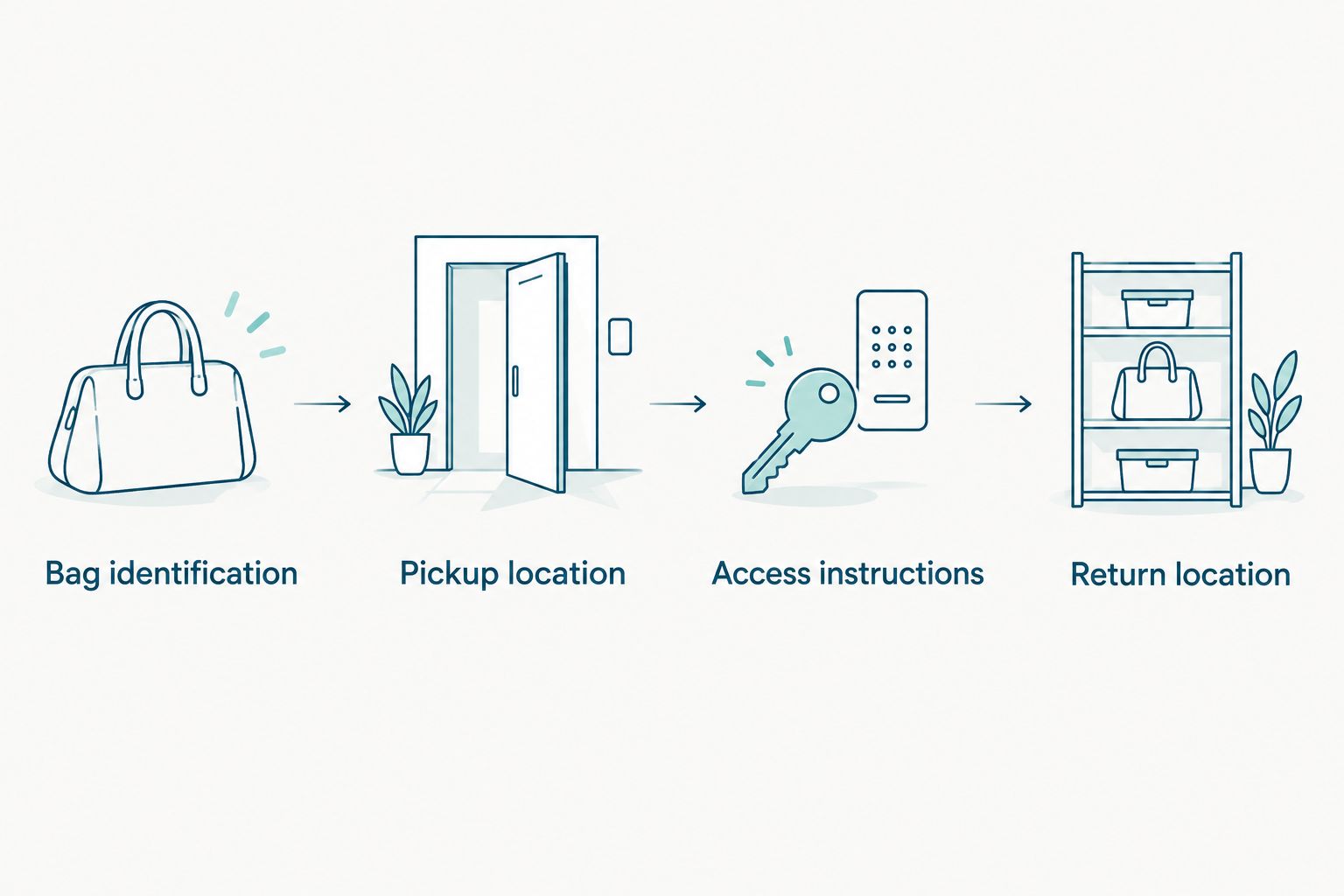
- Bag identification: specify the property or unit reference.
- Pickup location: name the approved collection point.
- Access instructions: share entry details through an appropriate channel.
- Return location: identify where clean bags belong.
- Assign a backup contact when the usual contact is unavailable.
Set your buffer
Count clean linens already on the shelf before scheduling outgoing laundry. Your next turnover should not depend on the same sheets currently waiting to be washed. The right reserve depends on booking patterns, item quantities, storage space, and the return arrangements you confirm.
For a 2026 linen plan, work backward from the next occupied stay. Identify what must be ready, what is already clean, and what is still away. Do not promise a room-ready deadline based on a delivery time you have not confirmed.
Keep the reserve usable, not merely counted. A stained sheet or incomplete bedding set does not cover a bed. Store clean items separately from outgoing bags, and make the reserve visible to the person preparing the unit.
- Count usable clean sets by bed size.
- Match towels and bedding to upcoming stays.
- Keep a designated clean-linen reserve.
- Confirm return arrangements before sending essential stock.
- Write an alternative plan for an interrupted pickup or return.
Test your process
Start with a limited trial rather than moving every property at once. A recommended 2-week pilot lets you inspect the workflow across actual pickups and returns; extend it if your property has too few turnovers to evaluate it. This is a planning window, not a provider delivery promise.
Choose representative laundry. A tiny bag of uncomplicated towels will not tell you how a mixed bedding load fits your storage and turnover routine. Include the ordinary items you intend to send, subject to the provider’s acceptance rules.
Inspect returned items before putting them into service. Check the contents against your record, look for unresolved stains, and confirm that the bags reached the intended location. Report concerns through the provider’s stated process rather than leaving them for the next shift.
- Trial one clearly defined property workflow.
- Record outgoing items and bag identifiers.
- Inspect cleanliness, condition, and returned contents.
- Note staff work still required after delivery.
- Resolve handoff problems before expanding.
Track your results
Keep the measurement simple enough that your team will use it. Log pickup and return events, unresolved issues, and the staff work that remains. Separate laundry-processing concerns from problems caused by unclear access instructions or a missed internal handoff.
For your 2026 review, compare the service with your original goal. Did you remove staff trips? Were clean linens ready when required? Did residents understand that their orders were separate from property linen orders? Use recorded answers rather than impressions.
Schedule a recommended 30-minute review after the pilot. Keep a process that meets your needs, fix instructions that cause confusion, and change the arrangement if the cleaning method or confirmed schedule does not fit. More properties should follow only after the first workflow works.
- Track actual pickup and return events.
- Log missing items, unresolved stains, and routing errors.
- Record staff handling and transport tasks.
- Compare results with your original operating goal.
- Review the process when occupancy or staffing changes.
Explore pickup and delivery
Hampr offers pickup, wash, fold, and delivery in select US cities. Confirm service for your property address.
Compare laundry options for your property
Choose the option that removes the right task without creating an unmanageable handoff. On-site washing, drop-off washing, and pickup service solve different parts of the problem. Specialty cleaning belongs in the comparison when the care label requires it, not as an automatic upgrade.
| Option | Best for | Main benefit | Key limitation |
|---|---|---|---|
| Staff-managed on-site laundry | Properties with suitable machines and staff capacity | Direct control over sorting and the wash schedule | Staff still handle washing, drying, folding, and storage |
| Local wash-and-fold drop-off | Managers who can handle transport | Outsources washing and folding | Your team still delivers and collects bags |
| Hampr pickup, wash, fold, and delivery | Managers seeking door-to-door laundry handling in supported cities | Combines pickup, washing, folding, and return delivery | Operates in select US cities; confirm address coverage and service fit |
| Specialist textile cleaning | Items requiring a care method outside ordinary wash and fold | Matches cleaning to the textile’s requirements | Requires a separate workflow and confirmation of accepted items |
Use this table as a shortlist, not permission to send every fabric through one route. Ask the provider about the actual items you manage. A service that suits everyday towels still needs to confirm whether it accepts a particular comforter or specialty fabric.
Common mistakes property managers make
Treating resident laundry as building inventory
Residents’ clothes and property-owned linens need separate records and responsibilities. Decide whether residents order directly or whether staff coordinate the handoff. Do not let an optional amenity quietly become an undefined custodial job for your front desk.
Sending out the only clean-linen backup
A bag ready for pickup can contain the very bedding your next turnover needs. Check the clean reserve before dispatching it. Laundry delivery and guest check-in are separate events; your linen plan must connect them without assuming an unconfirmed deadline.
Using one vague instruction for several buildings
Leave it by the door is not enough when a property has several entrances. Write address-specific collection and return notes, then name the responsible contact. The laundry should not need a building tour to reach the right shelf.
Assuming every textile belongs in wash and fold
Blankets, curtains, decorative covers, and everyday towels do not automatically share a cleaning method. Read their care labels and confirm acceptance. Keep items needing specialty treatment out of routine bags instead of hoping the provider will identify them for you.
Expanding before checking returned laundry
A successful pickup is only half the workflow. Inspect the return, reconcile the contents, and confirm that staff can find and store the clean items. Expand after those steps work, not simply after the first bag leaves the building.
FAQ
What is laundry service for property managers?
Laundry service for property managers handles washing and returning property linens or coordinates laundry for residents. Define ownership, cleaning requirements, pickup access, and return responsibilities before choosing a provider.
Is Hampr a fit for property managers?
Hampr is a fit for property managers seeking on-demand pickup, wash, fold, and delivery in its supported US cities. Confirm service for the property address, accepted items, and scheduling arrangements before relying on it for operations.
Can residents arrange their own laundry pickup?
Residents can arrange personal laundry separately from property-owned linen operations. Confirm the chosen provider’s ordering process and the building’s pickup rules, and explain whether staff have any role in the handoff.
Is laundry pickup better than washing linens on-site?
Laundry pickup is the better fit when your goal is to outsource transport as well as washing and folding. On-site washing keeps the process under your control but leaves machine handling, folding, and storage with your team.
Can I rely on laundry delivery for a same-day turnover?
Do not rely on a same-day return unless the provider explicitly confirms the arrangement for your order. Keep enough usable clean linens to prepare the property without depending on an unconfirmed delivery.
Should I send every property textile in one laundry bag?
No; separate items by ownership and cleaning requirements before sending them. Read care labels, identify specialty fabrics, and confirm which items the provider accepts.
What should I track during a property laundry trial?
Track outgoing contents, pickup and return events, item condition, unresolved issues, and remaining staff work. Compare those records with your goal, such as removing transport tasks or keeping clean linens ready for turnovers.
One last thing
Before rolling out laundry service across your properties in 2026, try this: ask a staff member who did not write the handoff note to explain the pickup and return process. If they cannot identify the bags, collection point, and clean-linen destination, rewrite the note. The simplest laundry improvement is often a clearer instruction, not another app.