Laundry service for personal trainers is pickup, washing, folding, and delivery of workout clothing and washable towels, with the aim of keeping you ready for clients without spending your downtime on laundry. This 2026 guide shows you how to plan around sweaty gear, back-to-back sessions, and care labels that do not all agree.
- Hampr offers laundry service for personal trainers who want pickup, wash, fold, and delivery in a supported city.
- Separate workout clothes from towels when their care instructions differ; laundry pickup does not replace garment-specific instructions.
- Choose your laundry schedule around confirmed return timing and the clean gear you need between sessions.
- Test an ordinary load before handing over the clothing you need for your busiest training day.
Why laundry service matters for personal trainers
Your laundry is part of your workday. A fresh coaching shirt, clean client towel, and spare change of clothes all need to be ready before your next appointment—not somewhere in a dryer you forgot to empty.
Training also creates different laundry jobs. Towels, synthetic shirts, and delicate sports bras can carry different washing and drying instructions. Putting everything into one bag does not make those differences disappear.
Hampr picks up, washes, folds, and delivers laundry for households and businesses in select US cities. Hampr laundry service is best for personal trainers who want pickup, wash, fold, and delivery in a supported city. Confirm local service coverage and care requirements before choosing it for your routine.
The useful comparison in 2026 is not just who washes your clothes. It is who handles each task, how the return fits your appointments, and whether the arrangement works for the items you actually use. A pickup service removes washing and folding from your list; you still need to prepare the load and put returned items away.
How to build a laundry routine around your training schedule
1. Count the laundry your sessions create
Start with a simple note on your phone. For 7 days, record the clothing and towels you send to the wash, including your own workouts and any client towels you provide. This is a planning exercise, not a reason to weigh every sock.
Separate personal laundry from items used for your business. A trainer who washes only coaching outfits has a different job to solve than a trainer who supplies towels throughout the day. Your appointment calendar alone does not tell you the size of the pile.
Include the tasks after washing, too. Folding, sorting, transporting, and putting items away belong in the comparison. The dryer finishing its cycle is not the finish line if your clean shirts are still living in a basket.
Use the record to identify an ordinary week before choosing a routine:
- List coaching outfits, personal workout clothes, and client towels separately.
- Note which days create the largest pile.
- Record when you next need each group of items.
- Mark garments that need special washing or drying care.
2. Separate items by their care instructions
You can do this yourself with labeled baskets or a written sorting note. Read the care labels before deciding that every workout item belongs in the same wash. Sort into 3 planning categories: towels, everyday workout clothing, and special-care items. These are organizing groups, not a universal washing recipe.
The garment label decides the next step. Items within the same group can still need different temperatures, drying methods, or handling. Separate anything whose instructions conflict with the rest of the load.
Before using a pickup service, ask how to communicate these differences and which requests it accepts. Keeping a delicate item at home is better than sending it with instructions the service cannot follow. For detergent selection, consult the guide to detergents for activewear and workout clothes alongside the garment label.
- Read washing and drying instructions before bagging clothes.
- Keep special-care garments separate from routine laundry.
- Empty pockets and remove accessories.
- Identify stains and communicate any care restrictions.
3. Choose what to outsource—and what to keep at home
The manual option is straightforward: wash compatible items yourself and fold them before your next training day. It gives you direct control over care, but leaves every laundry task on your schedule. Outsourcing makes sense when handing off washing and folding solves the part you most want to stop doing.
Hampr laundry service handles pickup, washing, folding, and delivery in select US cities. That makes it an option for routine washable laundry, subject to confirming that the service can handle your particular items and instructions. Do not assume every garment or business requirement is included.
A mixed routine is useful when your ordinary shirts and towels are easy to wash but a few garments need separate attention. You do not have to outsource the whole basket to remove a meaningful task from your week.
- Decide whether your main task is clothing, towels, or both.
- Confirm service coverage for the actual pickup address.
- Ask about accepted items and care requests.
- Keep incompatible special-care items in your home routine.
4. Match pickup and return to your appointments
Start with your calendar, not the bag. Identify when you need clean gear, then work backward from the service's confirmed return timing. A convenient pickup is not enough if the clothes come back after you need them.
For your 2026 schedule, include your own workouts, travel between training locations, and days with consecutive appointments. Count the clean outfits and towels you will use while the laundry is away. That count—not a generic recommendation—sets your reserve.
Write down a fallback before the first pickup. It can be an extra clean outfit, towels kept aside, or a home wash you can complete if the handoff does not happen as planned. Treat the reserve as working stock, not another pile available to send away.
- Confirm pickup and return arrangements before scheduling.
- Set aside clean items for the full laundry-away period.
- Avoid sending every usable coaching outfit together.
- Recheck the plan when your appointment pattern changes.
5. Make the pickup handoff easy to repeat
For a manual routine, choose one place to collect laundry and one place to return clean items. A consistent setup saves you from searching different rooms before a wash. For pickup, follow the provider's preparation and handoff instructions rather than assuming any bag or drop location works.
Your training location matters here. A home-based trainer, apartment resident, and trainer working inside a shared gym have different access arrangements. If you do not control the building, get permission before choosing a collection point.
Keep care instructions separate from building instructions. The person collecting your bag needs to understand access; the person washing your clothes needs to understand garment care. A single vague note such as “gym laundry” does not explain either job.
Use a short, repeatable handoff checklist:
- Follow the provider's bagging instructions.
- Confirm an authorized collection location.
- Explain relevant access details through the approved channel.
- Communicate care requests before the load leaves.
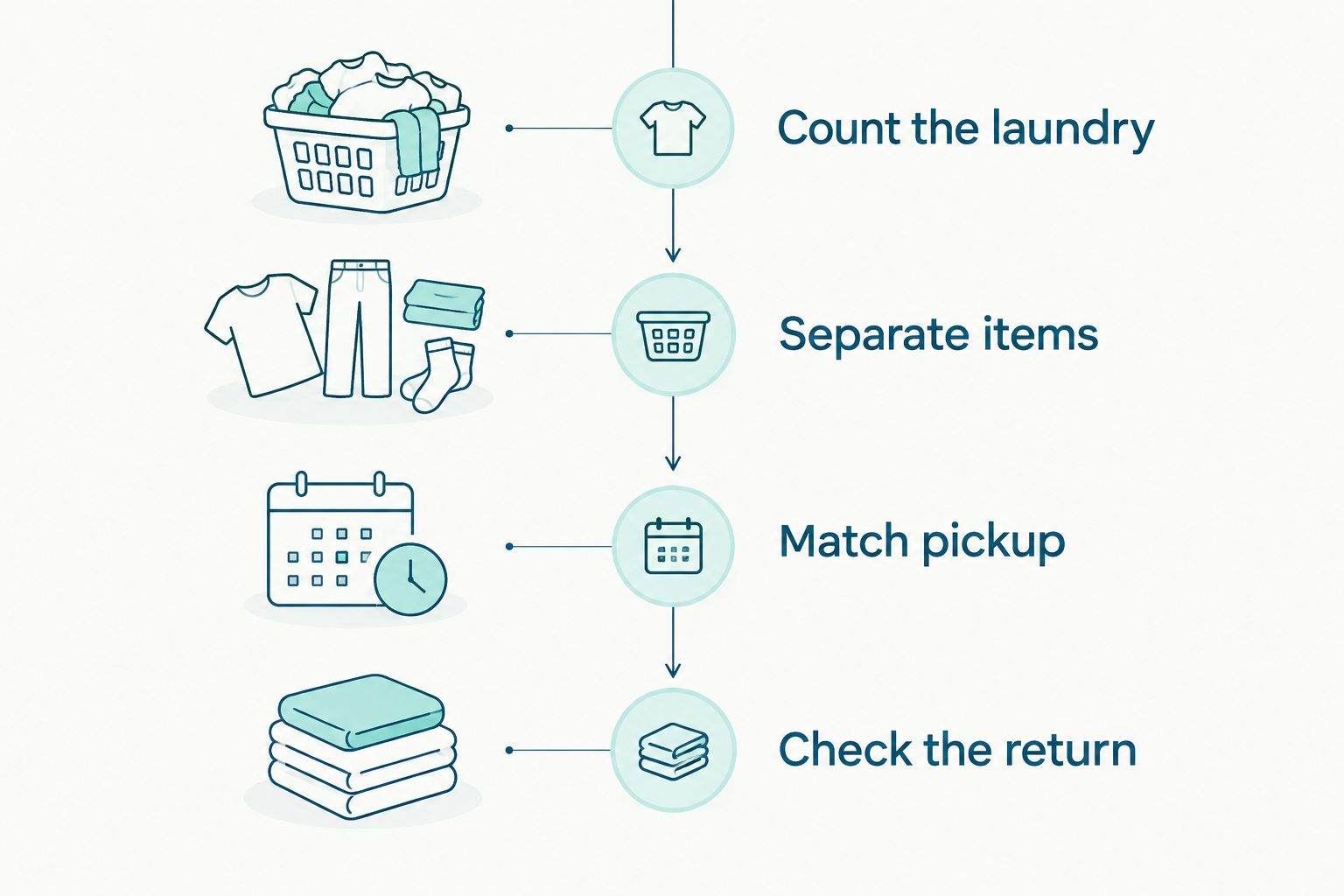
6. Test a routine load before relying on it
Start with an ordinary load rather than everything you need for tomorrow's appointments. Include routine items whose care requirements the provider has agreed to handle. Keep your essential reserve at home while you learn how the arrangement fits your day.
When the laundry returns, check the things that matter to your work: whether the requested care was followed, whether items are ready to wear, and whether the return matched the confirmed arrangement. Folding is useful, but it is not a substitute for checking garment condition.
For a practical 2026 trial, review 2 pickup cycles before making the service your default. This is a suggested evaluation window, not a performance claim. The second cycle lets you check whether your preparation and storage routine works again, rather than judging only the first handoff.
- Use routine clothing and towels for the initial load.
- Keep essential items out of the test.
- Check dryness, odor, stains, and garment condition on return.
- Record any issue and clarify the next load's instructions.
7. Put returned laundry straight into your work rotation
The free, manual fix is to give clean gear a clear home: coaching outfits together, workout clothing together, and client towels in their own designated storage. If your laundry is outsourced, this remains your job. Folded clothes at the door still need to become ready-to-use clothes.
Check returned items before storing them. Keep clean laundry apart from used gear, and do not put damp items into closed storage. If something is not ready to use, deal with it before it becomes tomorrow morning's surprise.
Then review the routine against your actual calendar. Adding sessions, changing locations, or starting to supply client towels changes what you need between returns. Your laundry plan should follow the work, not keep repeating a schedule that no longer fits.
- Inspect returned items before putting them away.
- Store clean towels separately from used towels.
- Refill your appointment-day clothing supply first.
- Update the reserve when your workload changes.
Compare laundry options for personal trainers in 2026
Choose the option that fits your items and calendar, not the one that sounds easiest in isolation. Manual washing gives you direct control. Pickup hands off more tasks. A mixed routine keeps exceptions out of your ordinary laundry load.
| Option | Best for | Main advantage | Key limitation |
|---|---|---|---|
| Home washing | Trainers who want direct control of garment care | You manage sorting, washing, and drying yourself | You also handle folding and the full laundry schedule |
| Self-service laundromat | Trainers who need access to laundry equipment | You use equipment without owning it | You still transport, supervise, and finish the laundry |
| Local wash-and-fold drop-off | Trainers who can fit a drop-off into their route | You hand off washing and folding | Collection and drop-off remain your responsibility |
| Hampr pickup and delivery | Trainers seeking pickup, wash, fold, and delivery in a supported city | The service handles collection through delivery | Coverage is limited to select US cities; confirm item requirements |
| Mixed home-and-service routine | Trainers with routine loads plus special-care garments | You outsource compatible items and keep exceptions at home | You maintain separate workflows |
Before choosing, ask each provider the same questions about accepted items, care requests, handoff arrangements, and return timing. Compare the full job you will still perform. A drop-off on your existing route and a pickup at an awkward location are not automatically ordered from harder to easier.
Check your laundry pickup options
Explore pickup, wash, fold, and delivery for your household or business in a supported city.
Common mistakes personal trainers make
Sending every coaching outfit in one load
Your laundry can be on schedule while you still have nothing clean to wear. The problem is sending away clothes you need before the confirmed return. Keep a working reserve based on your appointments, including your own workouts, rather than sending everything that fits into the bag.
Treating all gym laundry as one fabric
A cotton towel and a stretch training top are both gym laundry, but that does not make their care instructions interchangeable. Sort by the label and communicate exceptions. Do not ask a provider to guess which items need different drying or washing treatment.
Assuming ordinary washing is disinfection
Routine wash-and-fold and a specified disinfection process are not interchangeable claims. If your workplace or client situation requires a particular hygiene procedure, confirm that requirement and the provider's process separately. Do not choose an ordinary laundry service on the assumption that it meets an unstated standard.
Forgetting shared-building access
A trainer renting space in a gym cannot automatically use its entrance or reception area for a laundry handoff. Agree on access with the person responsible for the building. Include that arrangement in your routine before bags start appearing beside the front desk.
Outsourcing the wash but leaving the clean pile untouched
Laundry pickup solves washing and folding, not your storage system. Returned towels help only when they are checked and ready for the next client. Give putting-away a place in your routine so the clean pile does not become another obstacle between appointments.
FAQ
What's the best laundry service for personal trainers?
The best laundry service for personal trainers fits your pickup address, garment care needs, and appointment schedule. Hampr offers pickup, wash, fold, and delivery in select US cities; confirm coverage and item requirements before choosing it.
Can I send workout clothes and towels in the same pickup?
Ask the provider whether it accepts both and how it handles different care instructions. A shared pickup does not mean every item should receive the same washing or drying treatment.
Should I wash my training clothes at home or use pickup?
Wash at home when direct control over garment care is your priority; choose pickup when handing off washing and folding is your priority. A mixed routine lets you keep special-care pieces at home while outsourcing compatible laundry.
How often should a personal trainer schedule laundry pickup?
Schedule pickup around your laundry volume, confirmed return timing, and clean-item reserve. Track a normal working week first, then choose a schedule that leaves enough clothing and towels for appointments while the load is away.
Does wash-and-fold disinfect client towels?
Do not assume routine wash-and-fold includes a specified disinfection process. If your workplace requires one, ask the provider to confirm the process against that requirement before sending client towels.
Can laundry be picked up from the gym where I train?
A gym pickup requires provider coverage and permission to use the collection location. Confirm building access and handoff arrangements with both the provider and the person responsible for the gym.
What should I check when my workout laundry comes back?
Check dryness, odor, stains, garment condition, and whether agreed care instructions were followed. Put ready-to-use clothing and towels into clean storage, and raise any issue before sending the next load.
One last thing
Build your laundry routine around the next clean outfit you need—not the moment your dirty basket overflows. That shift makes pickup a planned handoff rather than an emergency between clients.
For your next 2026 training week, set aside the clothing and towels you need while a load is away. Then choose the washing arrangement for everything else. You do the coaching; let the laundry plan stay in the background.