

Your take-home earnings as a Hampr laundry driver depend on the role’s current pay terms, the work you complete, and any expenses you cover yourself—not a universal hourly figure. To decide whether to get paid to do laundry, compare earnings after expenses with all the time the work requires, including any driving, washing, folding, and handoffs assigned to you.
- To get paid to do laundry through Hampr, confirm the role’s duties and current pay terms before estimating earnings.
- Gross earnings are not take-home earnings; subtract any work expenses you cover yourself.
- Count driving, folding, messages, and handoffs when those tasks belong to your role.
- Judge laundry work by earnings after expenses and total work time, not payment per order alone.
Why this matters
Getting paid for laundry sounds straightforward. But a payment for completing a job tells you little until you know what completing that job involves.
A pickup-and-delivery assignment and an assignment that includes washing and folding are different workloads. Before making an earnings estimate for 2026, understand how laundry pickup and delivery works, then confirm which parts would actually be your responsibility.
The useful number is what you keep for the time you spend. A busy schedule is not automatically a profitable one, and a full laundry basket is not a paycheck until you know the terms.
How much can you earn as a Hampr laundry driver?
Calculate your earnings from the current compensation terms for the specific role, rather than treating the service’s customer charges as worker pay. Confirm whether compensation relates to an order, a task, time worked, or another measure before doing the math.
Use this breakdown to keep different earnings figures separate:
| Earnings measure | What it means | Best for | What it leaves out |
|---|---|---|---|
| Gross earnings | Compensation received before your expenses | Checking payments against completed work | Your costs and time commitment |
| Earnings after expenses | Gross earnings minus work expenses you cover | Understanding what the work leaves you before taxes | How much time earning it required |
| Effective hourly earnings | Earnings after expenses divided by total work hours | Comparing the work with your personal income goal | Whether that workload will repeat |
Do not compare an advertised gross figure with another job’s take-home pay. Keep both sides of the comparison on the same basis, including expenses and tax treatment.
Build your own earnings estimate
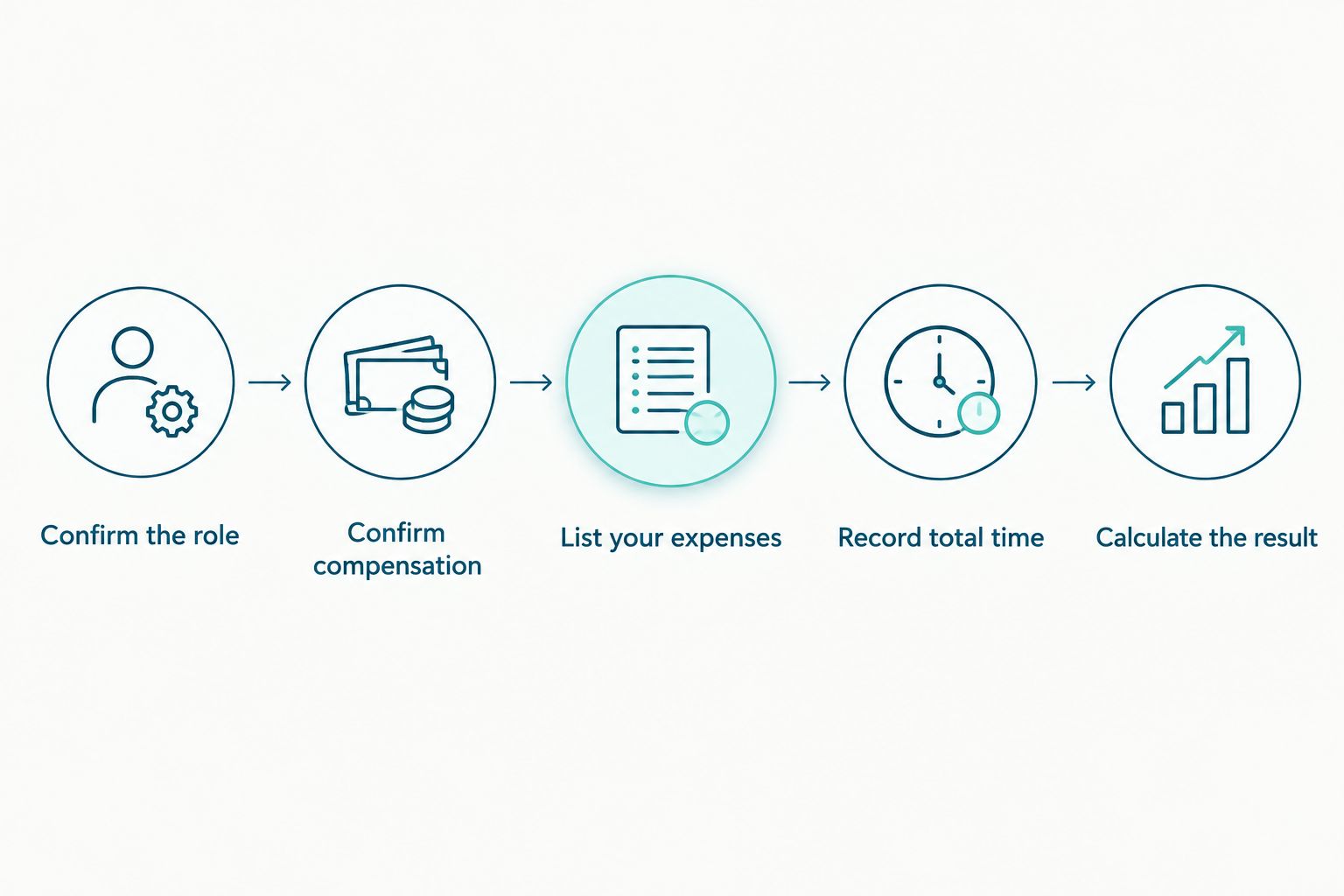
- Confirm the role. Ask whether you would handle transportation, washing, drying, folding, or a combination of tasks.
- Confirm compensation. Get the payment calculation and payment conditions in writing before relying on an estimate.
- List your expenses. Include only costs you would actually cover, and establish which expenses are reimbursed.
- Record total time. Count each required task, not just time behind the wheel or beside the washer.
- Calculate the result. Subtract your expenses from compensation, then divide the remainder by total work hours.
This is a planning method, not a promise of income. Your 2026 estimate should use current terms and your own records rather than an earnings screenshot from someone whose duties and expenses you do not know.
Driving and washing are different workloads
The word driver does not establish the complete job description. Do not assume that picking up a laundry bag means you are responsible for cleaning its contents—or that a laundry-work opportunity involves transportation alone.
Ask for the exact duties before deciding whether the work fits your schedule and equipment. That distinction changes which costs and time commitments belong in your calculation.
If the role involves transportation
Confirm who handles pickup, return delivery, customer communication, and any required handoff steps. Ask how missed handoffs, changed instructions, or unsuccessful trips are handled under the current terms.
If you supply the vehicle, determine which vehicle expenses you cover and whether any reimbursement applies. A route’s distance is only part of the picture; parking and required waiting also consume your time.
If the role involves laundry processing
Confirm whether you would supply the washer, dryer, detergent, workspace, and packaging. Also establish the cleaning instructions and handling requirements you would need to follow.
Machine runtime and hands-on time are different. A wash cycle can run without your constant attention, but sorting, transferring, folding, and preparing an order still require work; record those activities separately rather than treating the whole process as either fully active or fully passive.
If the role combines both
Account for the complete assignment. Transportation expenses do not disappear because you also wash clothes, and washing expenses do not disappear because pickup is the most visible part of the job.
The benefit of understanding the full workflow is a more useful earnings estimate. The drawback of a broader assignment is that more tasks must fit into your day, so check the complete schedule before accepting the responsibility.
Why laundry-work earnings vary
Your calculation changes when the work, the payment terms, or your own expenses change. Check these factors rather than assuming every assignment produces the same result:
- Compensation terms. Establish what triggers payment and what work that payment covers. A customer’s service charge does not establish your compensation.
- Assigned duties. Transportation alone requires a different time calculation from transportation plus washing and folding. Include every required task.
- Work completed. Base earnings on completed, payable work. Do not turn a hoped-for workload into a guaranteed income forecast.
- Travel requirements. If driving belongs to your role, include the actual distance, parking, and required waiting associated with the assignment.
- Self-paid expenses. Supplies, utilities, vehicle use, or other costs belong in the calculation only when you are responsible for them.
- Time commitment. Record required messages, preparation, handling, and handoffs alongside the more obvious tasks. Small pieces of work still use your day.
For your 2026 budget, separate what you know from what you hope will happen. Confirmed compensation terms belong in the calculation; unconfirmed future orders do not.
What should you ask before you start?
Ask questions that turn a general opportunity into a clear work agreement. You are looking for answers you can use in a budget, not just an appealing headline.
What exactly would I do?
Request a description of the assigned tasks and where each task happens. Confirm whether you need equipment, a vehicle, supplies, or a particular workspace before buying anything for the role.
Also ask what happens when an order needs clarification. Knowing who resolves questions helps you understand the responsibility you are accepting.
How is compensation calculated and paid?
Ask what the payment covers, what conditions apply, and when completed work becomes payable. Confirm how adjustments or disputes are handled rather than assuming every displayed amount is final.
If tips, bonuses, or reimbursements are mentioned in the current terms, ask how each works. Treat them as separate items in your records instead of building an essential household budget around an uncertain addition.
Who covers expenses and unexpected problems?
Establish responsibility for supplies, transportation, equipment use, and any other required spending. Check insurance requirements with the relevant provider rather than assuming an existing policy covers paid work.
Read the terms covering damage, complaints, canceled work, and other exceptions. Those details matter because a payment calculation alone does not explain the full financial responsibility of an assignment.
How do you track whether the work is worthwhile?
Keep a simple record for each completed assignment. Record compensation, expenses, active work time, required waiting, and any unresolved payment issue without mixing estimates with confirmed payments.
Your record should answer a practical question: Did this work leave enough money for the time and responsibility it required? That answer is more useful than celebrating gross earnings while ignoring what it took to earn them.
Use consistent definitions throughout your 2026 records. If you count preparation time for one assignment, count it for comparable assignments too; otherwise, the apparent improvement comes from changing the calculation rather than improving the result.
Keep active time and schedule constraints separate
Active work is time spent doing required tasks. A schedule constraint is a period when you need to remain available or return to a task, even if you are not actively working throughout it.
Record both without counting overlapping time twice. Laundry work that fits between other commitments can still tie you to a location or deadline, so the hourly calculation should sit alongside an honest look at your day.
Set your personal minimum before reviewing results
Decide what earnings after expenses would make the work worthwhile for you. Include your need for predictable income and the effect on other commitments, not just the appeal of earning from a familiar household task.
Then compare your records with that minimum. If the result falls short, identify whether the gap comes from compensation, expenses, or time before committing to more of the same work.
Is getting paid to do laundry the same as passive income?
Getting paid to do laundry is payment for work, not evidence of passive income. Required pickups, handling, folding, communication, and deliveries involve active effort when they belong to the assignment.
An appliance running in the background does not make the whole job hands-off. Count the work around the cycle, and decide whether any gaps are genuinely usable for something else.
Can I use customer laundry charges to estimate my pay?
Customer laundry charges are not worker compensation terms. They describe what the customer pays for a service, not what a particular worker receives for completing assigned duties.
Hampr laundry pickup is best for households and businesses that want washing and folding handled for them. That customer benefit explains the service, but it does not establish a worker’s pay, expenses, employment status, or duties.
Should I budget around an earnings screenshot?
An earnings screenshot is not enough to build a reliable budget. Without the person’s expenses, total time, duties, and payment details, the headline amount does not tell you what they kept.
For a 2026 decision, ask whether the example reflects the same role and current terms you are considering. Even then, use your own completed-work records to decide whether the arrangement meets your needs.
FAQ
Can I get paid to do laundry through Hampr?
Confirm Hampr’s current worker opportunities and role requirements directly before planning around laundry income. Its customer service includes laundry pickup, washing, folding, and delivery, but that description does not establish an individual worker’s duties or compensation.
How much can I earn per hour doing laundry?
Calculate effective hourly earnings by subtracting self-paid work expenses from compensation and dividing the remainder by total work hours. Include all required tasks rather than counting only driving or folding.
Is a laundry driver responsible for washing the clothes?
A driver title alone does not establish responsibility for washing clothes. Confirm whether the specific assignment includes transportation, laundry processing, or both.
Does doing laundry for money count as passive income?
Paid laundry work requires active effort when the role includes handling, folding, communication, or transportation. Machine runtime does not remove the tasks around the wash and dry cycles.
Do I need my own washer and dryer to earn money doing laundry?
Equipment requirements depend on the specific role. Confirm who supplies the equipment and workspace before purchasing anything or estimating your expenses.
Should I include tips in my expected laundry income?
Do not treat tips as guaranteed income. First confirm whether tips apply under the current terms, then record amounts actually received separately from base compensation.
What expenses should I subtract from laundry earnings?
Subtract work expenses you actually cover, such as applicable supplies, utilities, or transportation costs. Check reimbursement terms and keep tax planning separate from your operating-expense calculation.
One last thing
The easiest task to overlook is the one between the obvious tasks: checking instructions, finding the pickup location, or preparing the finished order. Record those moments when they are required work; they belong in your earnings calculation too.
Before you commit, write down the duties, payment terms, expenses, and time commitment in one place. A clear answer on paper beats a promising number with the important bits left out.