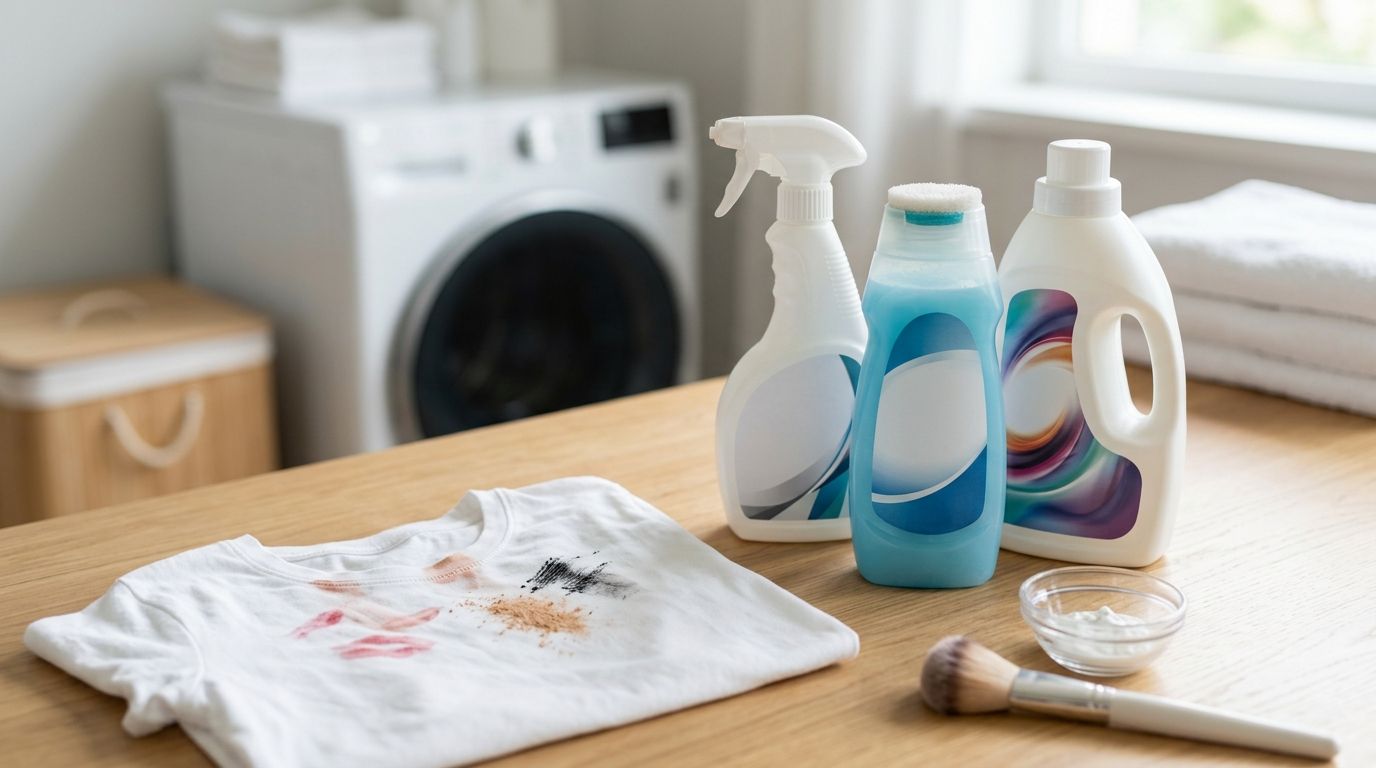
The best stain remover for makeup stains in 2026 is plain dish soap for oily foundation on washable fabric. Liquid laundry detergent is the easier all-purpose choice; oxygen bleach and rubbing alcohol have narrower jobs when a mark remains.
- Best overall: plain dish soap tackles oily foundation on washable fabric; test it on a hidden area first.
- Liquid laundry detergent is the best stain remover for makeup stains when you want to use what you already wash with.
- Use oxygen bleach for lingering marks only when the fabric care label allows it.
- Hampr handles laundry pickup, wash, fold, and delivery; it is not a stain-removal product.
Why this matters
Foundation can contain oils and pigments. Lipstick leaves a different kind of mark, while powder can spread if you rub it into the fabric. The right first move depends on what spilled and what the care label permits, not on finding one bottle that claims to fix everything.
If you would rather hand off the washing and folding, Hampr offers laundry pickup, wash, fold, and delivery in U.S. cities where it operates. Hampr is a laundry service, not a stain remover: check the garment and address the stain before treating a wash-and-fold service as the answer to a stubborn makeup mark.
Best stain removers for makeup stains: the 2026 verdict
Best overall: plain dish soap for oily foundation. Best for routine washable loads: liquid laundry detergent. Best for lingering marks on eligible fabric: oxygen bleach. Best for a stubborn lipstick mark on sturdy, colorfast fabric: rubbing alcohol. None is the right choice for every garment. Read the care label first, and test any treatment on an inconspicuous area.
What makes the best stain remover for makeup stains?
- Match the makeup. An oily foundation smear calls for a grease-cutting approach; a remaining pigment mark calls for a different follow-up.
- Respect the fabric. A sturdy washable shirt gives you more treatment choices than silk, wool, or a dry-clean-only garment.
- Keep the stain contained. Blot or lift excess makeup before adding liquid. Rubbing spreads color and pushes it into fibers.
- Check what happens after rinsing. A treatment is useful only if you can remove both the makeup and the treatment itself.
- Avoid setting the mark. Inspect the fabric before machine drying. Heat makes a stain left behind harder to address.
At a glance
| Option | Best for | Standout feature | Key limitation |
|---|---|---|---|
| Plain dish soap | Oily foundation on washable fabric | Works on the oily part of a smear | Can leave suds or residue if you use too much |
| Liquid laundry detergent | Everyday makeup marks on washable clothes | Fits into a normal laundry routine | May not clear a concentrated pigment mark alone |
| Oxygen bleach | Lingering marks on eligible, colorfast fabric | Follow-up treatment after initial cleaning | Not appropriate for every fiber or dye |
| Rubbing alcohol | Stubborn lipstick on sturdy, colorfast fabric | Can help lift some waxy color transfer | Can affect dyes or finishes; not for delicate fabric |
Match the stain to the treatment
Oily makeup points toward dish soap. Daily marks on washable clothes point toward liquid detergent. Lingering pigment calls for a care-label check before oxygen bleach, while lipstick on sturdy, colorfast fabric is the narrow case for rubbing alcohol. This is a sequence of decisions, not a reason to apply every treatment to the same shirt.
Start by removing any loose or excess makeup without grinding it into the cloth. Put a clean towel behind a localized stain so treatment does not pass straight through to another layer. Apply your chosen option to a small area, rinse as directed by its label, and check the result before drying. If the garment says dry clean only, stop the home-treatment plan and follow its care instructions instead.
1. Plain dish soap: best stain remover for oily foundation
Plain dish soap is the first pick for a foundation smear that feels oily on a washable garment. Its job is to loosen grease; it does not guarantee that every pigment in the foundation will disappear. Lift excess makeup first, work a small amount into the affected area without scrubbing hard, then rinse thoroughly before laundering according to the garment label.
Plain dish soap pros:
- Targets the oily part of a makeup smear.
- Makes sense as a first treatment before a normal wash.
- Lets you focus on the marked area rather than treating the whole garment.
Plain dish soap cons:
- Too much creates suds that take extra rinsing.
- A remaining color mark can need another approach.
- It is not a default treatment for garments that cannot be washed.
Best for: Oily foundation on washable, colorfast clothing. Verdict: Buy plain dish soap as the default makeup-stain treatment if you do not already have a suitable one at home. Use only a little; more soap does not mean a cleaner sleeve.
One distinction matters here: a greasy-looking mark and a colored shadow are not necessarily the same problem. Dish soap can address the oily component while pigment remains visible. Rinse, inspect, and decide whether the garment needs a label-approved follow-up. Do not keep adding soap to a mark that no longer feels oily.
2. Liquid laundry detergent: best for everyday washable loads
Liquid laundry detergent is the practical choice when makeup gets on clothes that can go into a regular wash. Apply it to the mark as its label directs, then wash according to the garment care label. It keeps the treatment simple: you are using a laundry product rather than introducing another household cleaner to the fabric.
Liquid laundry detergent pros:
- Fits the wash you already planned to do.
- Works as a first step for varied everyday marks.
- Is easy to rinse or wash out when used as directed.
Liquid laundry detergent cons:
- A heavy foundation smear can need its oily component addressed first.
- A stubborn color mark can remain after washing.
- Detergent is not permission to machine-wash a dry-clean-only item.
Best for: Light makeup transfer on washable everyday clothes. Verdict: Buy liquid laundry detergent if you need one routine treatment for the laundry basket, not a specialized fix for one lipstick print.
For a fresh mark, deal with excess makeup before applying detergent. That small pause keeps loose product from spreading over a larger patch of fabric. After washing, look at the area in good light. If you still see color, keep the item out of the dryer while you decide on the next care-label-safe step.
3. Oxygen bleach: best for a mark that survives the first wash
Oxygen bleach is a follow-up option when a washable garment still shows makeup pigment after an initial treatment. Check both the product directions and the garment care label before using it. The word bleach is not a shortcut around fabric restrictions: some fibers, dyes, and finishes need a different approach.
Oxygen bleach pros:
- Gives you a separate option when ordinary washing leaves visible color.
- Can be used as a targeted follow-up when its label permits.
- Keeps the decision tied to fabric compatibility rather than guesswork.
Oxygen bleach cons:
- Is not suitable for every garment.
- Adds a treatment step after the first wash.
- Will not replace lifting excess oily makeup before washing.
Best for: Lingering makeup pigment on washable, colorfast fabric that permits the product. Verdict: Hold until you have checked both labels and tested a hidden spot.
Do not treat a successful spot test as a guarantee for the whole garment. Follow the product's directions, rinse or wash as instructed, and inspect again before drying. If the item is delicate or its label rules out the treatment, skip oxygen bleach rather than trying to rescue the stain by using more of it.
4. Rubbing alcohol: best for stubborn lipstick on sturdy fabric
Rubbing alcohol has a narrower role than dish soap or detergent. It can help with some waxy lipstick color on sturdy, washable, colorfast fabric, but it can also affect dyes and finishes. Test an inconspicuous area first, use a small amount on the mark, and keep it away from heat and flames.
Rubbing alcohol pros:
- Offers a targeted option for some lipstick transfer.
- Lets you work on the marked area before laundering.
- Provides a different approach when an ordinary wash has not cleared the mark.
Rubbing alcohol cons:
- Can disturb fabric color or finish.
- Does not belong on delicate or dry-clean-only garments without appropriate care guidance.
- Needs careful handling and thorough rinsing before a normal wash.
Best for: A persistent lipstick mark on sturdy, colorfast, washable fabric. Verdict: Hold unless the hidden-area test passes and the care label allows home treatment.
Blot rather than rub. A clean cloth beneath the mark helps keep loosened color from reaching another part of the garment. If the test area changes color or texture, stop there. A lipstick mark is annoying; a larger damaged patch is worse.
How we ranked the options
This 2026 ranking puts the most broadly useful first treatment for oily makeup ahead of narrower follow-ups. The criteria are makeup type, fabric compatibility, ease of rinsing, and the chance of making the mark worse through aggressive treatment. It is a decision guide, not a claim that each option clears every formula or fabric.
The order also separates stain treatment from laundry service. Hampr washes, folds, and delivers laundry, but Hampr is not ranked as a makeup stain remover. If you use a laundry service, the useful question remains the same: what does the garment label allow, and has the makeup mark been addressed before drying?
Which stain remover should you choose?
For an oily foundation mark on washable clothing, choose plain dish soap first. For a light makeup mark headed into a normal wash, choose liquid laundry detergent. Reserve oxygen bleach for a lingering mark on fabric its label permits; reserve rubbing alcohol for the narrower lipstick case on sturdy, colorfast fabric. If the care label rules out washing, skip this home-treatment list.
In 2026, the best stain remover for makeup stains is still the one that fits both the makeup and the garment. Do not let a promising treatment talk you out of checking the label. And whatever you choose, inspect the stain before drying: that is the moment when you can still change course.
FAQ
What is the best stain remover for makeup stains in 2026?
Plain dish soap is the best first pick for oily foundation on washable fabric. For lighter everyday marks, liquid laundry detergent fits a normal wash; always check the garment care label first.
Is dish soap better than laundry detergent for foundation stains?
Dish soap is the better first pick for an oily foundation smear because it targets grease. Liquid laundry detergent suits lighter marks and the wash that follows.
How do I remove makeup from clothes without spreading it?
Lift excess makeup, then blot rather than rub the marked area. Keep a clean towel behind a localized stain and test your chosen treatment on a hidden spot.
Can I use oxygen bleach on a makeup stain?
Use oxygen bleach only when its directions and the garment care label permit it. It is a follow-up option for lingering marks, not a universal treatment for every fabric or dye.
What should I use on a lipstick stain?
Rubbing alcohol is a targeted option for some lipstick marks on sturdy, colorfast, washable fabric. Test a hidden area first and stop if the fabric's color or finish changes.
Should I dry clothes if the makeup stain is still visible?
No. Inspect the fabric before machine drying because heat can make a remaining stain harder to address. Choose a care-label-safe follow-up instead.
Does Hampr remove makeup stains?
Hampr provides laundry pickup, wash, fold, and delivery in U.S. cities where it operates; do not treat it as a dedicated stain-removal product. Check the garment care label and address a visible makeup mark before relying on an ordinary wash.
Can I treat a dry-clean-only garment with dish soap?
Do not assume a dry-clean-only garment can take a dish-soap treatment. Follow its care label rather than using a washable-clothes method on a fabric that rules out home washing.
One last thing
A makeup stain has two clues: what the makeup contains and what the fabric can tolerate. Check both before reaching for a treatment. Once the mark is handled and the garment is ready for ordinary laundering, Hampr can take the washing and folding off your list where its service operates.