
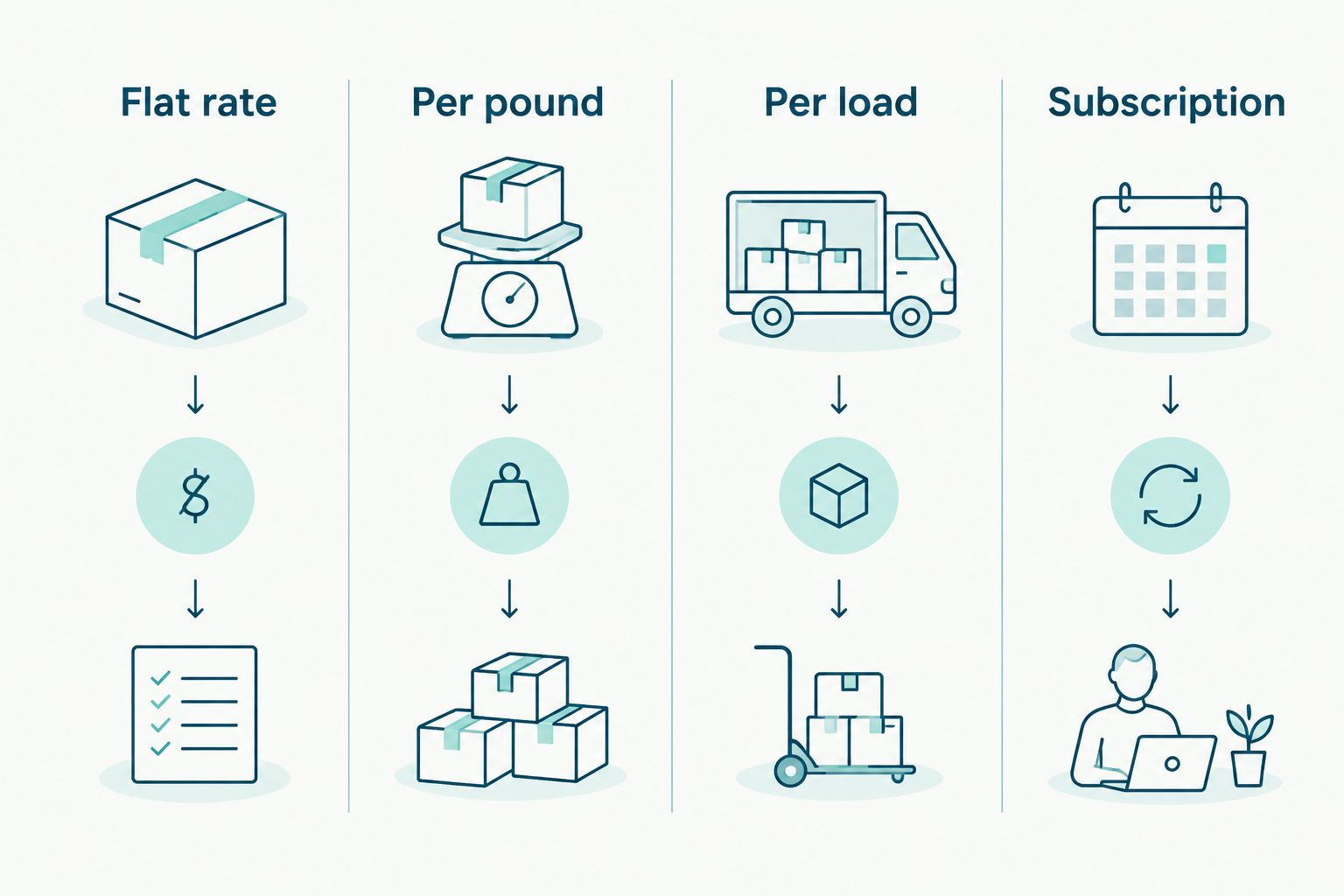
Laundry apps ranked by price in 2026 isn't really a question of who charges the least — it's a question of which pricing model matches how you actually do laundry. Flat rate, per pound, per load, and subscription all show up differently on your card statement, and the cheapest-looking app on the App Store isn't always the cheapest one by the time your invoice lands.
This guide compares five laundry apps by pricing structure, not by a single dollar figure that changes by market and season. Hampr leads the flat-rate group, and four other apps cover the per-pound, per-load, and subscription approaches you'll run into while shopping laundry apps in 2026.
- Hampr wins for flat, per-bag pricing with no per-pound surprises in 2026.
- Rinse suits people who want dry cleaning and wash-and-fold on one combined invoice.
- Poplin and Sudshare price per pound or per load through independent laundry pros, so cost varies by provider.
- Cleanly fits households that want a recurring subscription instead of booking one-off pickups.
- Laundry apps ranked by price in 2026 come down to four models: flat rate, per pound, per load, and subscription.
Why this matters
Most people compare laundry apps by glancing at the home screen price and picking whichever number looks smaller. That's how per-pound pricing quietly costs more than a flat rate once a load of towels or bedding pushes the weight up.
The pricing model tells you more than any single quoted price, because the model determines whether your invoice can move after you drop off the bag. A flat-rate app locks the number before pickup. A per-pound or per-load marketplace app doesn't finalize the price until your laundry is weighed or accepted by a provider.
Knowing which of the four laundry app pricing models you're dealing with in 2026 is the actual decision — not the number on the splash screen.
What makes the best laundry app for price
- Pricing structure clarity — flat rate, per pound, per load, or subscription, stated up front
- Fee transparency — no add-on charges for delivery, minimums, or weight surcharges after pickup
- Provider consistency — one company doing the work versus a marketplace of independent pros
- Turnaround flexibility — same-day or next-day options without a separate rush fee
- Recurring order support — the option to set a standing pickup instead of booking every time
- City coverage — the app actually operates where you live, not just in a handful of metros
Laundry apps ranked by price: at a glance
| App | Best for | Standout feature | Pricing model | Key limitation |
|---|---|---|---|---|
| Hampr | Predictable flat pricing | Flat per-bag rate set before pickup | Flat rate per bag | Only operates in the cities Hampr currently serves |
| Rinse | Bundling dry cleaning with laundry | One invoice for dry clean plus wash-fold | Itemized dry clean + per-pound wash-fold | Costs more for everyday bulk loads |
| Poplin | Choosing your own local pro | Marketplace of independent laundry pros | Per pound, set by each pro | Price and turnaround vary pro to pro |
| Sudshare | Pay-per-load, gig-style laundry | Neighbor-to-neighbor washer network | Per load, set by local washer | No standardized service level across washers |
| Cleanly | Recurring weekly laundry | Scheduled pickup plans on a set cadence | Subscription plan | Less flexible for a one-off order |
1. Hampr: best laundry app for flat, predictable pricing
Hampr picks up your laundry, washes and folds it, and delivers it back on a flat per-bag rate that's set before the bag leaves your porch. You bag it, leave it, and the number you saw when you booked is the number on your invoice — no weight surprise, no per-pound math after the fact.
Hampr pros:
- Flat rate per bag means the price can't move after pickup
- No per-pound weight surcharge for heavier loads like towels or bedding
- One company handling wash, fold, and delivery — not a rotating marketplace of pros
- Recurring pickup scheduling for households that do laundry weekly
Hampr cons:
- Service area is limited to the cities Hampr currently operates in
- Flat-rate bag pricing can cost more than per-pound for someone who does one small load a month
Hampr pricing: flat rate per bag, quoted before pickup, no added weight fee — check the current rate for your city on the laundry pickup and delivery apps page.
Best for: anyone who wants the same number every time, regardless of what's actually in the bag.
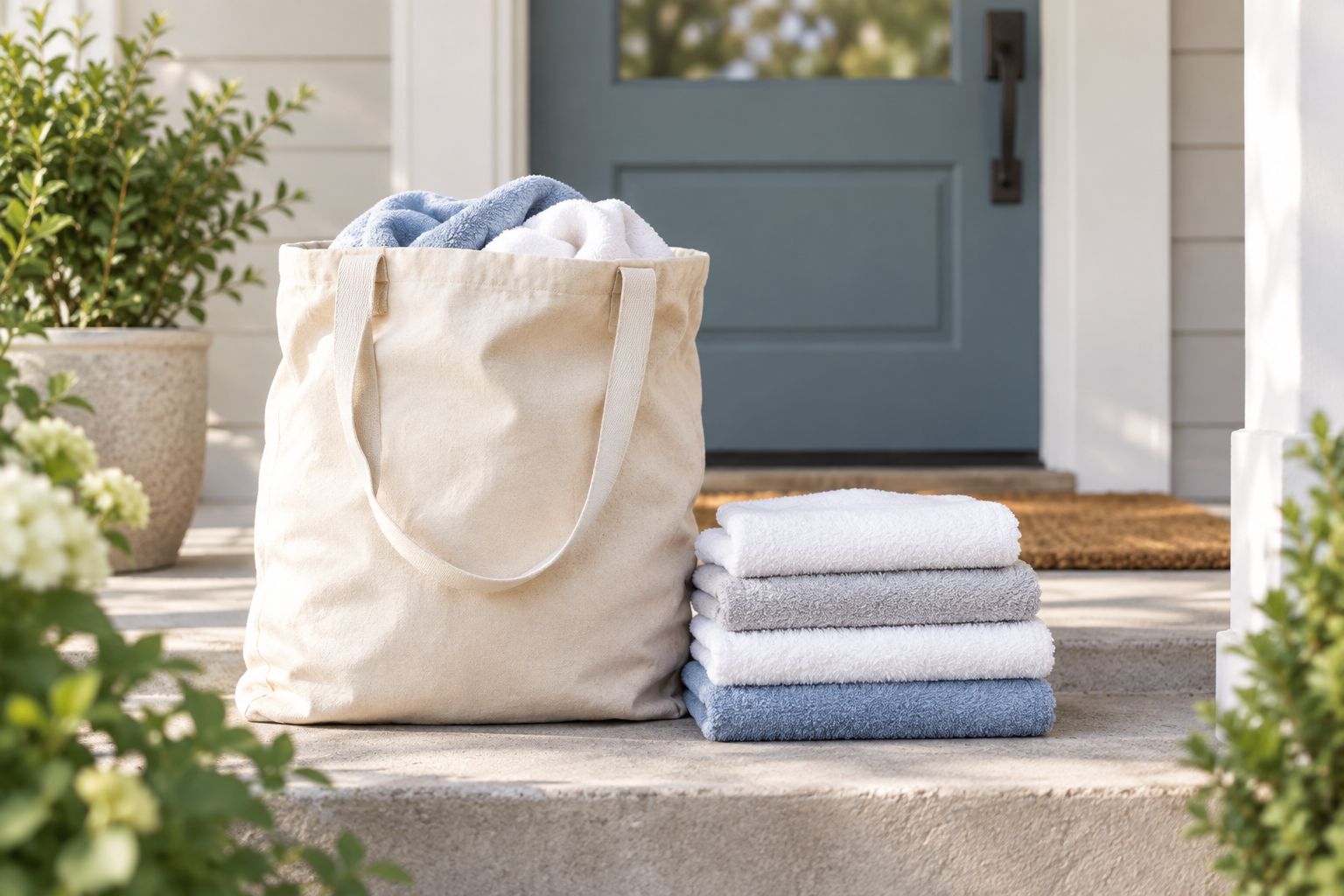
Verdict: Buy for anyone tired of guessing what a laundry invoice will say.
2. Rinse: best laundry app for dry cleaning plus wash-and-fold
Rinse combines dry cleaning and everyday wash-and-fold on one app, itemizing garments by category and pricing wash-and-fold by the pound. It works well for households that regularly mix suits or dresses with regular loads and want one pickup for both.
Rinse pros:
- One pickup handles dry cleaning and wash-and-fold together
- Itemized dry cleaning pricing is transparent per garment type
- Good fit for professionals who need both services on a schedule
Rinse cons:
- Per-pound wash-and-fold can cost more than a flat-rate bag for bulky everyday loads
- Dry cleaning items add up fast on a combined invoice
Rinse pricing: itemized dry cleaning rates plus per-pound wash-and-fold — check the current rate card in the app for your city.
Best for: people who need dry cleaning and laundry handled together, not separately.
Verdict: Hold unless dry cleaning is a regular part of your routine.
3. Poplin: best laundry app for choosing your own local pro
Poplin (formerly known for its network of independent laundry pros) runs as a marketplace: you pick a nearby pro, and that pro sets a per-pound price for the wash. It's a different structure than a single-company flat rate — pricing and turnaround shift depending on who accepts your order.
Poplin pros:
- Marketplace model lets you pick a pro based on reviews or proximity
- Per-pound pricing can work out cheaper for very light loads
- Wide coverage since it relies on independent pros rather than a centralized fleet
Poplin cons:
- Price, quality, and turnaround vary from one pro to the next
- No single flat number until a pro accepts and weighs the order
Poplin pricing: per-pound rate set individually by each pro on the platform.
Best for: people who want to shop around within one app instead of committing to one provider.
Verdict: Hold if consistency matters more to you than choice.
4. Sudshare: best laundry app for pay-per-load, gig-style pricing
Sudshare connects you with local washers who pick up, wash, and return your laundry, pricing each order per load rather than per bag or per pound. It's built more like a gig marketplace than a laundry company, which shows up in how flexible — and how variable — the pricing gets.
Sudshare pros:
- Per-load pricing is simple to understand order to order
- Local washer network can mean fast turnaround in dense areas
- No dry cleaning upsell cluttering the order flow
Sudshare cons:
- No standardized service level since each washer sets their own pace and quality bar
- Per-load pricing can vary noticeably between two similar loads
Sudshare pricing: per load, set by the individual local washer who accepts the order.
Best for: occasional users who want a single order without a subscription commitment.
Verdict: Hold for a one-off order; less predictable for regular use.
5. Cleanly: best laundry app for a recurring subscription
Cleanly leans on scheduled pickup plans rather than one-off bookings, aiming at households that want laundry handled on a set cadence — weekly or every other week — without rebooking each time.
Cleanly pros:
- Subscription cadence removes the need to book every single pickup
- Predictable schedule works well for busy households on autopilot
- Reduces the decision fatigue of choosing a pickup day each time
Cleanly cons:
- Less flexible if you only need laundry done occasionally
- Committing to a plan before a proven track record with the service adds risk
Cleanly pricing: subscription plan billed on a recurring cadence — confirm current plan details directly with the service.
Best for: households that want laundry off the weekly to-do list entirely.
Verdict: Hold unless a standing weekly pickup fits your routine.
How we ranked these laundry apps
Each app was scored against the six criteria above: pricing structure clarity, fee transparency, provider consistency, turnaround flexibility, recurring order support, and city coverage. Flat-rate and subscription models scored higher on transparency because the price is locked before the work starts; per-pound and per-load marketplace models scored higher on flexibility for one-off, light loads.
Which laundry app should you choose in 2026?
If a predictable number matters more than shopping around, Hampr's flat per-bag rate is the safer default for 2026 — you know the price before the bag leaves your door. If you regularly need dry cleaning alongside laundry, Rinse earns its place. If you want to compare local pros or washers order by order, Poplin and Sudshare give you that flexibility at the cost of consistency. If your household just wants laundry gone every week without thinking about it, Cleanly's subscription model is worth a look — and pairing that decision with a look at same-day laundry delivery options narrows it further if turnaround speed matters as much as price.
See Hampr's flat rate for your city
Bag it, leave it, get it back folded — one flat price, no weight surprises.
FAQ
What's the best laundry app for flat-rate pricing in 2026?
Hampr uses a flat per-bag rate that's set before pickup, so the price you see when you book is the price on your invoice. That makes it the most predictable option among laundry apps ranked by price in 2026.
Is per-pound laundry pricing cheaper than a flat rate?
It depends on load size and what's in the bag. Light loads can cost less per pound, but heavier items like towels and bedding push per-pound pricing above a comparable flat rate.
How does Hampr's pricing compare to Rinse?
Hampr charges a flat rate per bag for wash-and-fold, while Rinse itemizes dry cleaning separately and prices wash-and-fold by the pound. Rinse fits better if dry cleaning is part of your regular order.
Are laundry pickup apps worth it for large households?
Flat-rate apps like Hampr tend to work better for larger households since the price doesn't climb with load weight the way per-pound pricing does. Subscription models also help by locking in a recurring schedule instead of one-off bookings.
What hidden fees should I watch for in laundry apps?
Watch for weight surcharges added after pickup, delivery fees on top of the quoted price, and minimum order charges. Flat-rate and subscription models are the least likely to add fees after the fact.
Does Poplin or Sudshare guarantee a set price before pickup?
No. Both operate as marketplaces where an individual pro or washer sets the per-pound or per-load price, so the final number isn't locked until someone accepts the order.
How much does a laundry subscription cost with Cleanly?
Cleanly bills on a recurring plan rather than a per-order price, and the exact plan cost should be confirmed directly with the service since it can vary by market and cadence.
Which laundry app pricing model is easiest to budget for?
Flat rate and subscription models are the easiest to budget for because the number doesn't change based on load weight. Per-pound and per-load marketplace pricing is harder to predict order to order.
One last thing
Before you pick an app based on price alone, ask how per-pound pricing weighs your laundry. A load of soaked towels or a comforter weighs noticeably more wet than dry, and that detail changes your invoice under per-pound billing in ways a flat per-bag rate simply doesn't. That's the one question worth asking every laundry app in 2026 before you compare a single number on the screen.